14 Window Treatment Trends Designers Are Using Now
Window treatments are no longer just finishing touches. They shape how light enters a space, influence proportions, and define the overall mood of a room. Today’s designers view window treatments as architectural elements rather than decorative afterthoughts. The right choice can make a room feel taller, warmer, more refined, or more relaxed—often without changing anything else.
Modern window treatment trends focus on balance: beauty and function, softness and structure, privacy and openness. Designers are moving away from heavy, overly ornate styles and embracing thoughtful layering, natural materials, and tailored simplicity. These trends work across interiors, from compact apartments to expansive homes, and they adapt easily to different budgets and lifestyles.
This in-depth guide explores fourteen window treatment trends designers are using now, explaining not only what’s popular but why these choices work and how they transform living spaces.
1. Floor-to-Ceiling Curtains for Visual Height
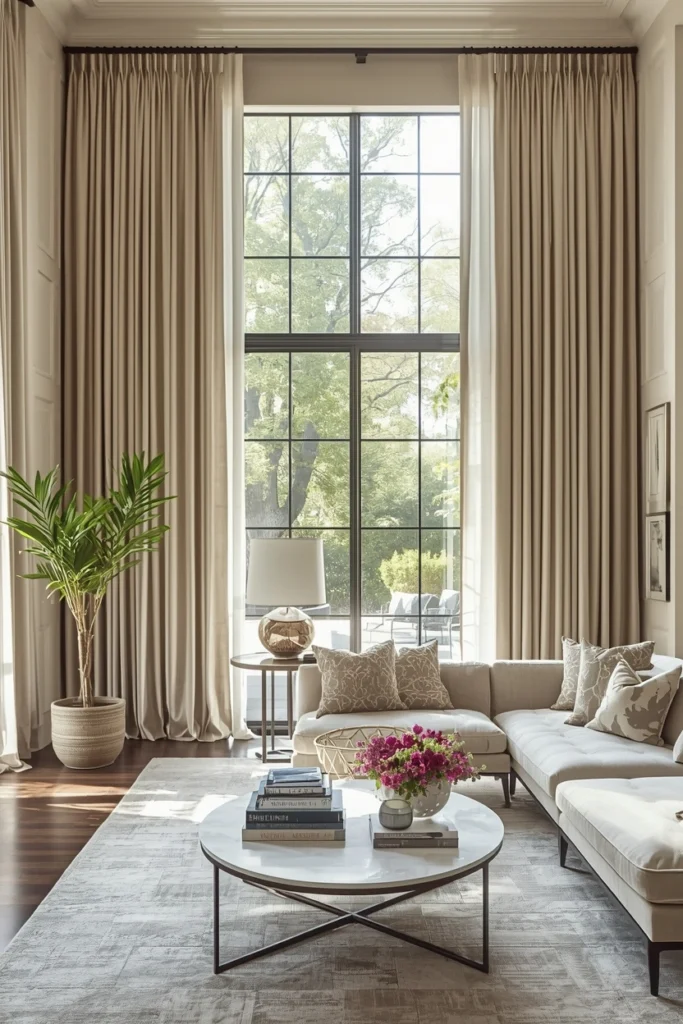
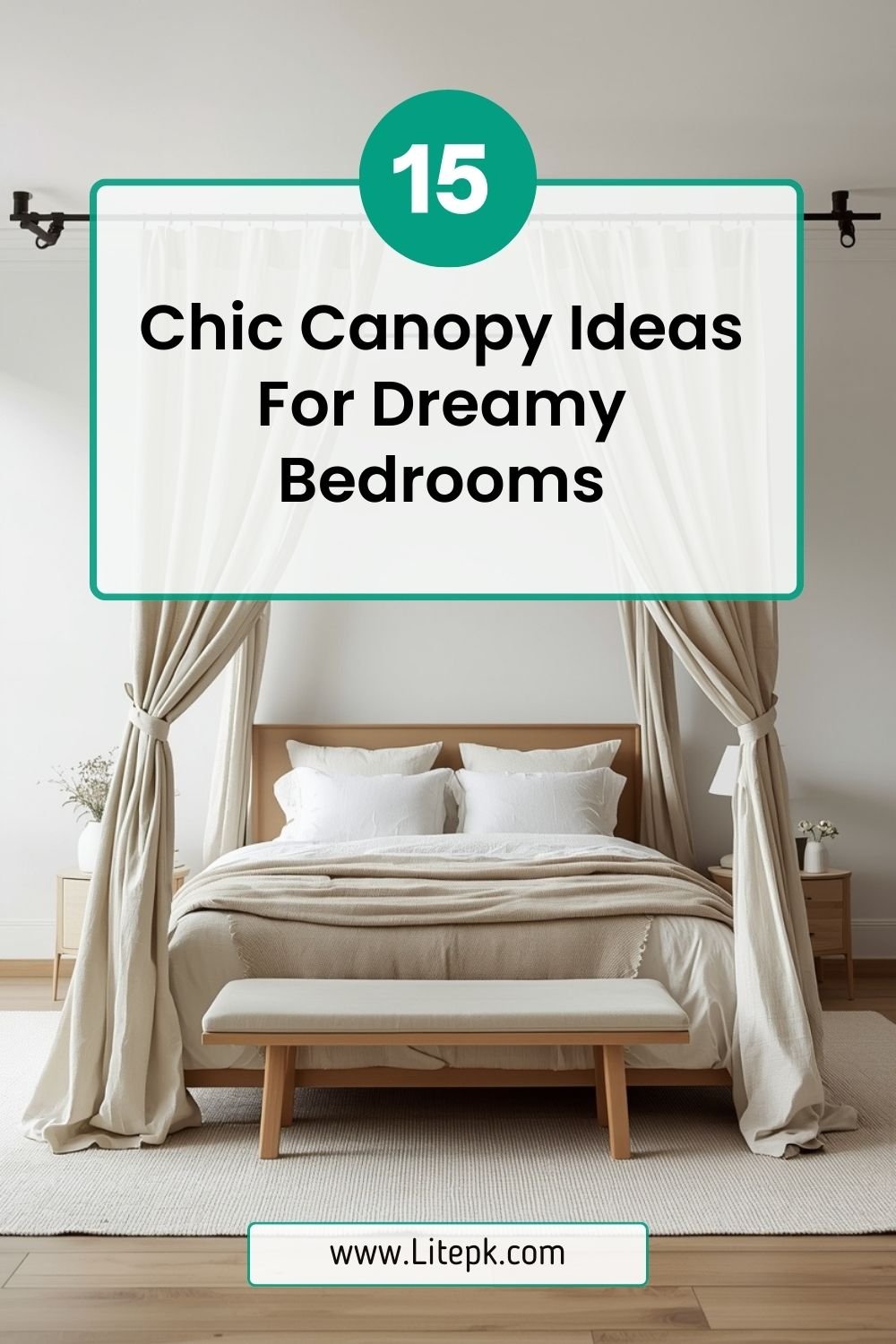
Floor-to-ceiling curtains remain one of the most powerful window treatment trends because of their ability to visually elevate a room. Designers consistently hang curtains higher than the window frame, often close to the ceiling, to create the illusion of taller walls and larger windows. This technique instantly adds architectural elegance without structural changes.
Long, uninterrupted fabric lines also create a calm, cohesive look. Neutral fabrics such as linen blends, cotton, or soft sheers are especially popular because they enhance natural light while maintaining a refined appearance. This approach works in both modern and classic interiors, making it a versatile trend that delivers strong visual impact with minimal effort.
2. Natural Linen and Organic Fabrics
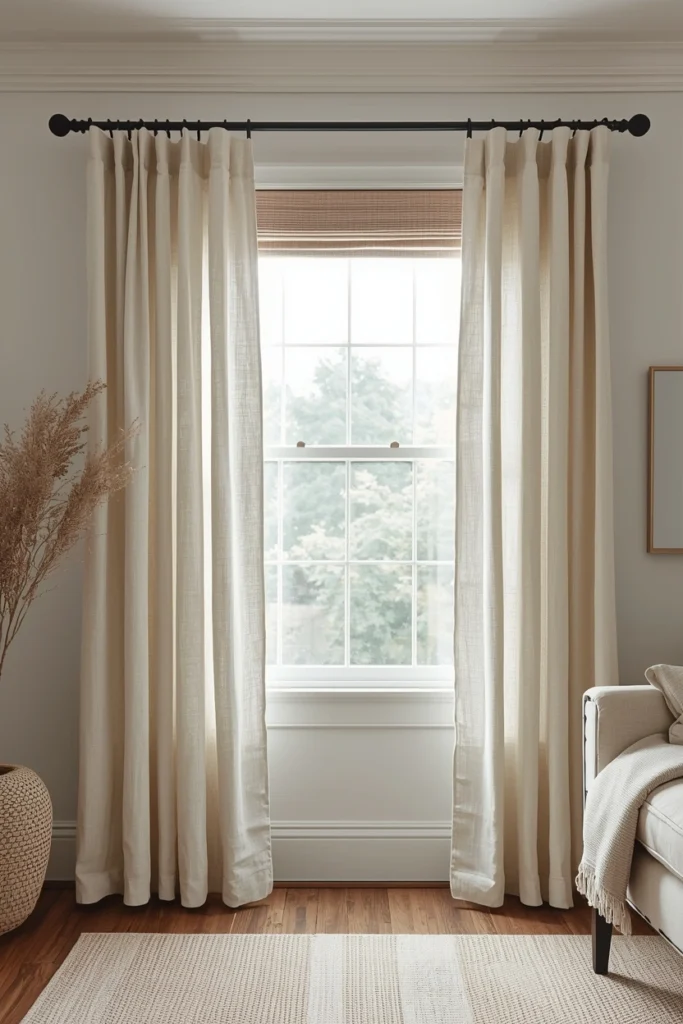
Designers are increasingly drawn to window treatments made from natural, breathable materials. Linen, cotton, hemp blends, and unbleached textiles add softness and texture without feeling heavy or formal. These fabrics move beautifully with air and light, giving rooms a relaxed yet intentional feel.
Organic fabrics also align with broader interior trends focused on sustainability and wellness. Their subtle imperfections and natural weave bring warmth and authenticity to spaces. Whether used in full-length curtains or Roman shades, these materials create an inviting atmosphere that feels timeless rather than trend-driven.
3. Layered Window Treatments for Flexibility
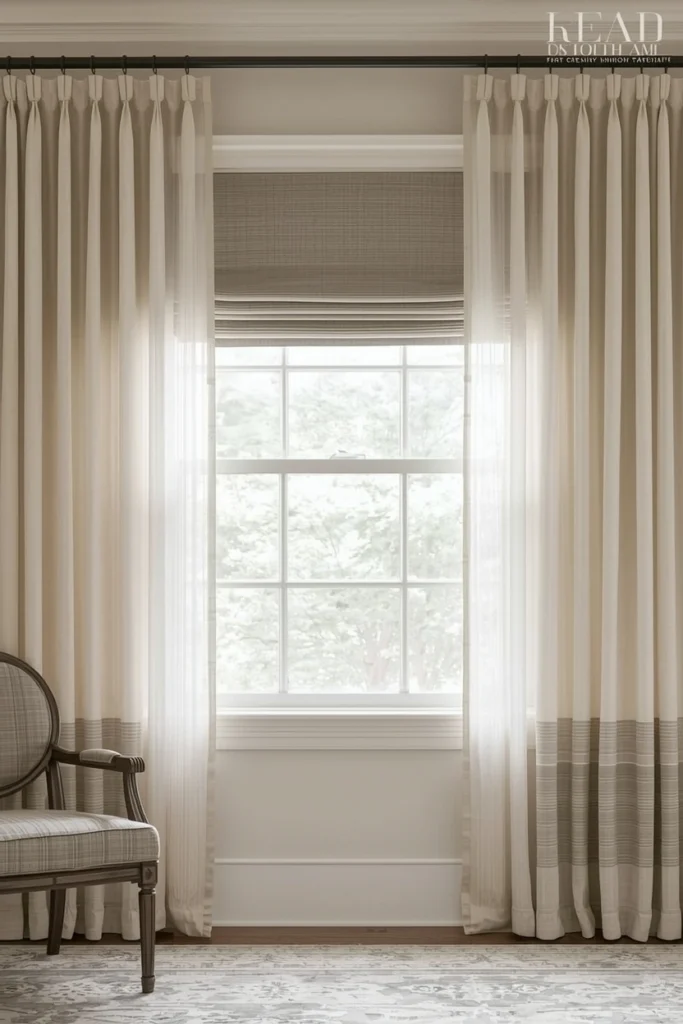
Layering is one of the most practical window treatment trends designers rely on. Combining sheer curtains with heavier drapery or pairing Roman shades with panels allows homeowners to control light, privacy, and mood throughout the day.
Sheers soften daylight and maintain openness, while heavier layers provide insulation and privacy when needed. Designers often use tonal layering—different textures within the same color family—to keep the look cohesive. Layered window treatments add depth and dimension, making windows feel more intentional and thoughtfully designed.
4. Minimalist Roller Shades
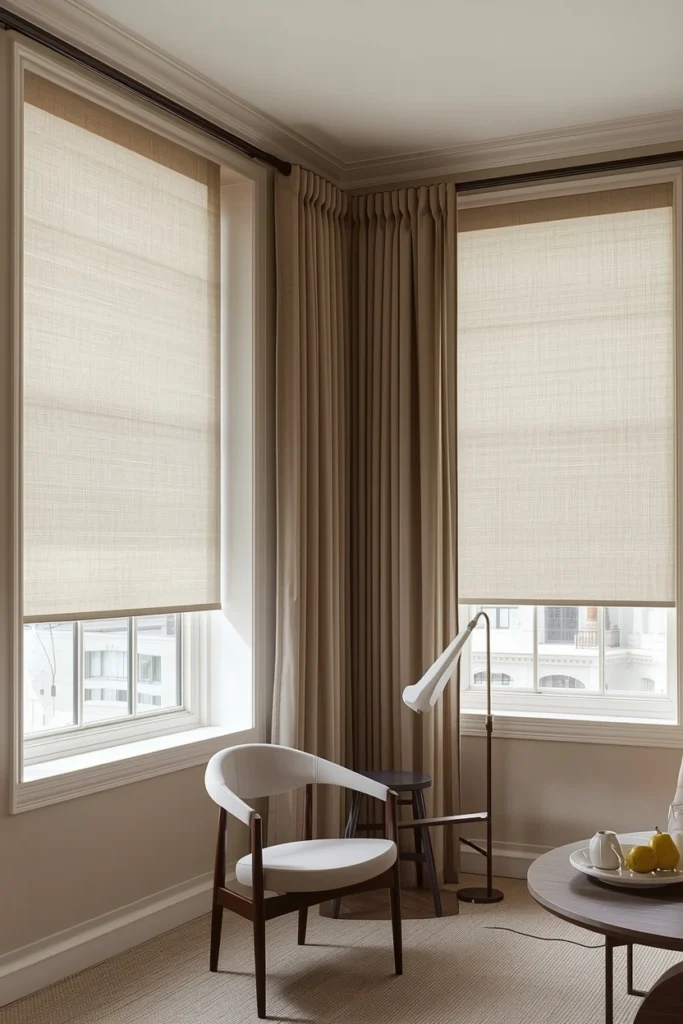
Roller shades have evolved far beyond basic functionality. Today’s designs feature refined fabrics, subtle textures, and clean lines that blend seamlessly into modern interiors. Designers favor roller shades for their simplicity, especially in spaces where architectural clarity is important.
Neutral colors such as off-white, warm gray, and soft taupe keep the focus on the room rather than the window covering. When recessed or paired with drapery, roller shades become nearly invisible, allowing other design elements to shine. This trend is particularly popular in kitchens, offices, and contemporary living spaces.
5. Roman Shades with Tailored Structure
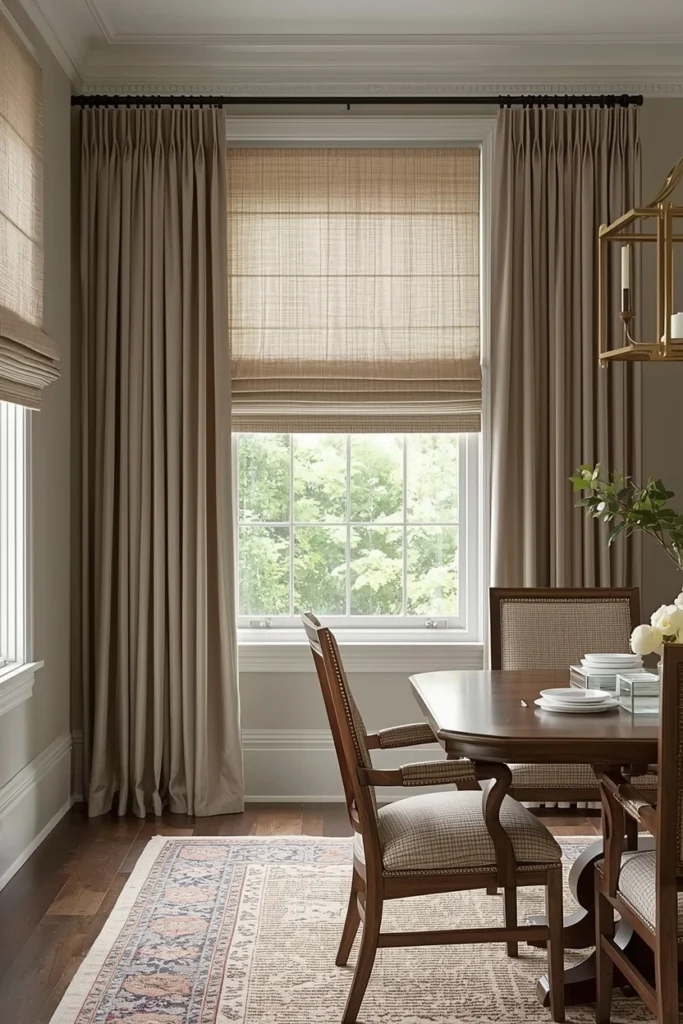
Roman shades offer a balance between softness and structure, making them a favorite among designers. Unlike loose curtains, Roman shades provide a clean, tailored look while still adding texture and warmth. When raised, they stack neatly, preserving window views.
Designers often choose subtle patterns, woven textures, or tone-on-tone fabrics to keep Roman shades timeless. This window treatment trend works well in dining rooms, bedrooms, and kitchens where a polished yet approachable aesthetic is desired.
6. Warm Neutral Color Palettes
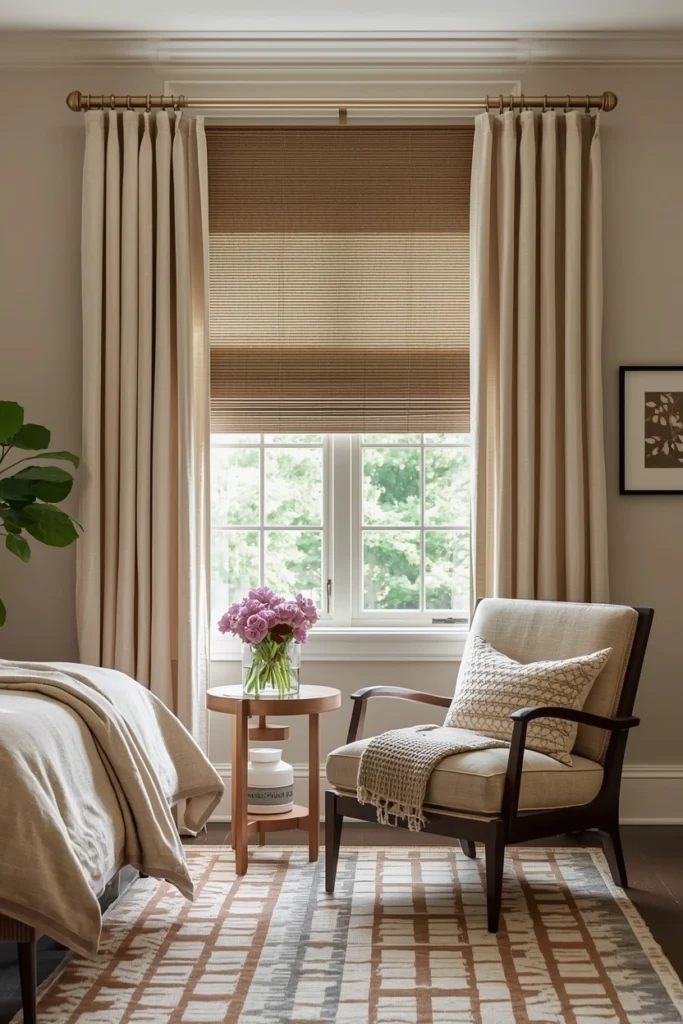
Bold colors are giving way to warm neutrals in window treatments. Designers prefer shades like sand, oat, stone, clay, and soft taupe because they complement a wide range of interiors. These tones enhance natural light rather than competing with it.
Warm neutrals also age well, maintaining relevance even as other decor elements change. They create a sense of calm and cohesion, making them ideal for long-term design planning. This trend reflects a broader shift toward comfort-driven, livable interiors.
7. Subtle Texture Over Bold Patterns
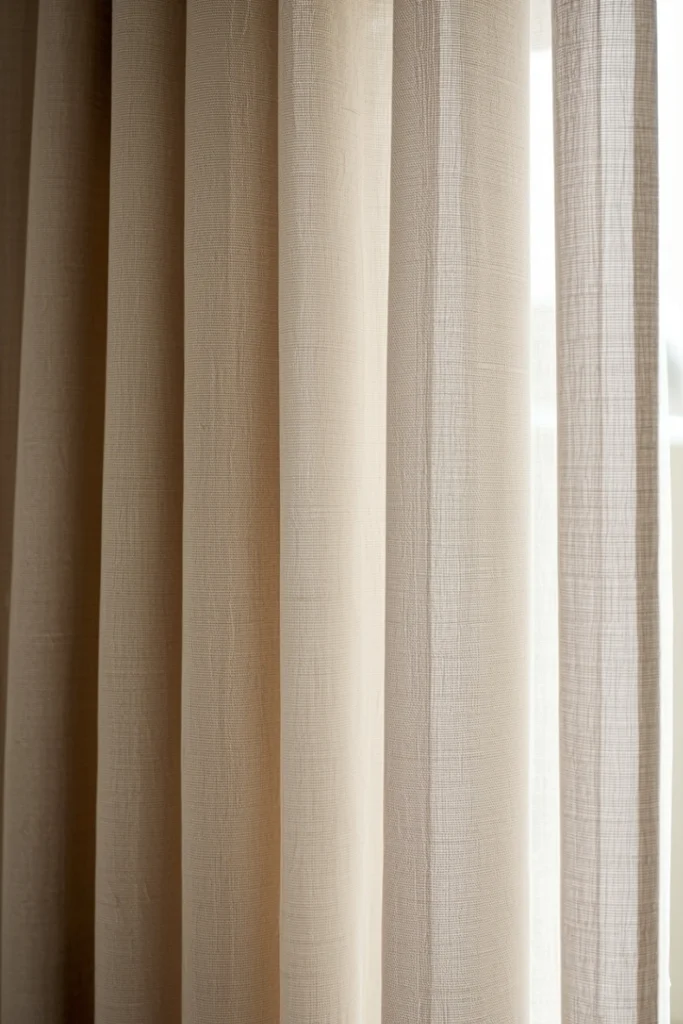
Rather than loud prints, designers are choosing window treatments with texture-driven interest. Woven fabrics, slubbed linens, embroidered details, and gentle ribbing add dimension without overwhelming the space.
Texture creates visual depth that feels sophisticated and tactile. It also interacts beautifully with light, producing soft shadows and movement throughout the day. This trend supports understated elegance and works particularly well in minimalist or transitional interiors.
8. Indoor-Outdoor Connection Through Sheer Drapes
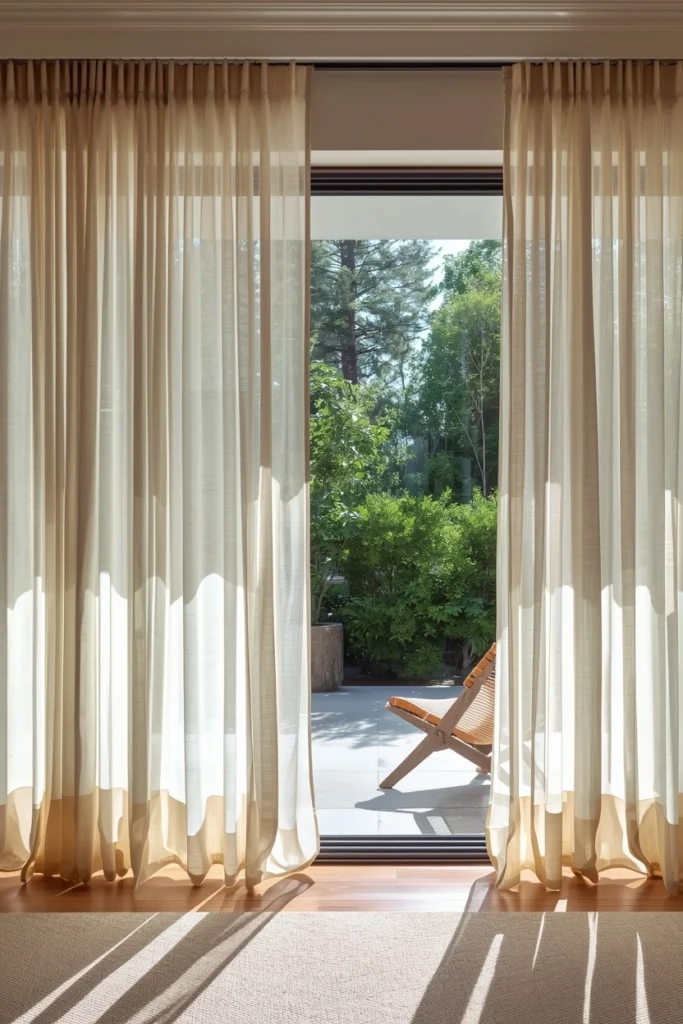
Sheer drapes are being used to blur the boundary between indoor and outdoor spaces. Designers favor lightweight sheers that allow daylight to flow freely while softening harsh sunlight. This approach enhances openness and visual continuity.
In rooms facing gardens, balconies, or patios, sheer window treatments maintain privacy without blocking views. Their movement adds a gentle, dynamic quality to interiors, making spaces feel alive and breathable.
9. Ceiling-Mounted Curtain Tracks
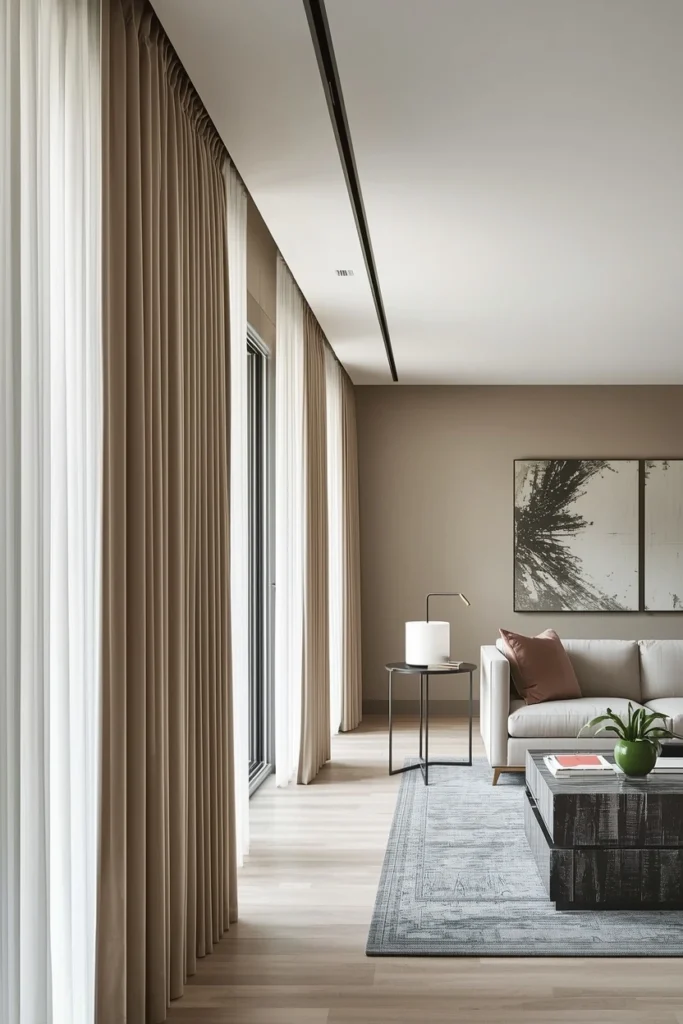
Ceiling-mounted tracks are gaining popularity because they create clean, uninterrupted lines. Designers use them to make windows appear larger and walls taller. This system also allows curtains to glide smoothly and evenly.
Hidden or minimal tracks keep attention on the fabric rather than hardware. This window treatment trend aligns with modern interiors where simplicity and precision are key. It’s especially effective in open-plan spaces and contemporary homes.
10. Soft Black and Dark Hardware Accents
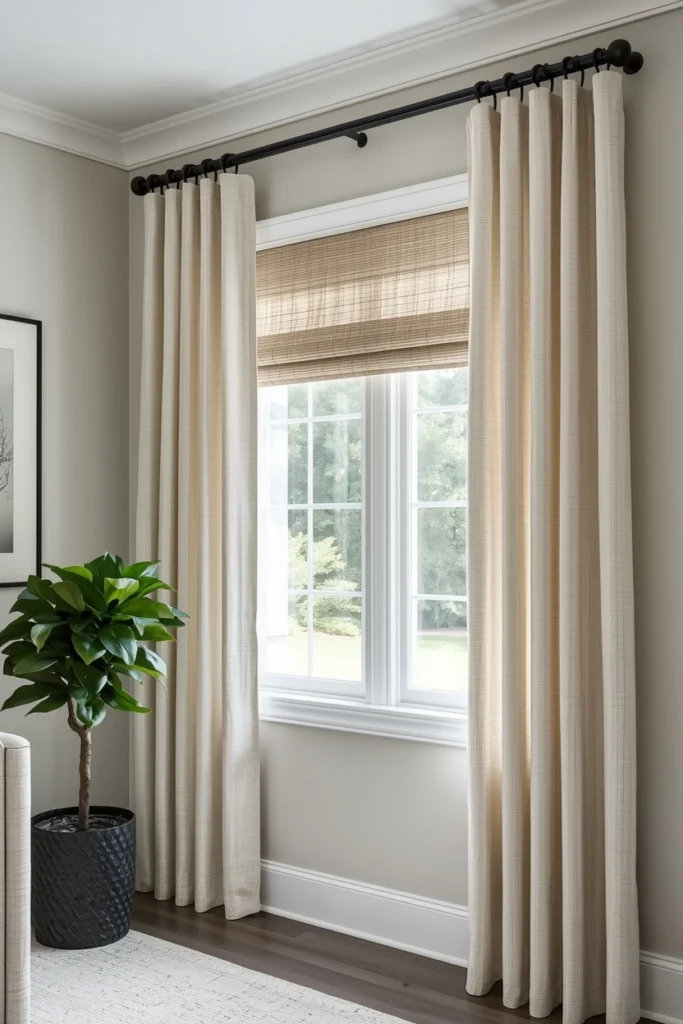
While fabrics stay neutral, hardware is becoming more expressive. Designers are introducing soft black, bronze, or matte finishes in curtain rods and brackets. These accents provide contrast and definition without feeling heavy.
Dark hardware works particularly well against light walls and curtains, framing the window elegantly. This trend adds subtle sophistication and ties window treatments into broader interior details such as lighting fixtures and furniture finishes.
11. Relaxed, Unlined Curtains
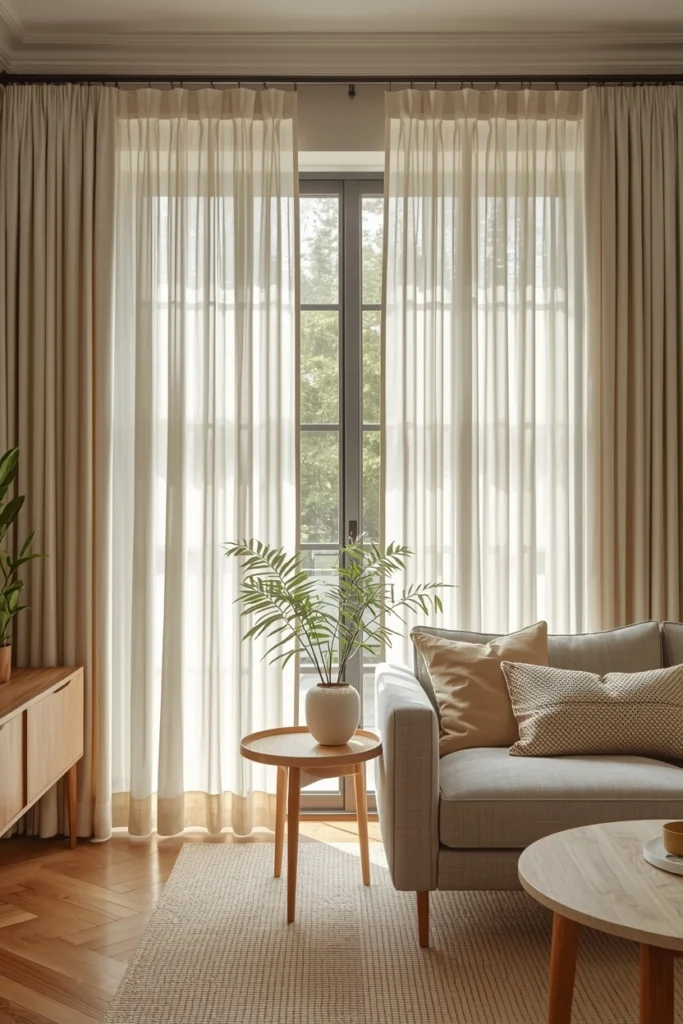
Unlined or lightly lined curtains are increasingly used in casual living spaces. Designers appreciate their natural drape and softness, which create a relaxed, effortless aesthetic. These curtains allow more light penetration and feel less formal.
This trend suits homes that prioritize comfort and ease. While not ideal for full blackout needs, unlined curtains work beautifully in living rooms and open areas where atmosphere matters more than total privacy.
12. Smart and Motorized Window Treatments
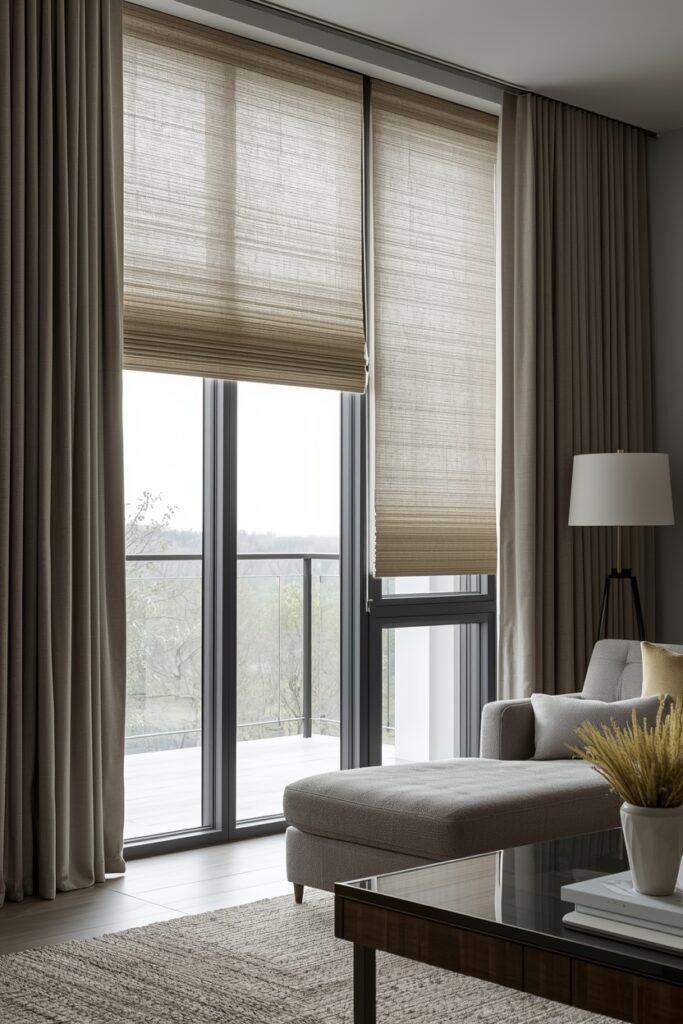
Technology is influencing window treatment trends as well. Motorized blinds and curtains offer convenience, especially in large or hard-to-reach windows. Designers integrate these systems discreetly to maintain aesthetic integrity.
Smart window treatments enhance comfort, energy efficiency, and accessibility. When paired with minimal fabrics and concealed tracks, they blend seamlessly into modern interiors without drawing attention to the technology itself.
13. Monochrome Window Styling
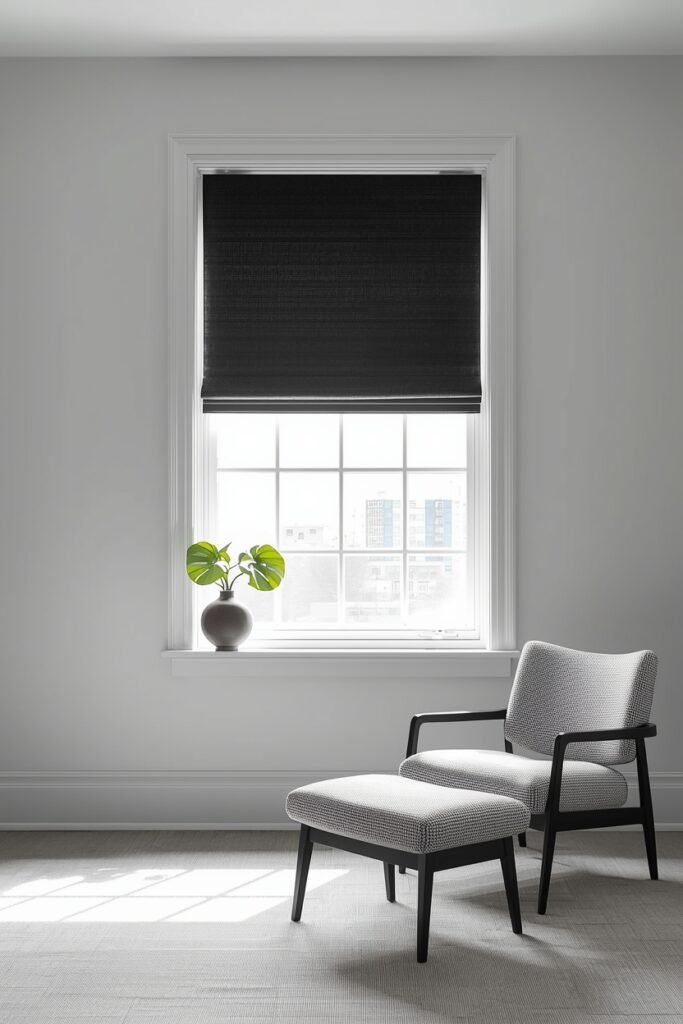
Monochrome styling extends to window treatments, with designers choosing fabrics that closely match wall colors. This creates a cohesive, calming environment where windows blend into the architecture.
Rather than standing out, window treatments support the overall design narrative. This trend is particularly effective in minimalist interiors where visual continuity enhances spatial flow.
14. Custom-Fit Window Treatments
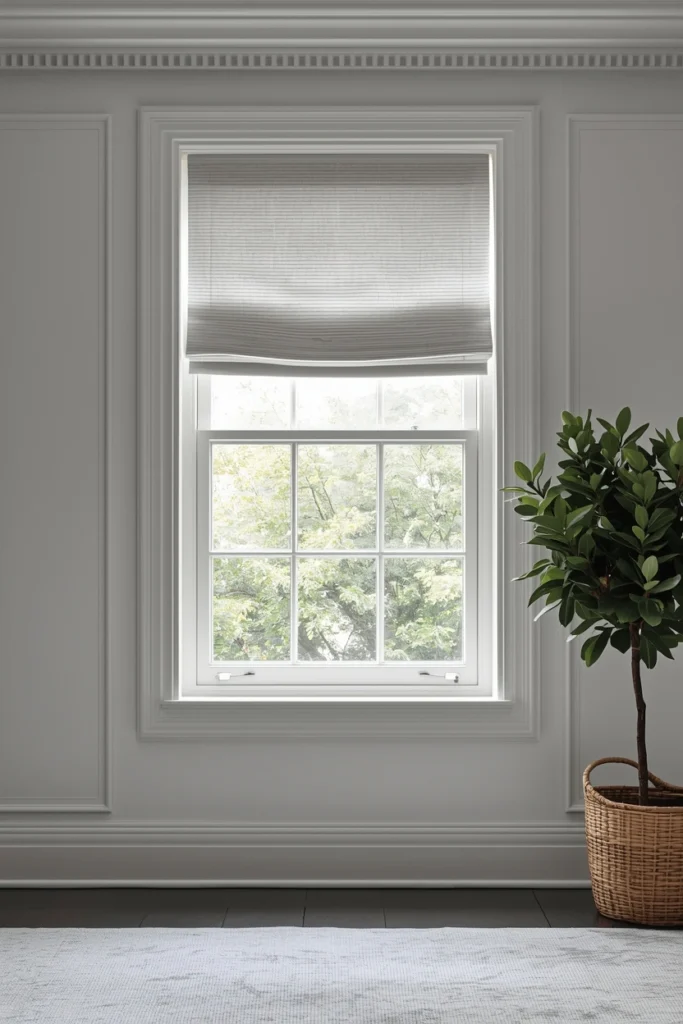
Designers increasingly favor custom-fit window treatments over standard sizes. Tailored solutions ensure proper proportions, clean lines, and a polished finish. Even simple fabrics look elevated when perfectly fitted.
Custom treatments also allow flexibility in fabric choice, length, and detailing. This trend reflects a shift toward intentional design, where quality and fit matter more than excess ornamentation.
Final Thoughts
Window treatment trends today emphasize restraint, texture, and thoughtful functionality. Designers are choosing solutions that enhance architecture, control light gracefully, and age well over time. Rather than chasing bold statements, the focus is on livable elegance and long-term comfort.
By understanding these trends, homeowners can make informed choices that elevate their interiors without unnecessary complexity. Well-chosen window treatments quietly shape how a space feels, performs, and endures.