15 Shelf Decor Ideas That Look Perfectly Styled
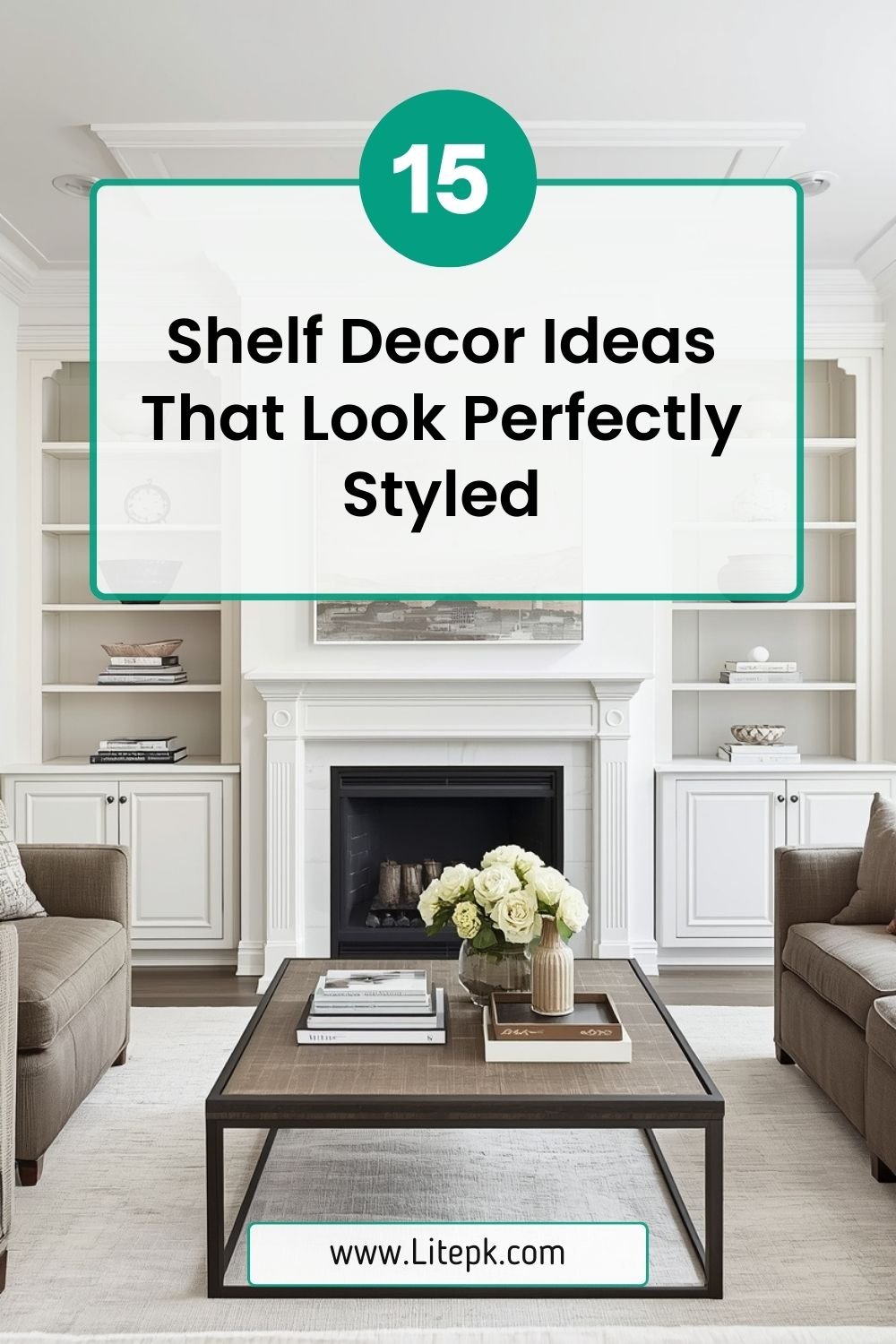
Shelves are more than simple storage solutions—they are an opportunity to tell a visual story. The right shelf decor can transform an ordinary wall into a curated focal point that feels intentional, balanced, and effortlessly styled. Whether you’re decorating built-ins, floating shelves, or a standalone bookcase, thoughtful arrangement makes all the difference.
If you’ve ever wondered how designers make shelves look polished but never cluttered, the secret lies in balance, layering, texture, and sculptural presence. In this guide, you’ll discover 15 shelf decor ideas that follow wrDIY Sculptural Decorating guidelines—focusing on proportion, negative space, contrast, and cohesive styling—so your shelves look perfectly styled every time.
1. Layered Artwork for Depth and Dimension
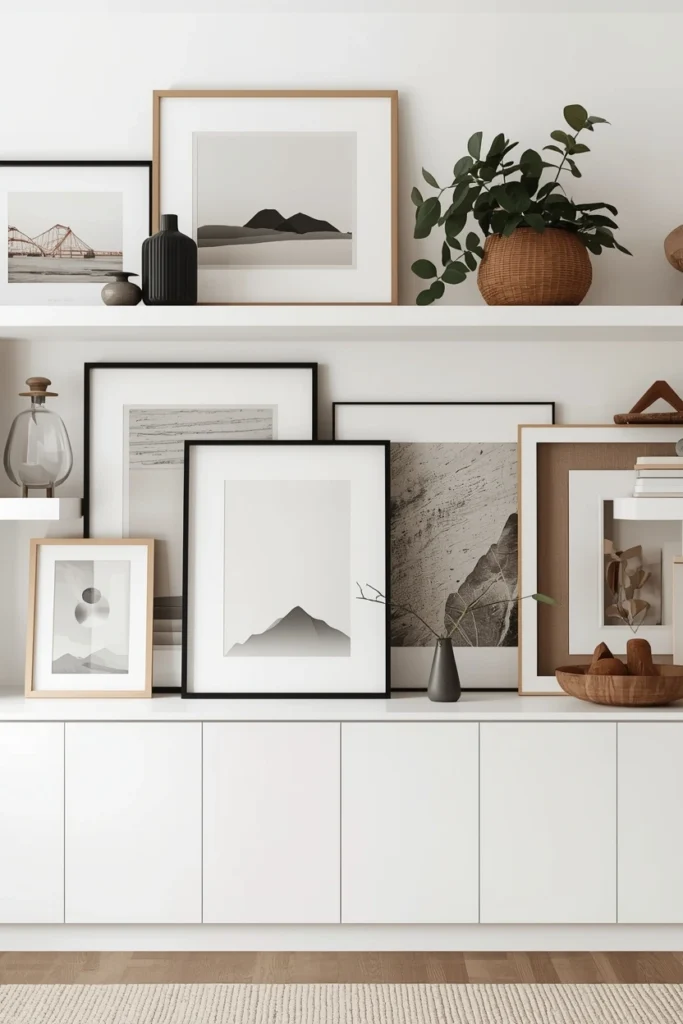
Layering artwork on shelves instantly creates depth and a collected-over-time aesthetic. Instead of hanging every frame, lean larger pieces against the wall and place smaller frames slightly in front. This approach adds dimension while maintaining flexibility. Choose a cohesive color palette to keep the look unified and avoid visual clutter. Vary frame finishes subtly—wood, black metal, or white—to introduce texture without overwhelming the composition.
To follow sculptural decorating principles, balance bold artwork with negative space. Avoid filling every inch; allow breathing room around focal pieces. Add a small decorative object or vase in front of one frame to create intentional overlap. This layered styling feels organic yet structured, making shelves look thoughtfully curated rather than randomly arranged.
2. Stacked Books with Decorative Objects
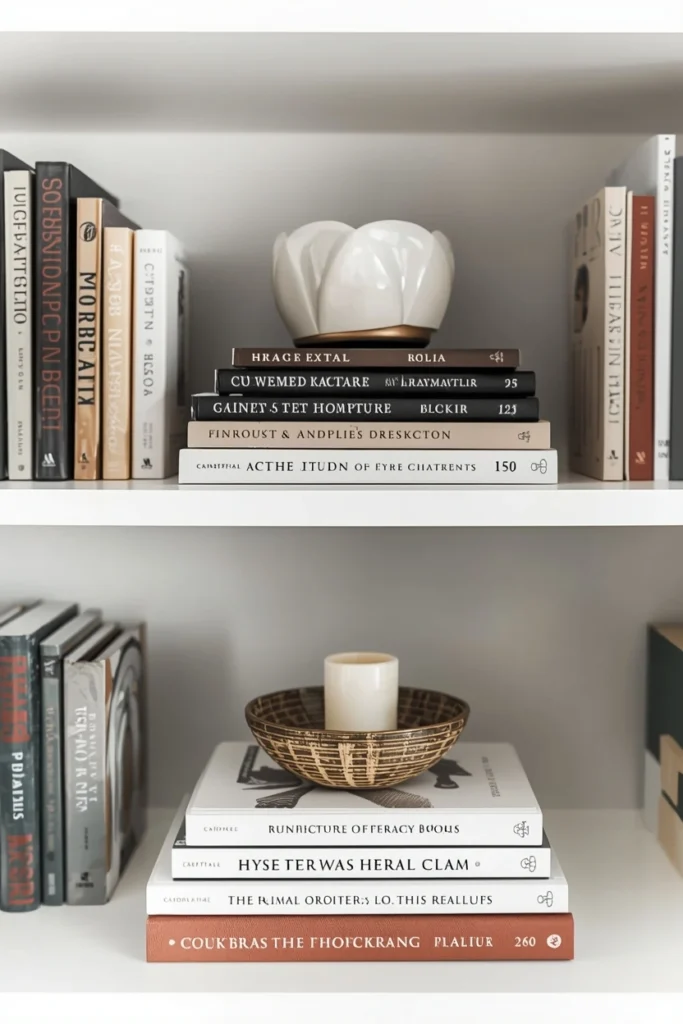
Books are foundational elements in shelf decor ideas because they provide height, structure, and personality. Stack books both vertically and horizontally to create varied levels. Horizontal stacks serve as pedestals for small sculptural objects, candles, or bowls. Choose books with coordinating spine colors for a clean aesthetic or mix tones for a more collected look.
The key is proportion. Avoid stacking too many books in one pile; three to five books per stack typically feels balanced. Place a decorative object slightly off-center on top to create movement. This interplay between structured stacks and soft decorative elements adds visual rhythm while maintaining a polished appearance.
3. Sculptural Vases as Statement Pieces
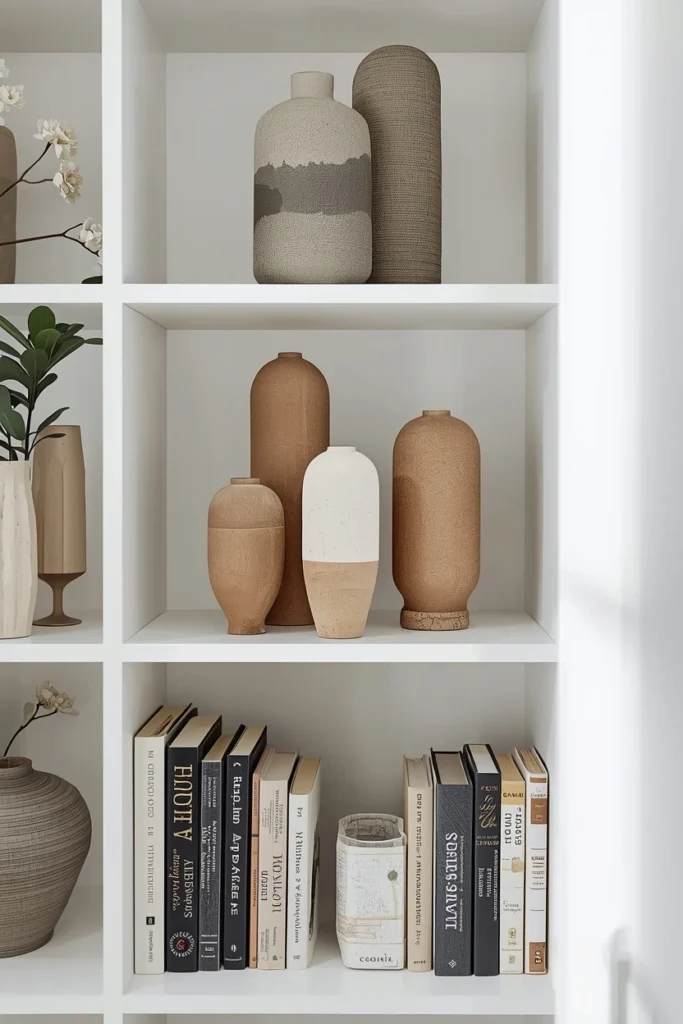
Sculptural vases bring artistic presence to shelves, even without florals. Choose vases with unique shapes—arched silhouettes, textured ceramics, or asymmetrical forms—to create focal points. Place taller vases toward the back and shorter ones in front to achieve layered depth.
When following wrDIY sculptural guidelines, think in terms of shape contrast. Pair rounded vases with angular decor items nearby to prevent monotony. Leave space around statement pieces to emphasize their form. The result is a gallery-like arrangement where each item feels intentional and visually impactful.
4. Greenery for Freshness and Movement
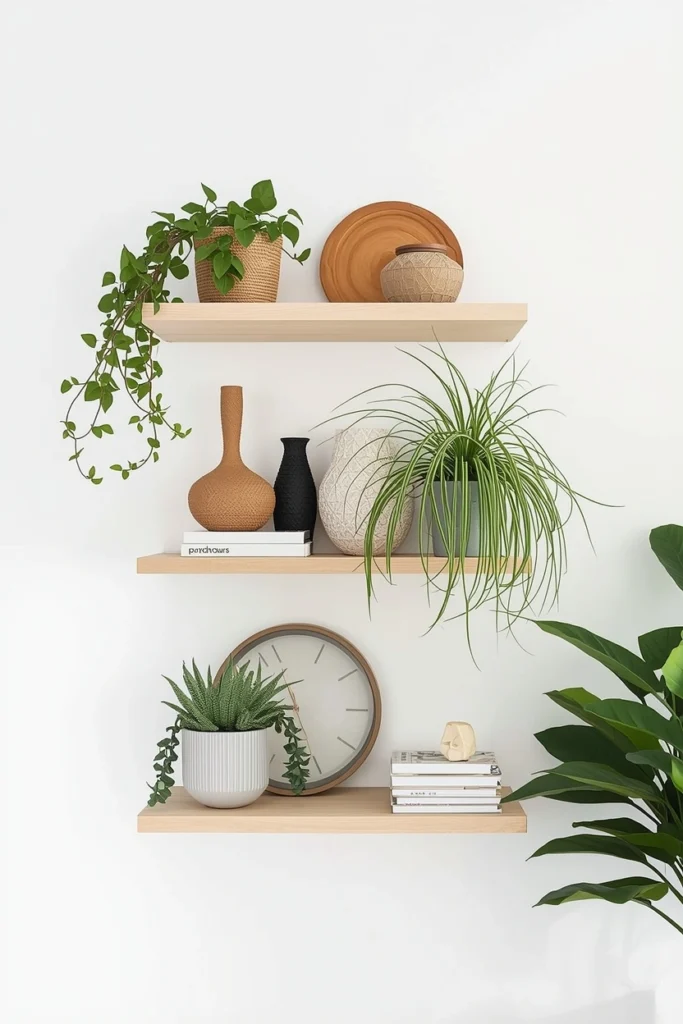
Plants instantly breathe life into shelves. Incorporate trailing plants on higher shelves to create downward movement and soften rigid lines. Small potted plants or dried botanicals add texture without overwhelming the display.
Balance is essential. Use greenery sparingly so it enhances rather than dominates the composition. Place plants asymmetrically and counterbalance them with solid decorative objects on the opposite side. This natural element introduces organic contrast against structured shelves, creating harmony between softness and structure.
5. Decorative Boxes for Stylish Storage
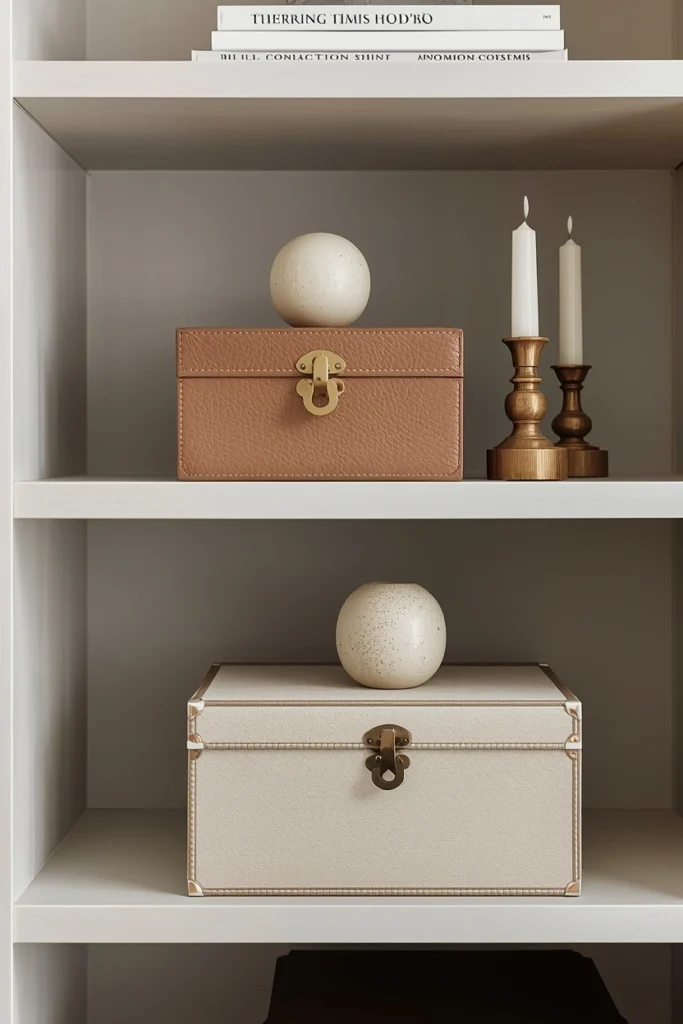
Decorative boxes combine form and function, making them a practical shelf decor idea. Use boxes in leather, linen, or wood finishes to add texture while concealing small items. Stack two boxes of varying sizes for dimension.
Keep proportions balanced by pairing boxes with lighter elements like candles or small sculptures. This prevents the shelf from feeling heavy. Incorporating hidden storage also maintains visual clarity, aligning with sculptural styling principles that emphasize intentional simplicity.
6. Mixing Textures for Visual Interest
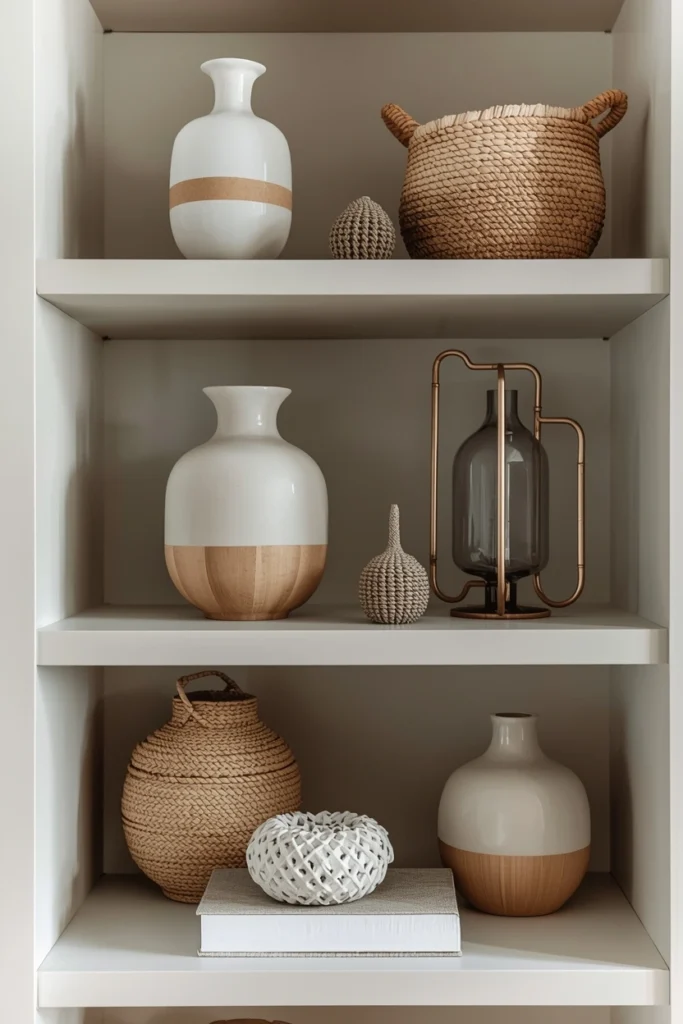
A perfectly styled shelf incorporates varied textures. Combine ceramics, glass, wood, and metal to create tactile contrast. For example, pair a smooth glass vase with a woven basket or matte ceramic sculpture.
Texture layering should feel cohesive. Stick to a consistent color story so materials complement rather than compete. This balance between contrast and unity ensures shelves appear curated and sophisticated rather than chaotic.
7. Symmetrical Styling for Classic Appeal
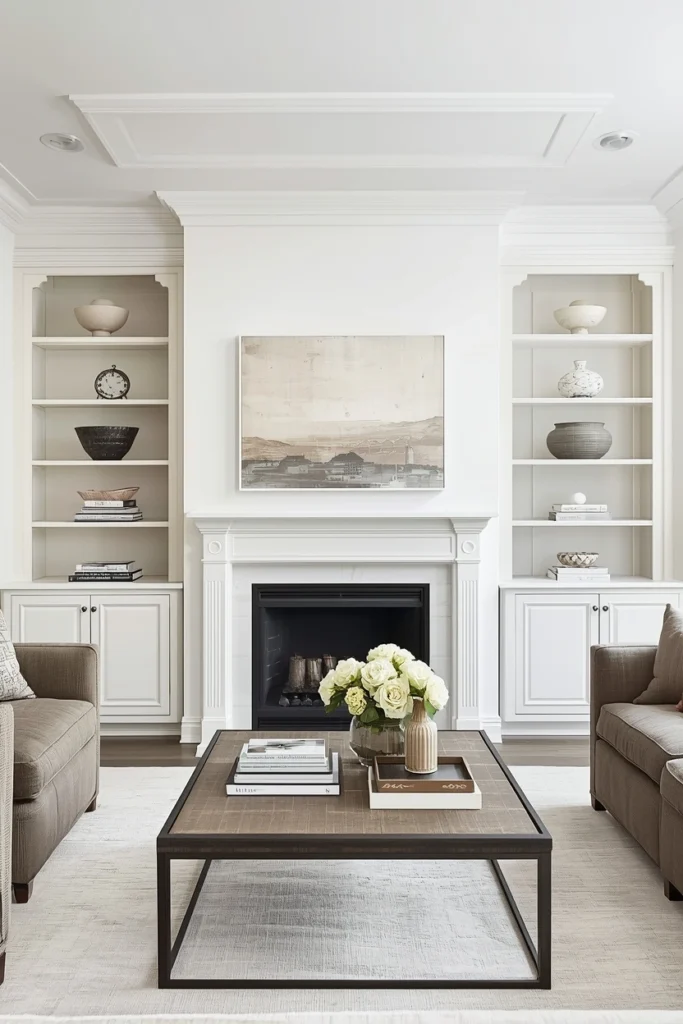
Symmetry brings a sense of order and elegance to shelves. Place matching objects on either side of a central focal point, such as identical vases or book stacks. This approach works particularly well for built-in shelving around fireplaces or media units.
To prevent symmetry from feeling rigid, vary heights slightly or introduce subtle differences in texture. The result is a refined display that feels structured yet inviting, following the principle of balanced proportion.
8. Personal Touches with Framed Photos
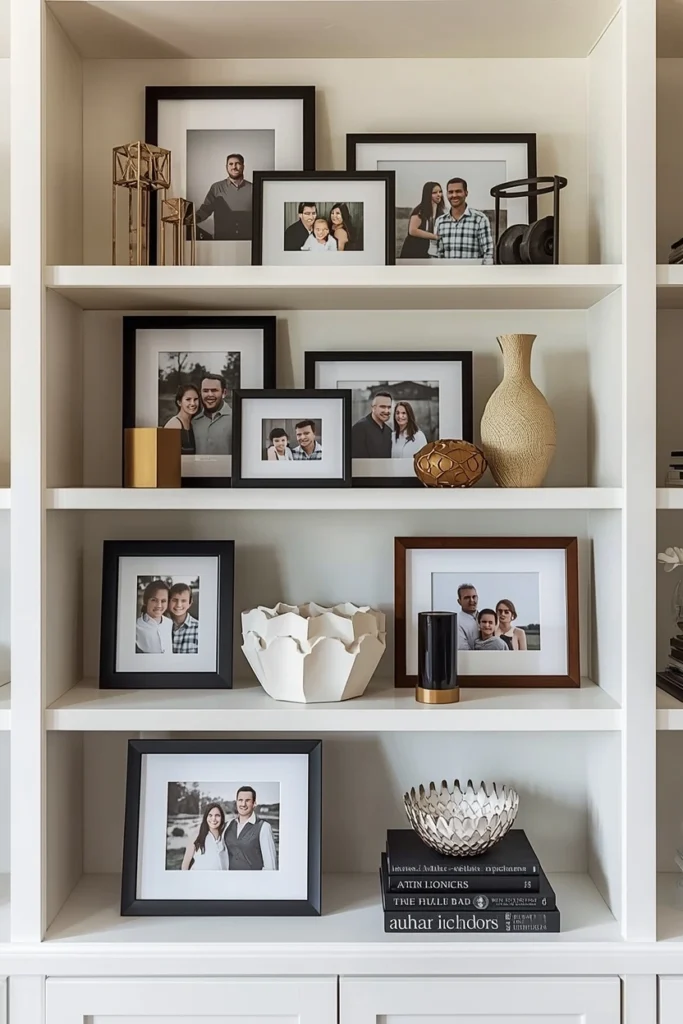
Incorporating personal photos adds warmth and authenticity. Choose frames that match your decor style—black for modern, wood for rustic, gold for classic. Keep arrangements cohesive by limiting frame finishes.
Avoid overcrowding. Select a few meaningful images and intersperse them with decorative objects. This combination of personal and sculptural elements creates emotional resonance while maintaining a polished aesthetic.
9. Minimalist Styling with Negative Space
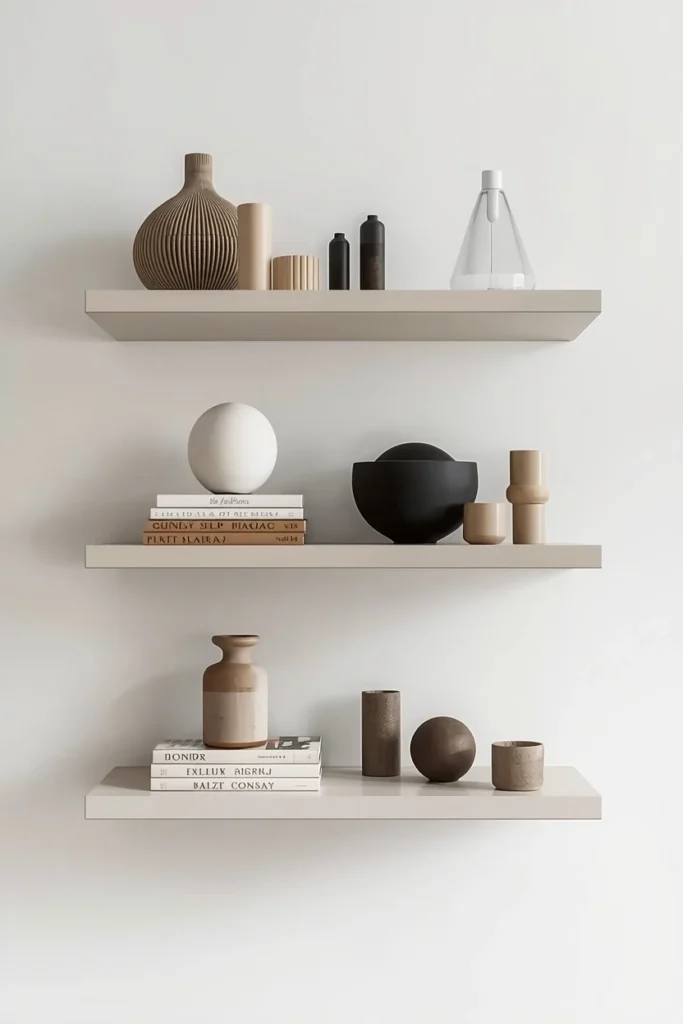
Sometimes less truly is more. Minimalist shelf decor ideas emphasize breathing room between objects. Select a few impactful pieces and allow empty space to highlight their form.
Negative space enhances sculptural elements, drawing attention to shape and proportion. Stick to a limited color palette and avoid overcrowding. This intentional restraint results in shelves that feel calm, balanced, and sophisticated.
10. Layered Lighting Elements
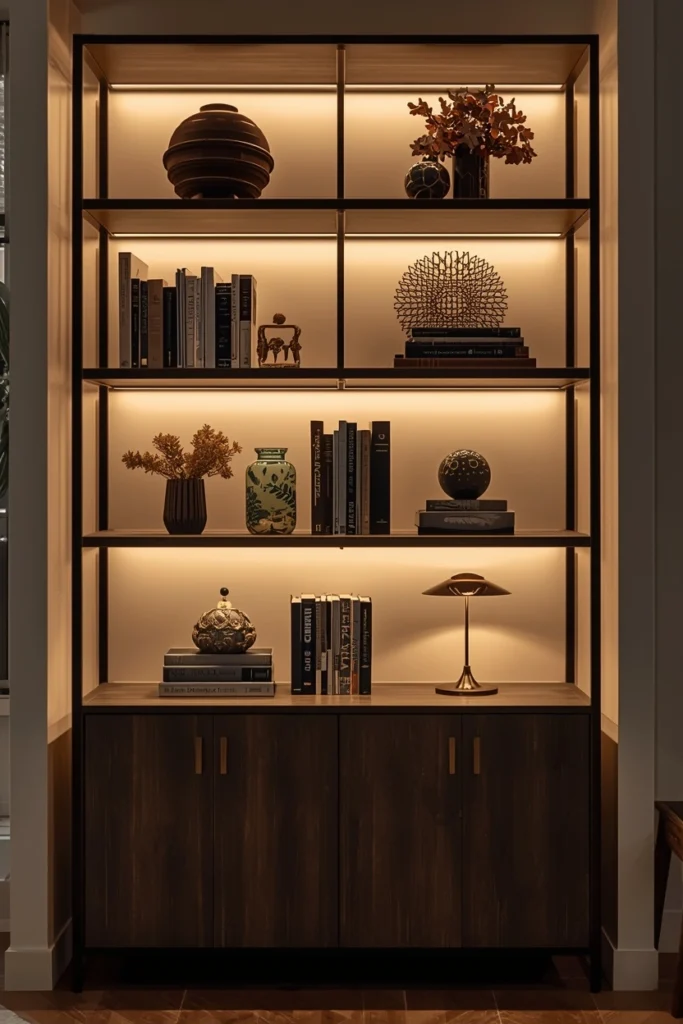
Small table lamps or LED accent lights can elevate shelf styling. Lighting adds warmth and depth while highlighting focal objects. Choose compact lamps that fit comfortably without dominating the shelf.
Balance illuminated pieces with neutral decor to prevent visual overload. Lighting introduces dimension and creates ambiance, making shelves feel integrated into the overall room design.
11. Seasonal Decor Swaps
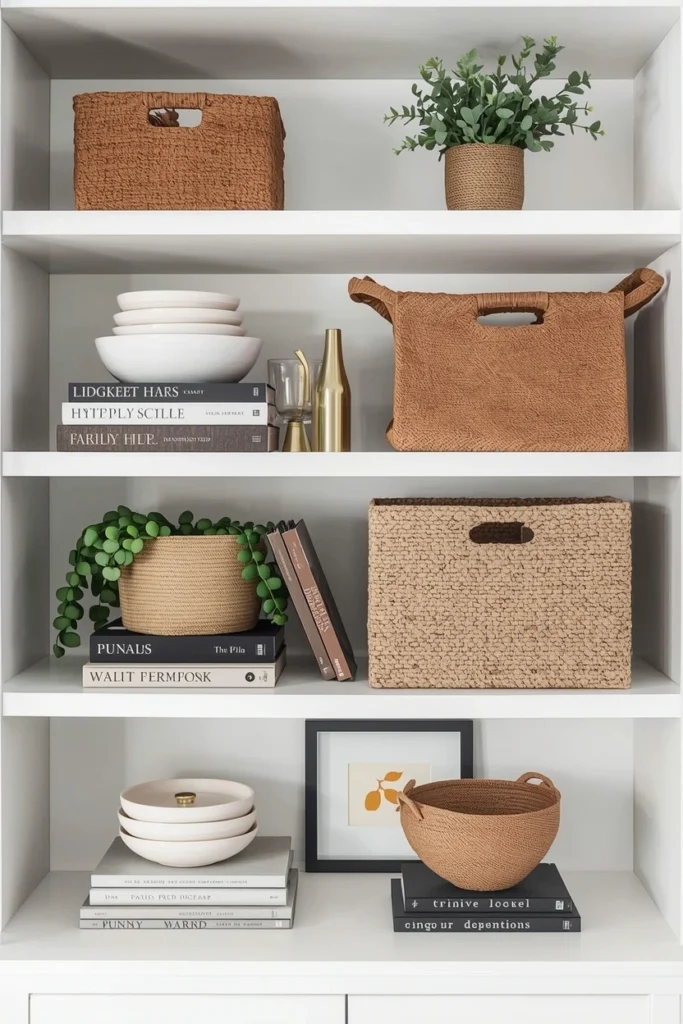
Refreshing shelves seasonally keeps your space dynamic. Swap lightweight ceramics and greenery for warmer textures like woven baskets or darker tones in cooler months.
Maintain foundational elements like books and sculptural pieces, then rotate accent items. This layered approach preserves balance while allowing flexibility. Seasonal styling ensures shelves remain visually engaging year-round.
12. Artful Object Groupings in Threes
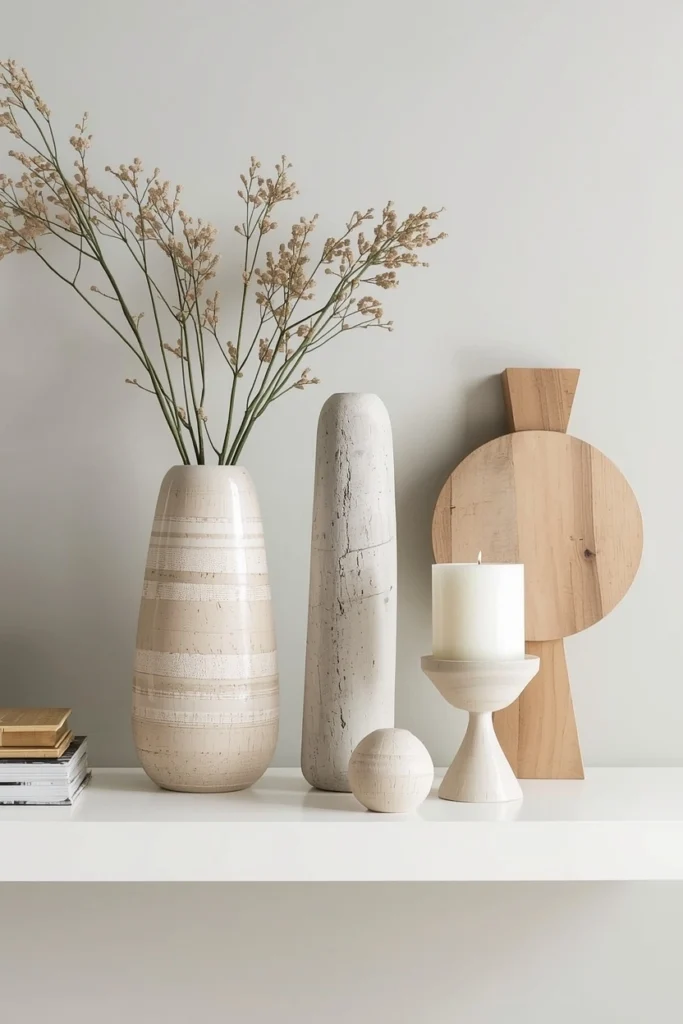
Grouping objects in odd numbers—especially threes—creates natural balance. Combine varying heights and shapes for visual interest. For example, pair a tall vase, medium sculpture, and small candle.
Maintain a cohesive color palette and vary scale for depth. This method prevents symmetry from feeling too rigid while still achieving structured harmony.
13. Mixing Vertical and Horizontal Lines
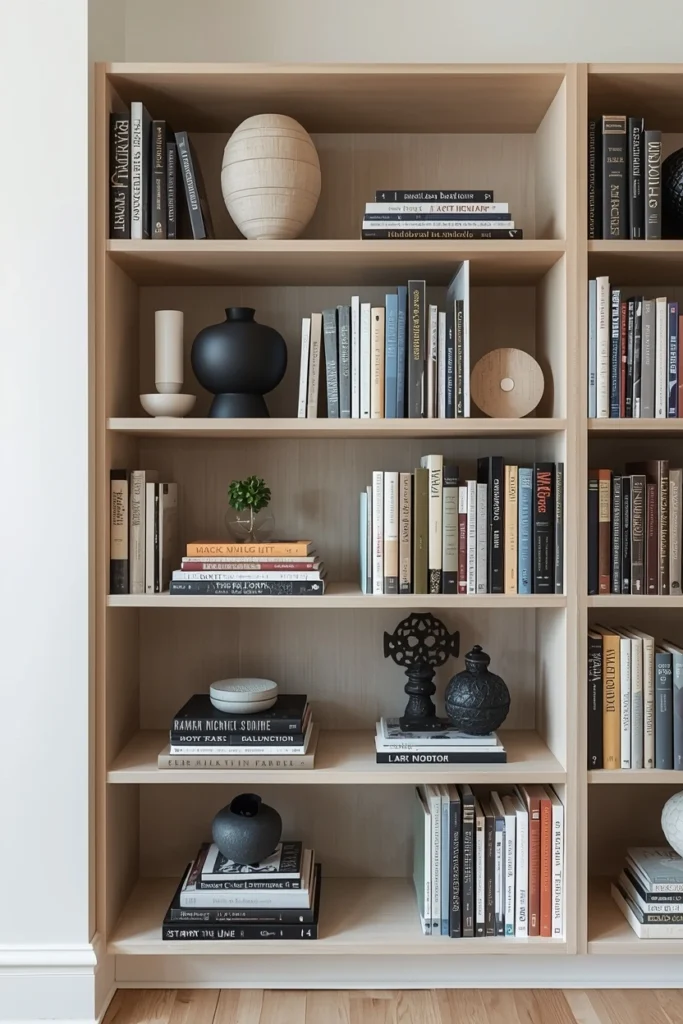
Create movement by alternating vertical book arrangements with horizontal stacks. This variation breaks monotony and adds rhythm to the shelf layout.
Incorporate tall objects near vertical stacks and low-profile decor atop horizontal ones. The interplay between directions enhances dynamic balance while maintaining cohesion.
14. Incorporating Mirrors for Depth
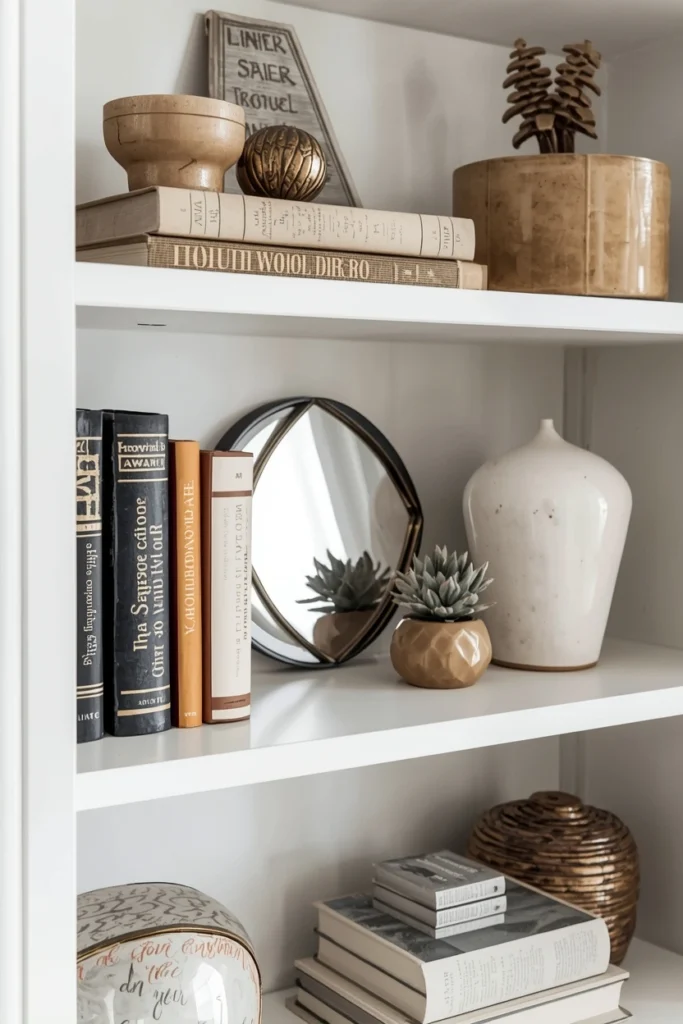
Small decorative mirrors on shelves reflect light and create the illusion of depth. Lean a mirror against the wall behind other objects to amplify brightness.
Pair mirrors with matte textures to prevent excessive shine. This subtle reflective element enhances dimension while keeping the arrangement grounded and elegant.
15. Statement Sculptures as Focal Points
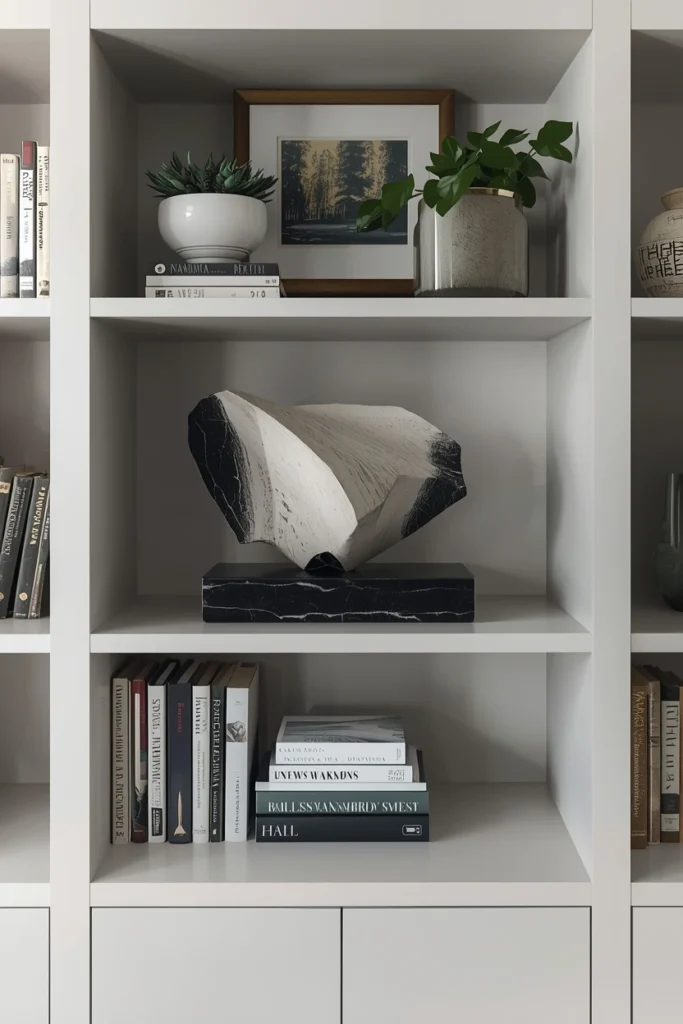
Every perfectly styled shelf benefits from a standout piece. A bold sculpture anchors the arrangement and draws the eye. Choose a piece that complements your color scheme and scale.
Surround statement sculptures with understated decor to maintain balance. Avoid competing focal points on the same shelf. This intentional hierarchy ensures a refined, gallery-inspired aesthetic.
Conclusion
Perfectly styled shelves combine balance, layering, proportion, and texture. By following these shelf decor ideas and applying sculptural decorating principles, you can create displays that feel curated yet effortless. Focus on intentional placement, cohesive color palettes, and negative space to transform ordinary shelves into stunning design features.