
11 Japandi Living Room Ideas With Serene Balance
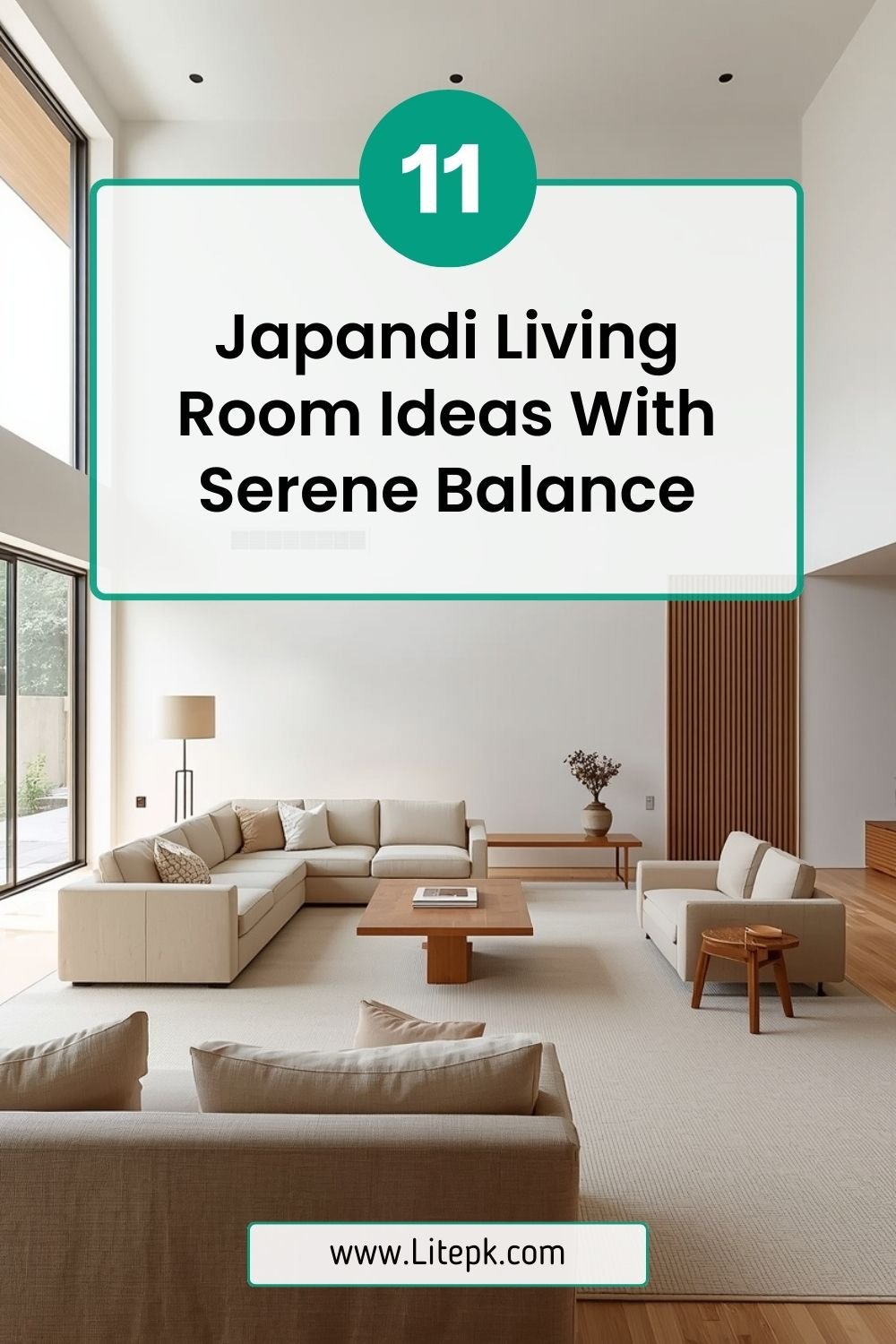
Creating a home that feels peaceful, intentional, and beautifully minimal is no longer just a design trend — it has become a lifestyle aspiration. Japandi design, a fusion of Japanese simplicity and Scandinavian warmth, offers the perfect balance between functionality and soulful aesthetics.
If you are searching for Japandi living room ideas that feel timeless, calming, and visually elegant, this guide will help you craft a space that nurtures both comfort and mindfulness. From sculptural decor accents to warm neutral palettes, these ideas will inspire a harmonious transformation.
1. Neutral Layered Color Palette
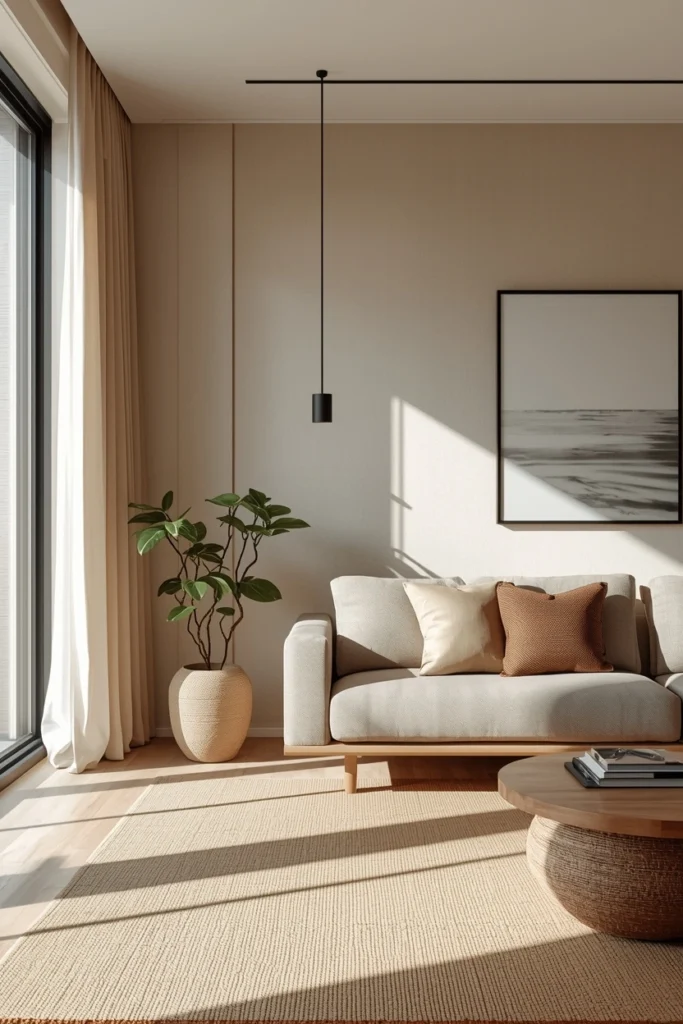
A Japandi living room begins with a carefully curated neutral palette that creates visual calmness while adding depth. Think warm beige, soft taupe, muted greys, and creamy whites layered thoughtfully to avoid flatness. This layering technique builds subtle contrast and allows natural light to interact beautifully with the surfaces, creating an ever-changing serene atmosphere throughout the day.
Instead of stark monochrome schemes, Japandi interiors embrace warmth through tonal variation. Textured walls, linen upholstery, and light wooden finishes all contribute to a balanced environment. By focusing on understated hues, you create a space that feels expansive, grounded, and emotionally comforting.
2. Sculptural Wooden Furniture
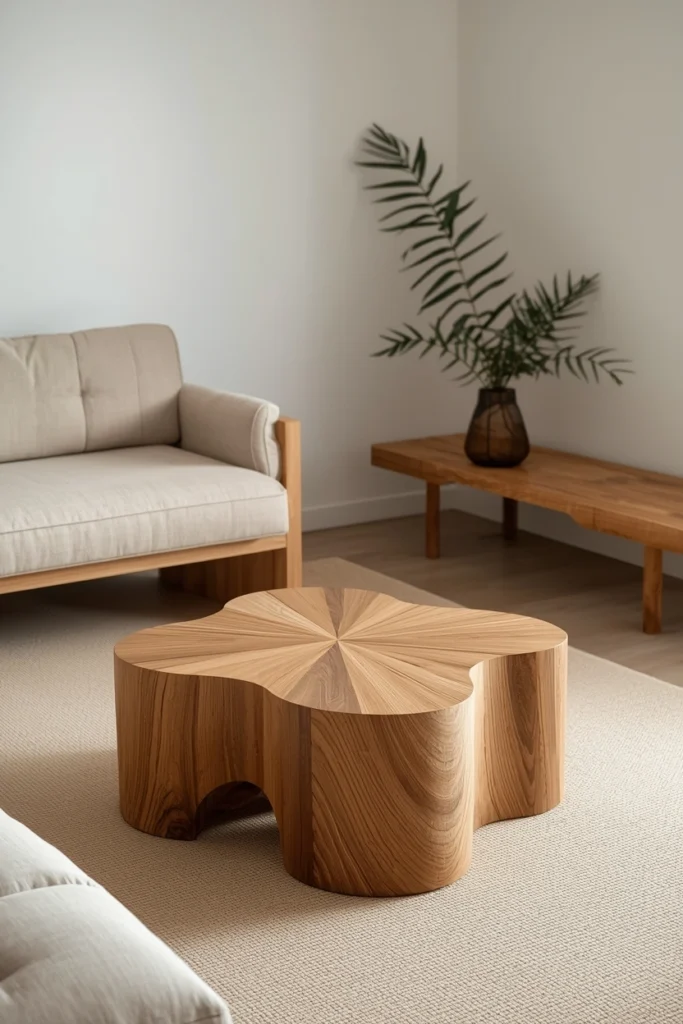
Sculptural furniture pieces define Japandi interiors by combining craftsmanship with artistic form. A coffee table with curved edges or a low wooden bench with organic lines can act as both functional and aesthetic anchors. These pieces embody simplicity while showcasing refined design intention, reinforcing the philosophy of mindful living.
Hand-finished wooden furniture introduces warmth that softens minimal spaces. Opt for pieces made from oak, ash, or walnut with visible grain patterns. These tactile elements enrich the sensory experience and create visual rhythm without overwhelming the room.
3. Low Profile Seating Arrangement
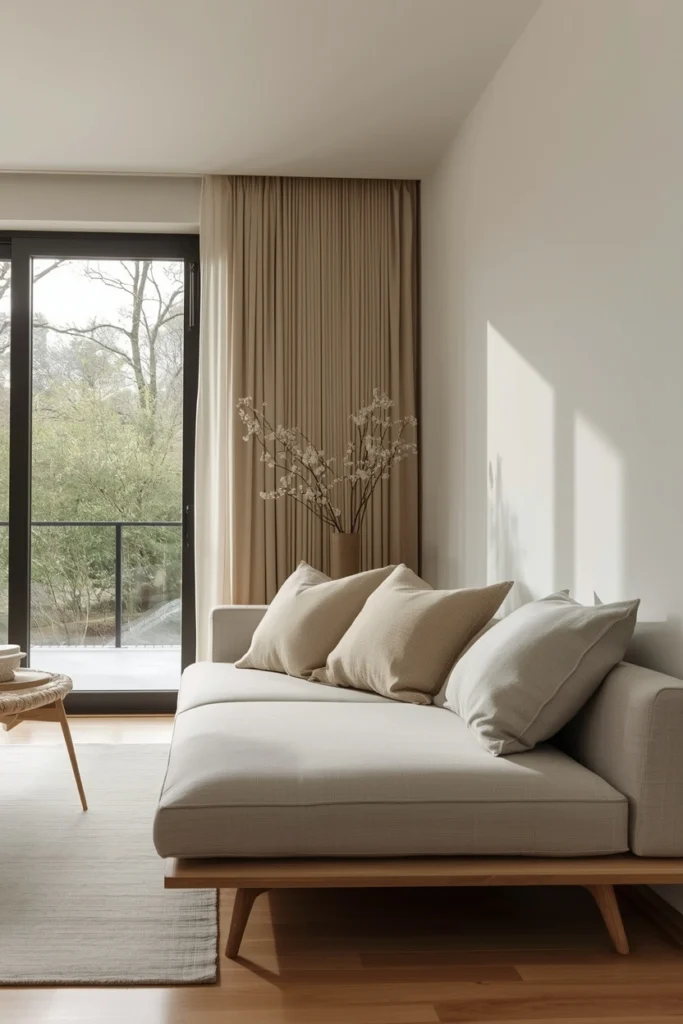
Low seating is deeply rooted in Japanese design principles and helps establish an intimate, grounded environment. A low-height sofa or floor-level lounge chairs visually expand the room while encouraging relaxed, mindful living. This arrangement naturally creates a calm visual flow and promotes human connection.
When paired with soft Scandinavian textiles, low seating feels both modern and inviting. Choose cushions in natural fabrics such as cotton, wool, or linen to maintain tactile comfort. This design approach ensures the living room feels open, breathable, and deeply tranquil.
4. Textured Natural Fabrics
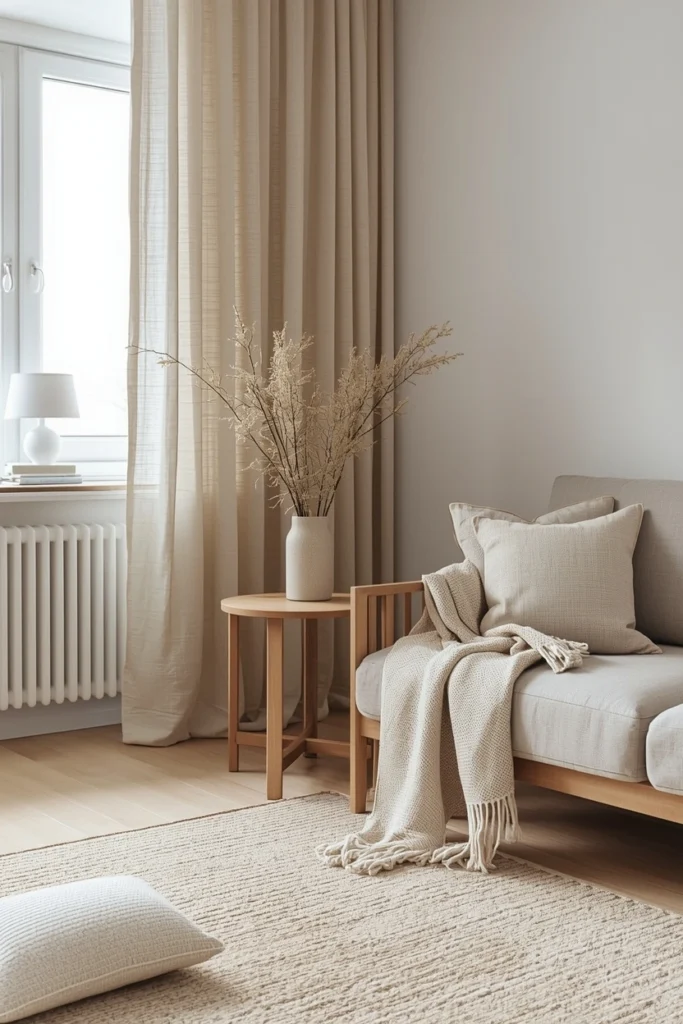
Texture plays a vital role in Japandi living room ideas, adding warmth without visual clutter. Layering natural fabrics like linen curtains, wool throws, and cotton rugs creates softness that balances minimalist furniture silhouettes. These tactile surfaces add depth while preserving simplicity.
The key lies in subtle contrast. Combining smooth wooden finishes with coarse textiles produces a harmonious interplay that feels organic and thoughtfully curated. This sensory richness transforms a minimal room into a nurturing living environment.
5. Minimalist Statement Lighting
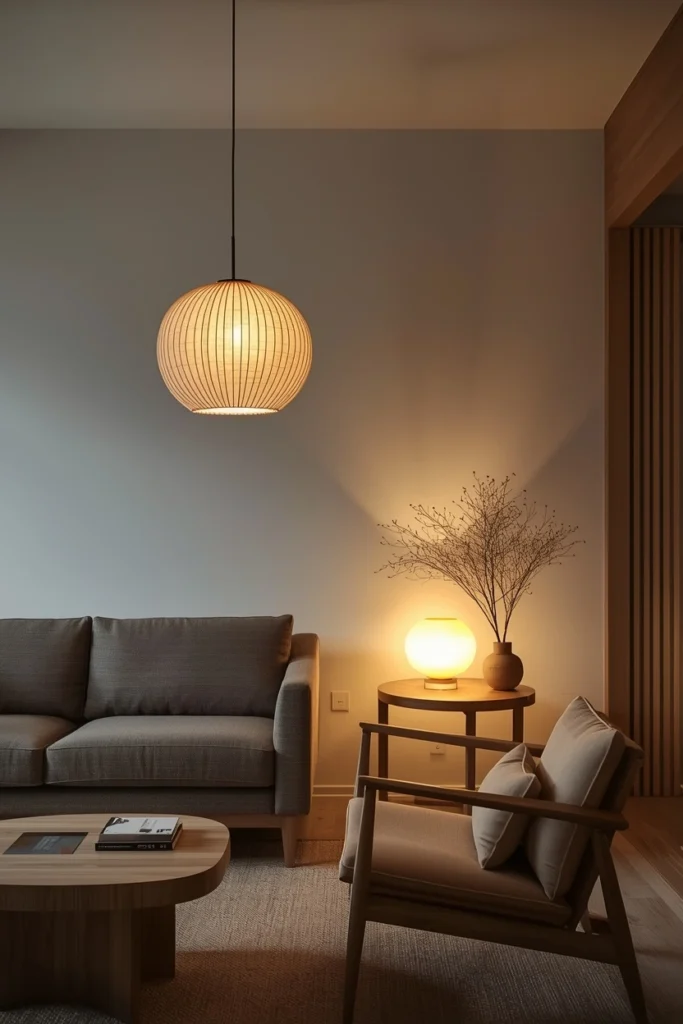
Lighting in Japandi interiors is both functional and sculptural. A single statement pendant light with organic curves or handcrafted paper texture can elevate the entire space. The goal is to introduce visual interest without compromising simplicity.
Soft diffused lighting enhances the serene atmosphere and reduces harsh contrasts. Opt for warm light tones to create a cozy ambiance that complements natural materials. Thoughtful lighting placement ensures the living room feels balanced and inviting.
6. Indoor Nature Integration
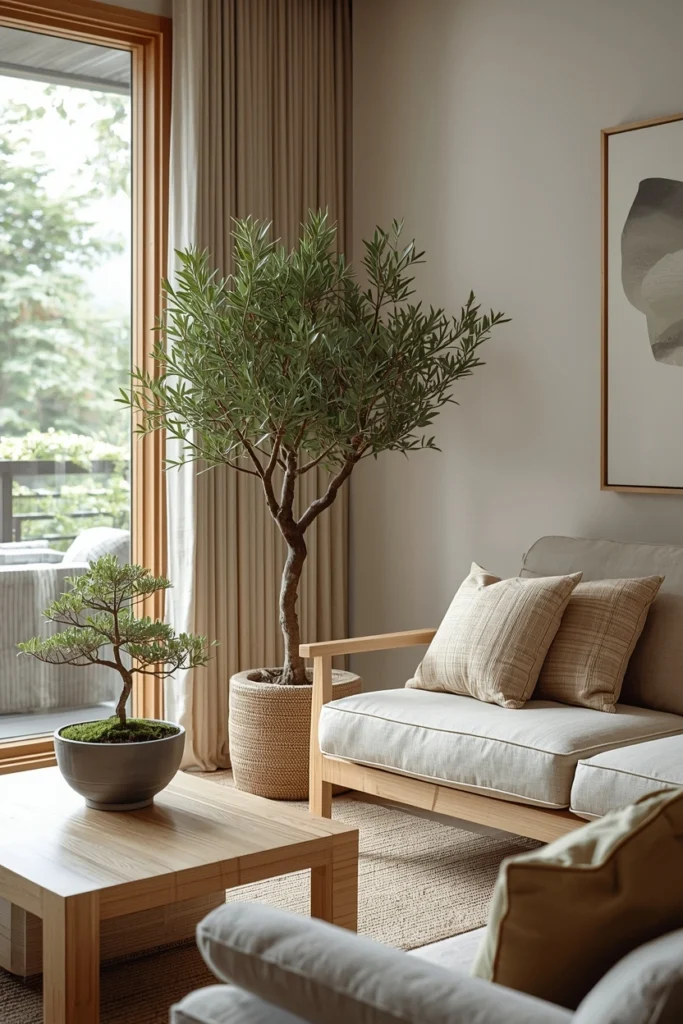
Japandi design celebrates the connection between indoor spaces and nature. Introducing plants such as bonsai, olive trees, or minimal foliage arrangements adds vitality while maintaining visual restraint. These elements bring subtle movement and life into the room.
Natural greenery softens geometric lines and enhances emotional well-being. The placement should feel intentional rather than decorative, reinforcing the philosophy of mindful living and spatial harmony.
7. Functional Minimal Decor
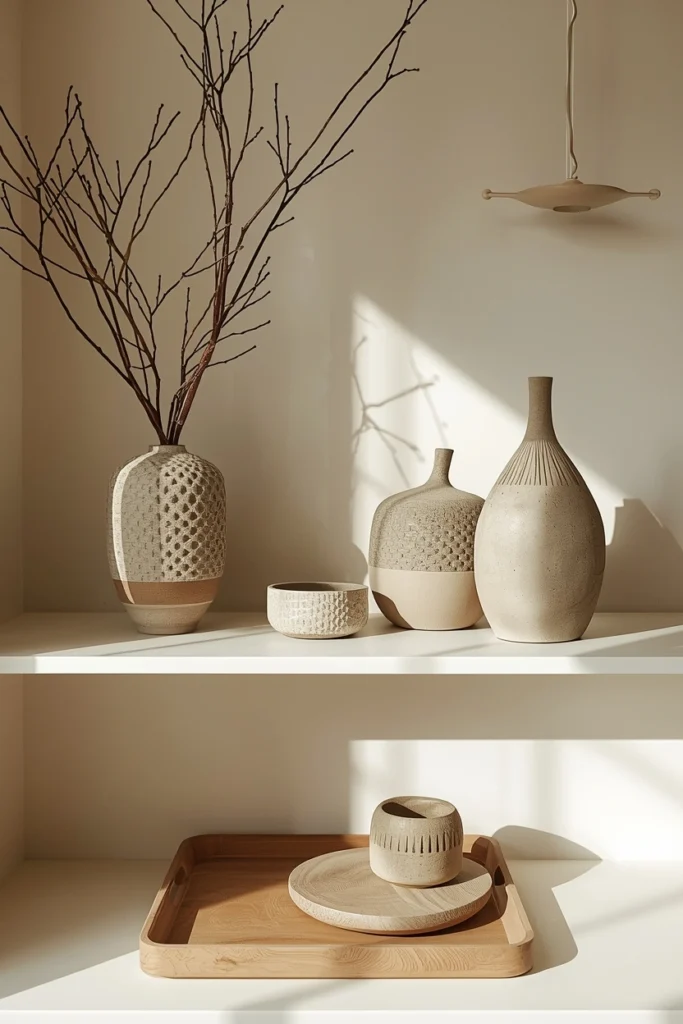
Decor in Japandi interiors must serve a purpose while maintaining aesthetic clarity. Sculptural vases, handcrafted ceramics, and textured trays are perfect additions that elevate visual interest without creating clutter.
The principle of “less but better” defines decor selection. Each object should contribute to the narrative of calmness and authenticity. By focusing on quality over quantity, the space achieves timeless elegance.
8. Warm Wood Flooring
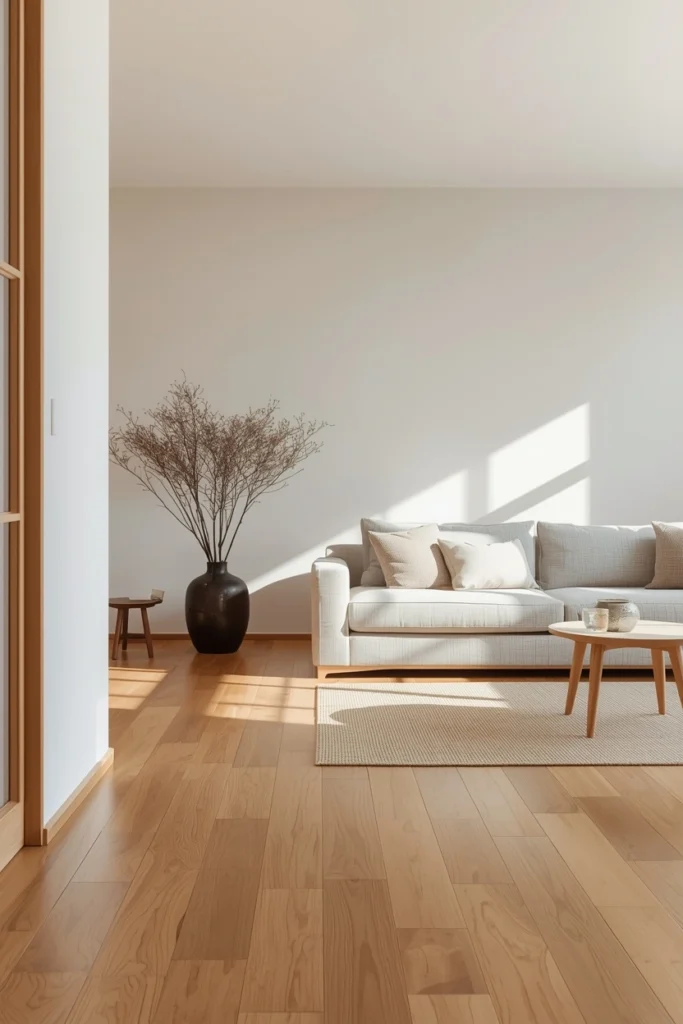
Flooring sets the foundational tone for a Japandi living room. Warm wooden floors create continuity and visually anchor the space. Light to medium wood tones are preferred to maintain brightness and natural warmth.
When paired with minimal rugs or tatami-inspired textures, wooden flooring enhances spatial harmony. This design choice ensures the room feels cohesive and grounded while preserving minimalist aesthetics.
9. Balanced Open Space Layout
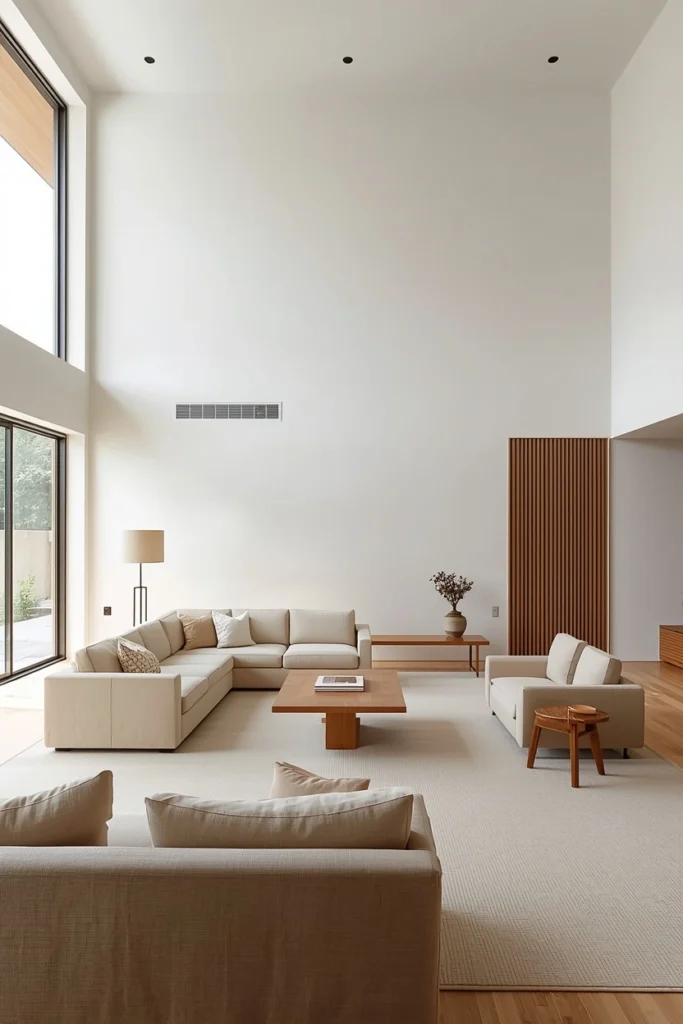
Japandi interiors prioritize breathing space. Avoid overcrowding furniture and allow negative space to enhance visual clarity. This openness creates a sense of calm and allows architectural elements to shine.
An uncluttered layout improves functionality and emotional comfort. By strategically arranging furniture, you encourage fluid movement and create a serene, thoughtfully curated environment.
10. Handmade Artistic Accents
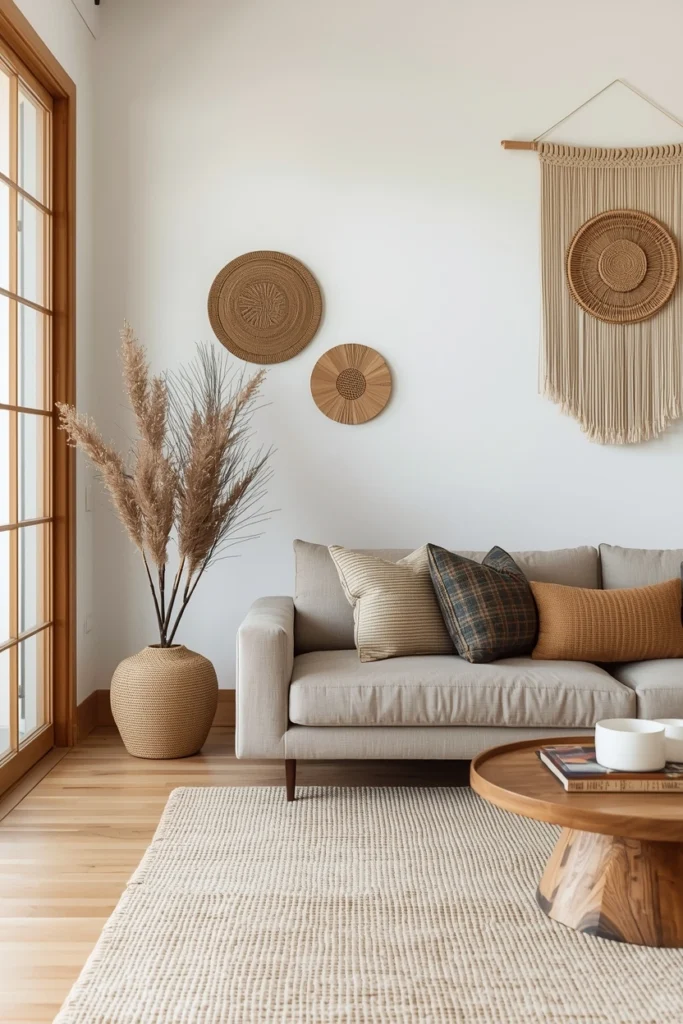
Handcrafted elements add authenticity and warmth to Japandi living rooms. Artisanal pottery, woven wall hangings, or hand-carved wooden pieces introduce cultural richness while maintaining minimalism.
These accents reflect the philosophy of wabi-sabi — appreciating imperfection and natural beauty. The presence of handmade decor fosters emotional connection and storytelling within the space.
11. Serene Monochrome Art Pieces
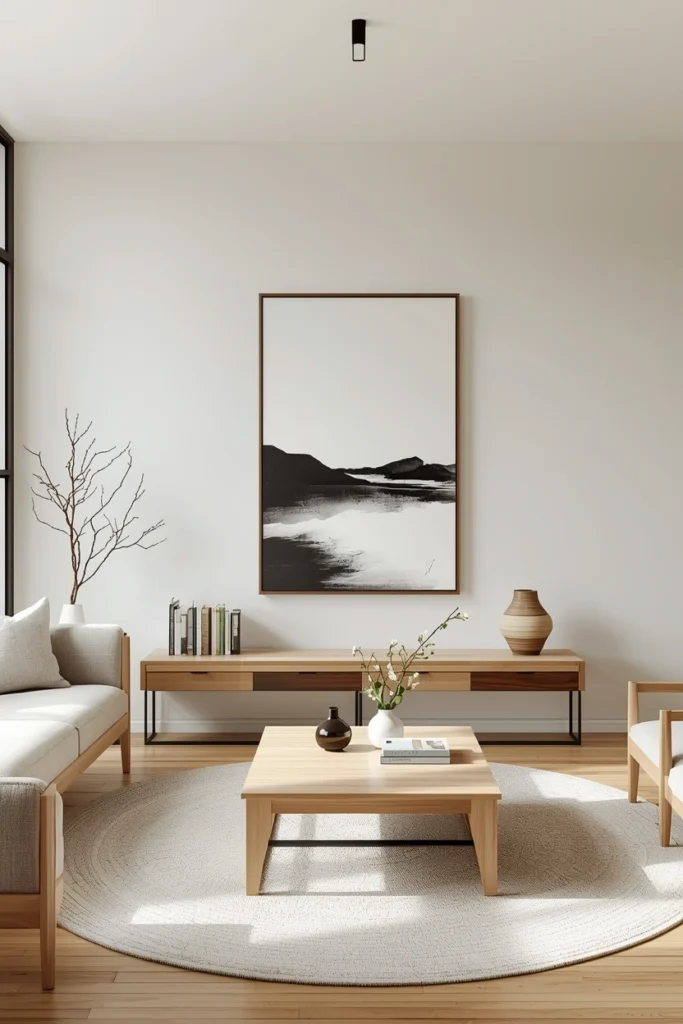
Minimal monochrome artwork can subtly enhance a Japandi living room without overwhelming its simplicity. Black ink abstract art or soft grayscale landscapes provide visual grounding and artistic sophistication.
Artwork should complement rather than dominate the space. Framing choices in natural wood or thin black metal maintain design harmony and reinforce the serene aesthetic narrative.
Conclusion
Japandi living room ideas offer more than visual appeal — they cultivate an environment of mindfulness, warmth, and intentional living. By merging Scandinavian comfort with Japanese minimalism, this design philosophy creates spaces that nurture both emotional well-being and aesthetic satisfaction.
Through sculptural decor, natural textures, and balanced layouts, you can transform your living room into a serene sanctuary. The essence of Japandi lies in thoughtful simplicity, where every element contributes to harmony and timeless beauty.