
12 Hidden Laundry Room Design Ideas That Look Seamless

Creating a functional laundry space doesn’t mean sacrificing style or flow in your home. In fact, the most impressive homes today feature laundry areas that are practically invisible. When designed thoughtfully, these spaces blend seamlessly into kitchens, hallways, bathrooms, and even bedrooms without disrupting the overall aesthetic.
If you’re looking to maximize space while maintaining a clean, cohesive look, these Hidden Laundry Room Design Ideas will inspire you to rethink how your laundry area fits into your home. From concealed cabinetry to multifunctional furniture solutions, each concept focuses on blending practicality with sculptural, intentional design — ensuring your laundry zone feels like a natural extension of your living space.
1. Behind Floor-to-Ceiling Cabinetry
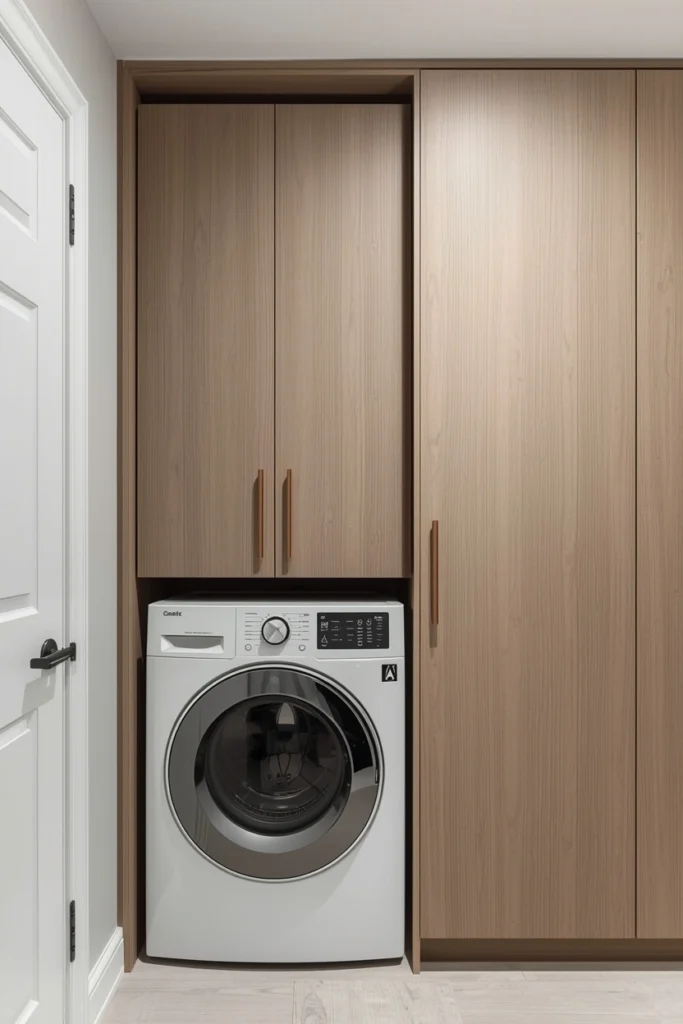
One of the most effective Hidden Laundry Room Design Ideas is concealing your washer and dryer behind full-height cabinetry. Custom cabinets that match your kitchen or hallway finishes create a seamless wall appearance, making the appliances virtually disappear when not in use. Opt for flat-panel or handleless doors to maintain a streamlined aesthetic. Soft-close hinges and integrated ventilation ensure both functionality and visual harmony.
This approach works particularly well in open-concept homes where visual clutter can disrupt the flow. When closed, the cabinetry reads as architectural millwork rather than a utility space. To elevate the sculptural quality, consider matching the cabinet finish to surrounding walls or using subtle wood grain textures that complement the room’s overall design palette.
2. Pocket Doors for Discreet Access
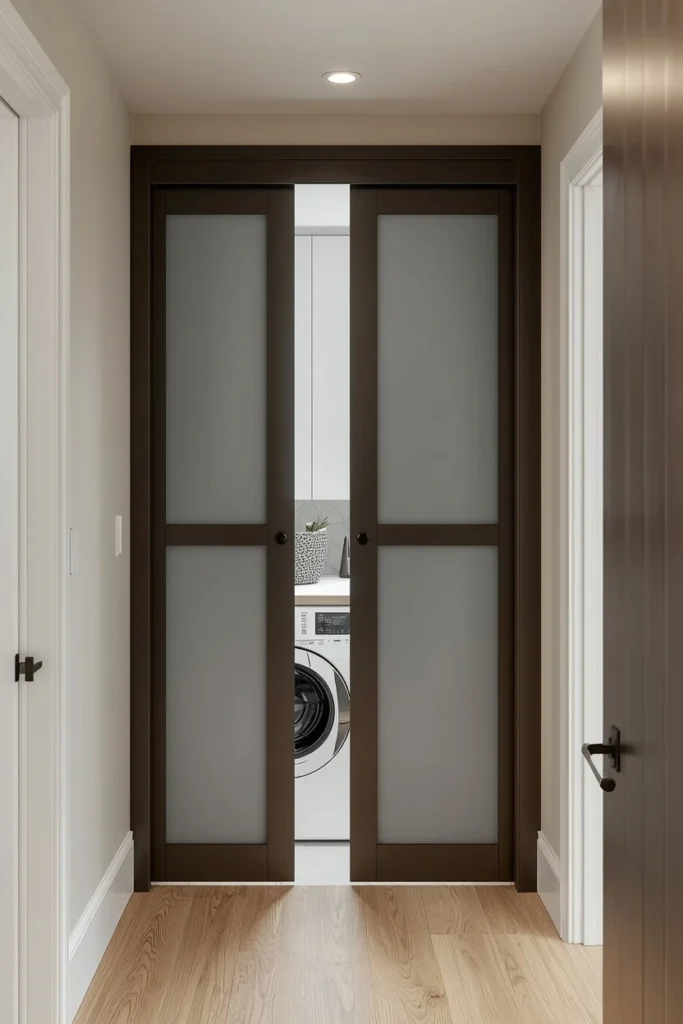
Pocket doors offer a clever way to hide a compact laundry area without sacrificing accessibility. Sliding effortlessly into the wall cavity, they eliminate the need for door clearance and allow the space to remain open when needed. Choose doors finished in the same color as the wall to maintain visual continuity.
This Hidden Laundry Room Design Idea works beautifully in small apartments or transitional spaces like hallways. When closed, the door blends seamlessly, making the laundry zone feel like part of the architectural structure rather than an afterthought. Frosted glass panels can also add subtle sophistication while diffusing light into the concealed area.
3. Laundry Closet in the Kitchen
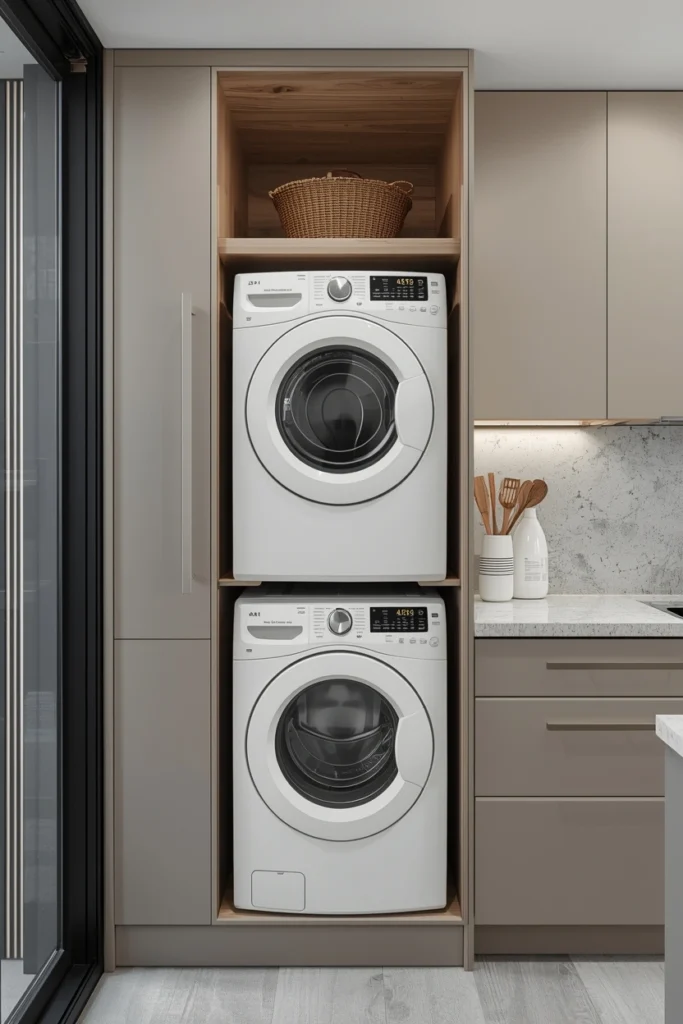
Integrating a laundry closet within the kitchen allows for maximum efficiency without disrupting design flow. By using cabinetry that matches kitchen finishes, the washer and dryer become indistinguishable from pantry storage. Vertical stacking units help maintain a compact footprint.
This solution is especially practical in urban homes where space is limited. With careful material selection, such as matte cabinetry or integrated handles, the laundry area becomes part of the sculptural kitchen composition. Add interior lighting and slim shelving for detergents to ensure organization remains effortless and visually calm.
4. Hidden Under Staircase Laundry
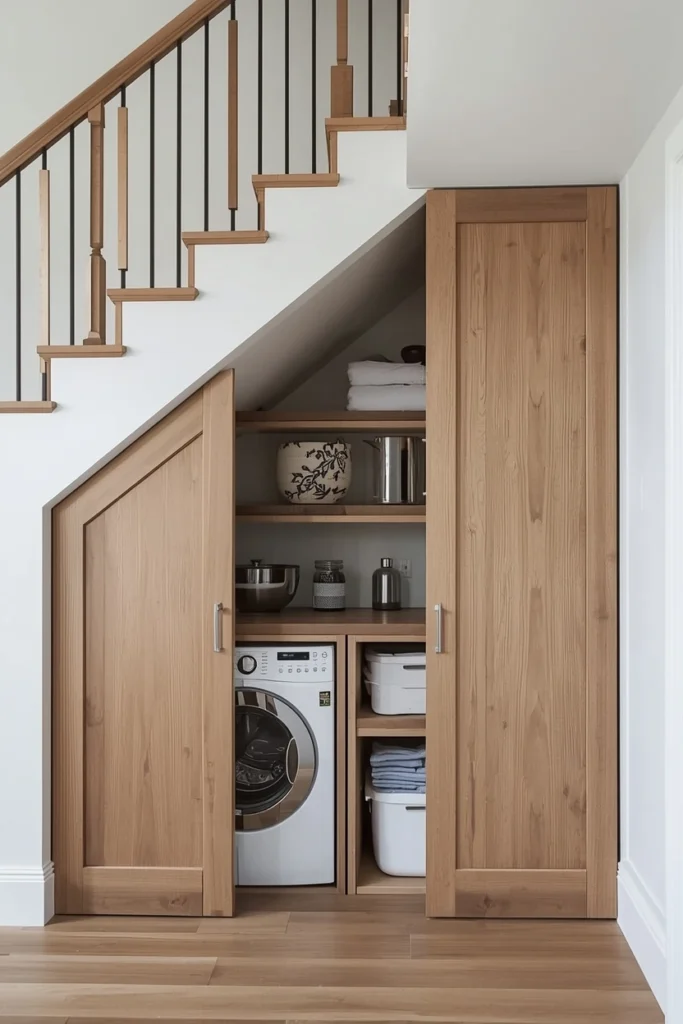
The unused space beneath a staircase can be transformed into a concealed laundry nook. Custom doors or sliding panels can hide the area completely when not in use. This makes the space both practical and architecturally efficient.
By incorporating built-in shelves and tailored storage compartments, the under-stair laundry becomes highly functional without drawing attention. Matching the door material to the staircase finish enhances the seamless look. This Hidden Laundry Room Design Idea turns overlooked square footage into a purposeful, hidden feature.
5. Hidden Laundry in a Bathroom Vanity Extension
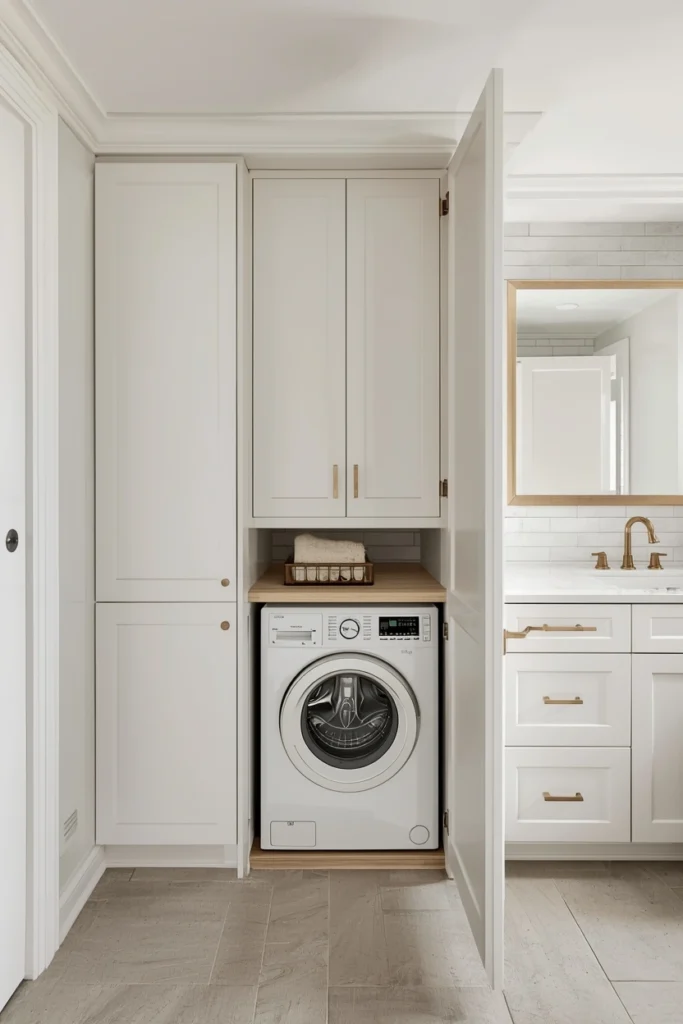
Extending a bathroom vanity to conceal a compact washer and dryer creates a seamless, spa-like appearance. Cabinet fronts that mirror the vanity design ensure uniformity. This is ideal for smaller homes where combining functions is essential.
Ventilation and moisture-resistant materials are key to maintaining durability. By aligning countertop materials and hardware finishes, the concealed laundry becomes part of the bathroom’s sculptural composition. This approach keeps the room visually calm while enhancing practicality.
6. Paneled Appliance Integration
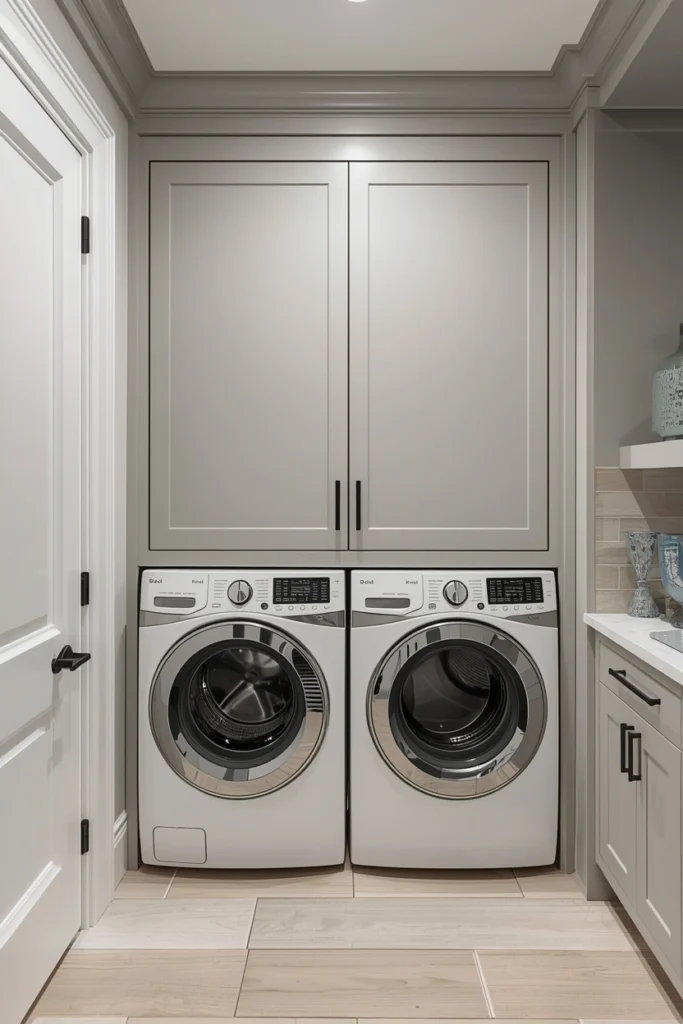
Using custom panels that attach directly to the washer and dryer doors creates a built-in effect. This method mirrors integrated refrigerators and dishwashers, ensuring appliances visually blend with surrounding cabinetry.
This Hidden Laundry Room Design Idea is perfect for high-end interiors aiming for uninterrupted lines. The consistent material palette maintains architectural integrity. With concealed hinges and flush finishes, the laundry zone feels intentional rather than utilitarian.
7. Laundry Behind a Sliding Barn Door
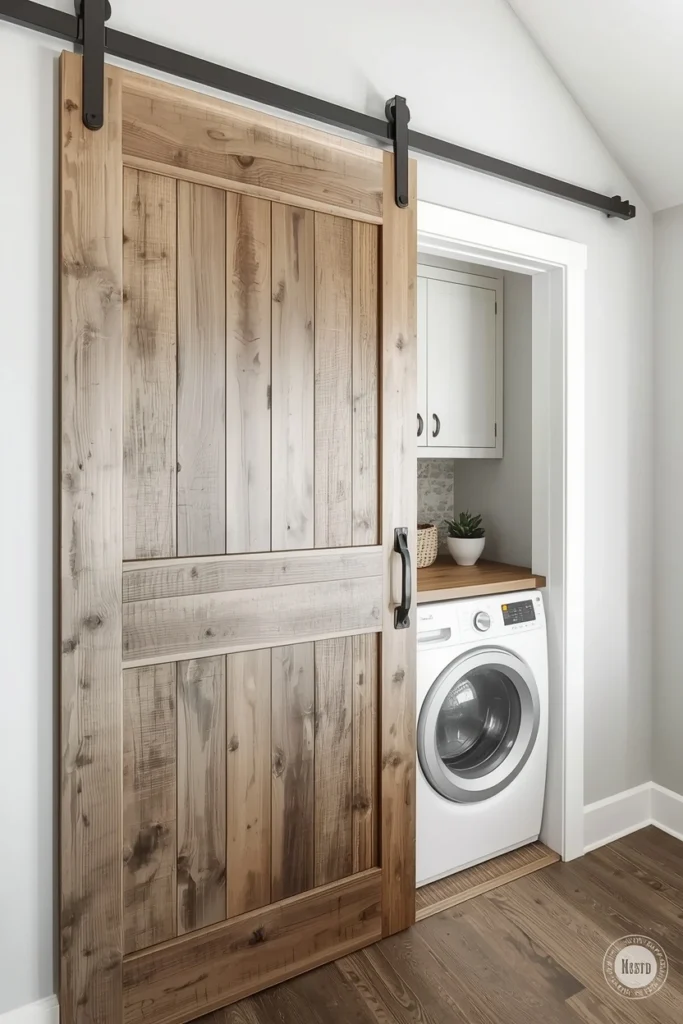
A sliding barn door adds character while concealing a laundry nook. When closed, it becomes a decorative design feature; when open, it provides easy access. Choose materials that complement the room’s style — reclaimed wood for rustic homes or painted finishes for modern spaces.
The barn door acts as both functional divider and sculptural accent. This Hidden Laundry Room Design Idea works well in farmhouse, industrial, or transitional interiors where texture and movement enhance visual appeal.
8. Hallway Laundry Wall Integration
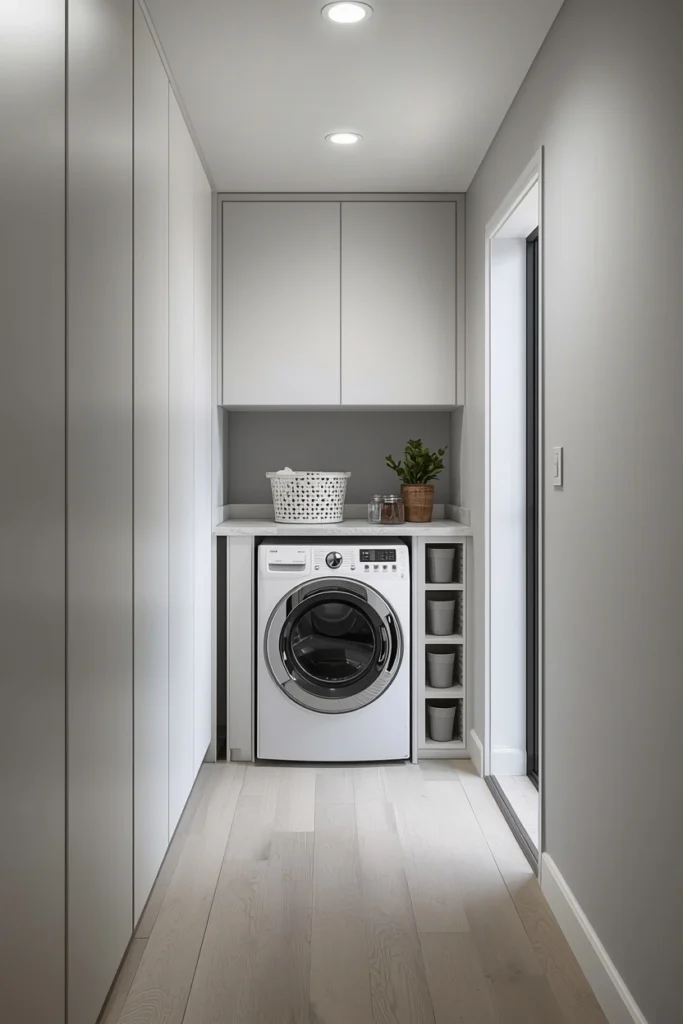
Transform a hallway wall into a concealed laundry unit by embedding appliances behind flush cabinetry. When closed, the wall appears uniform and uninterrupted. This design maintains flow in narrow spaces.
Interior organization is essential for functionality. Adjustable shelving and pull-out baskets keep supplies accessible yet hidden. Matching wall paint or veneer ensures the concealed area blends naturally into the architectural framework.
9. Closet Conversion Laundry Space
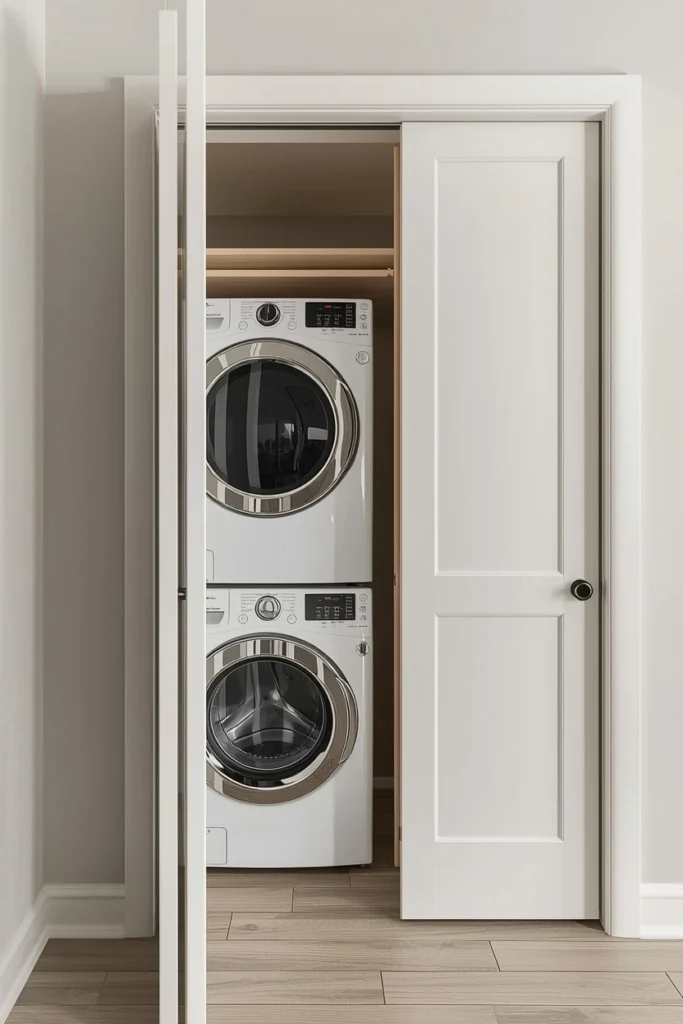
Repurposing a standard closet into a laundry area is a practical solution. Install bi-fold or sliding doors that align with surrounding finishes. This allows the laundry to remain completely out of sight when not in use.
Adding built-in storage above and beside appliances maximizes efficiency. By maintaining consistent materials and tones, this Hidden Laundry Room Design Idea ensures the closet integrates effortlessly into bedrooms or hallways.
10. Hidden Laundry in a Mudroom Bench Wall
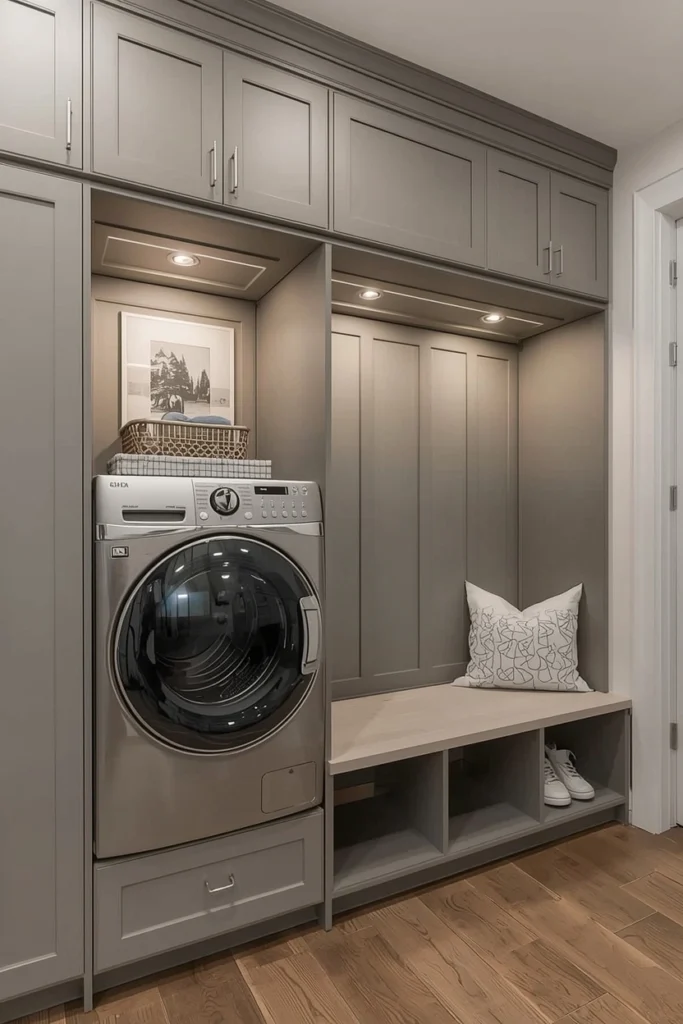
Incorporating a concealed laundry unit behind a mudroom bench wall blends practicality with organization. Cabinet fronts that match bench seating and storage cubbies maintain design continuity.
This solution is ideal for family homes where convenience matters. By concealing appliances within the mudroom’s structure, the space remains visually tidy. Integrated lighting and cohesive finishes ensure the design feels intentional and sculptural.
11. Behind Mirrored Sliding Panels
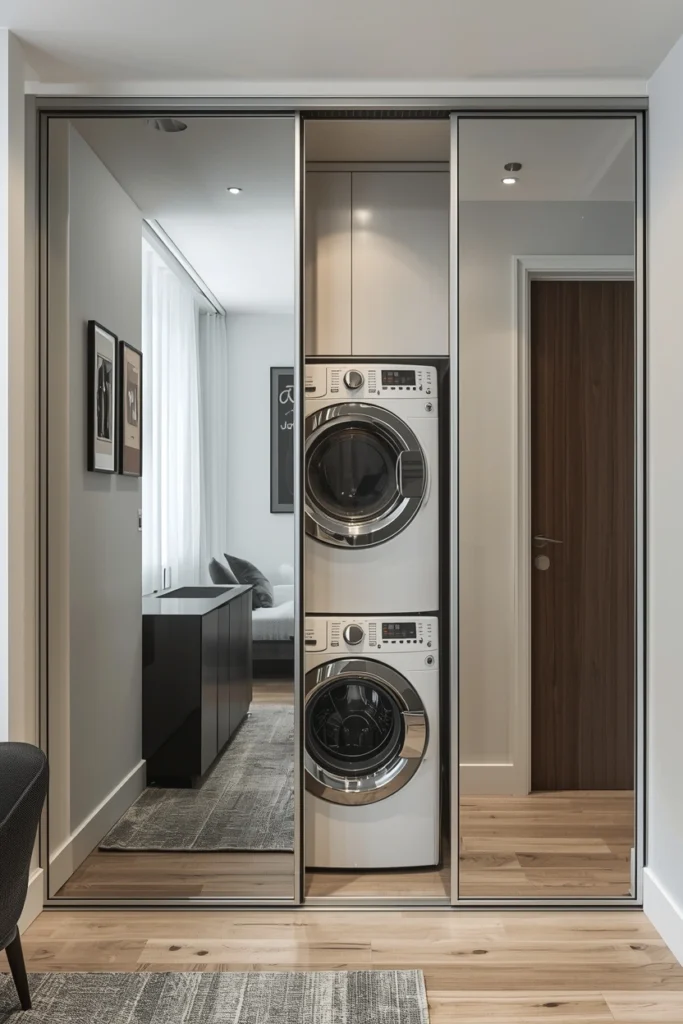
Mirrored sliding panels can conceal a laundry area while reflecting light and expanding visual space. This works especially well in smaller apartments.
When closed, the mirrored surface enhances brightness and openness. This Hidden Laundry Room Design Idea combines function with aesthetic benefit, creating a space that feels larger and more refined.
12. Seamless Built-In Laundry Cabinet Niche
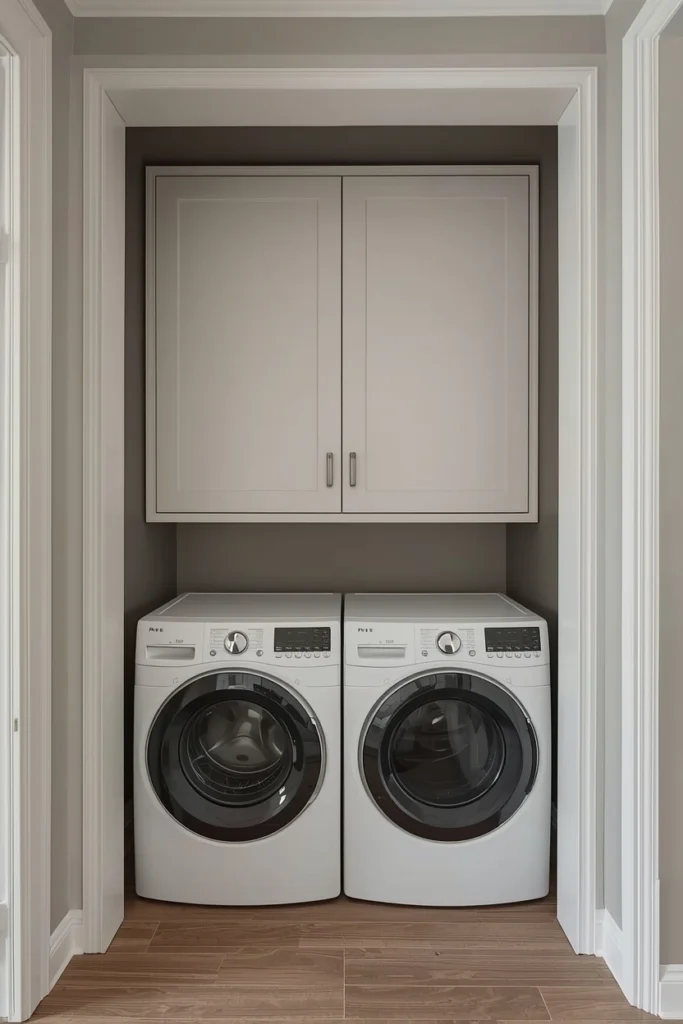
Designing a recessed niche specifically for laundry appliances ensures they sit flush with the wall. Custom cabinetry frames the space, making it appear architecturally integrated.
By aligning finishes with adjacent walls and millwork, the laundry niche becomes almost invisible. This method embodies sculptural decorating principles — clean lines, intentional proportions, and cohesive materials — ensuring the hidden space enhances rather than disrupts the home’s aesthetic.
Final Thoughts
Hidden laundry spaces are no longer just a necessity — they are a design opportunity. By carefully integrating appliances into cabinetry, architectural niches, or multifunctional spaces, you can maintain a clean and cohesive interior aesthetic. These Hidden Laundry Room Design Ideas demonstrate how thoughtful planning transforms functional areas into seamless extensions of your home’s design language.
Whether you’re renovating or building new, prioritizing concealed functionality ensures your home feels calm, organized, and visually harmonious. The key lies in material consistency, flush finishes, and intentional spatial planning that supports both practicality and style.