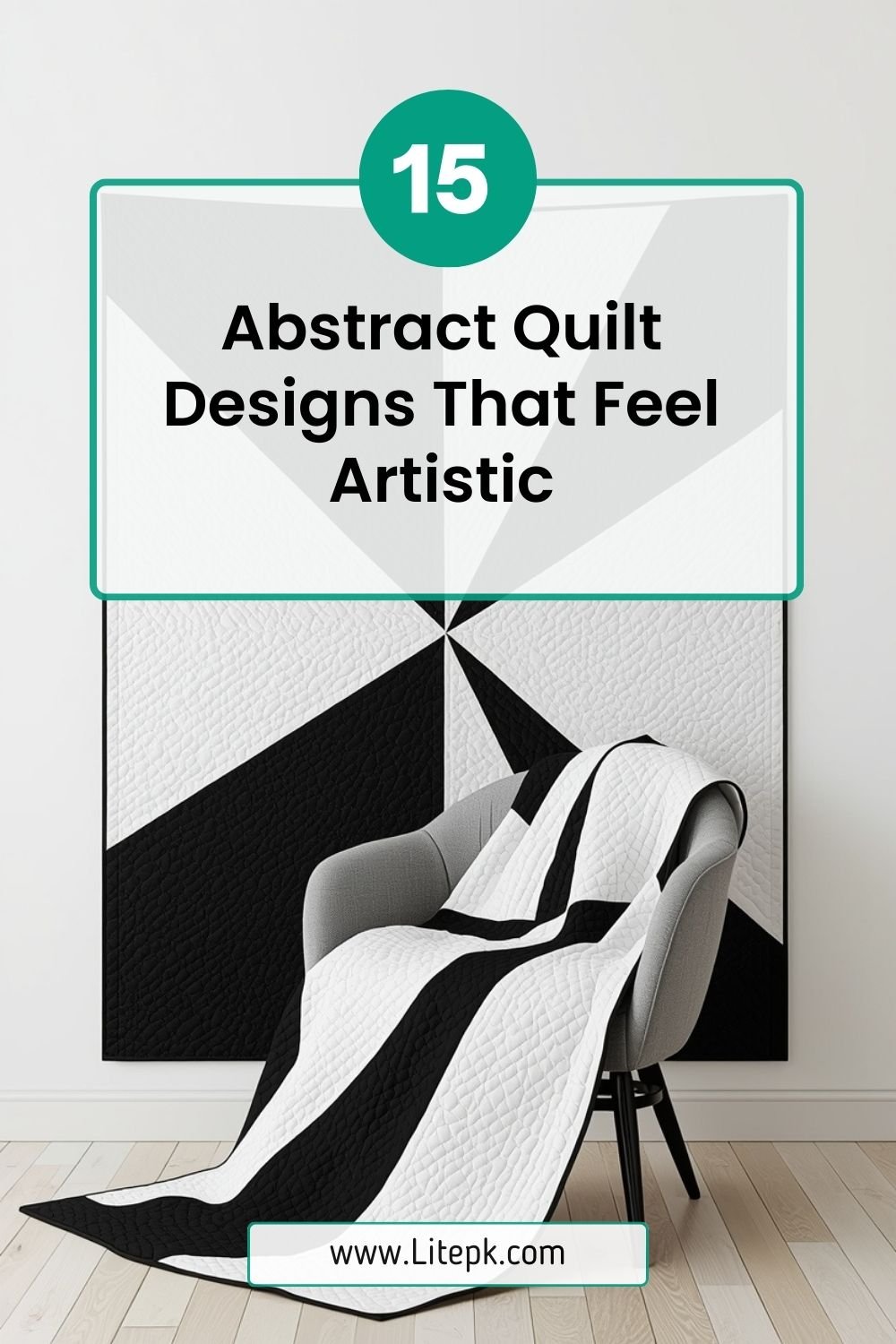
15 Abstract Quilt Designs That Feel Artistic
Quilting is no longer confined to tradition. Today, it has evolved into a form of textile art where geometry, color blocking, and expressive stitching turn fabric into visual sculpture. Abstract quilting embraces movement, imbalance, and creative freedom — transforming soft materials into bold artistic statements.
If you are searching for Abstract Quilt Designs that feel modern, gallery-worthy, and intentionally artistic, this curated collection explores fifteen powerful concepts. Each design blends contemporary aesthetics with tactile craftsmanship, proving that quilts can be as expressive and architectural as any canvas painting.
1. Asymmetrical Color Block Quilt
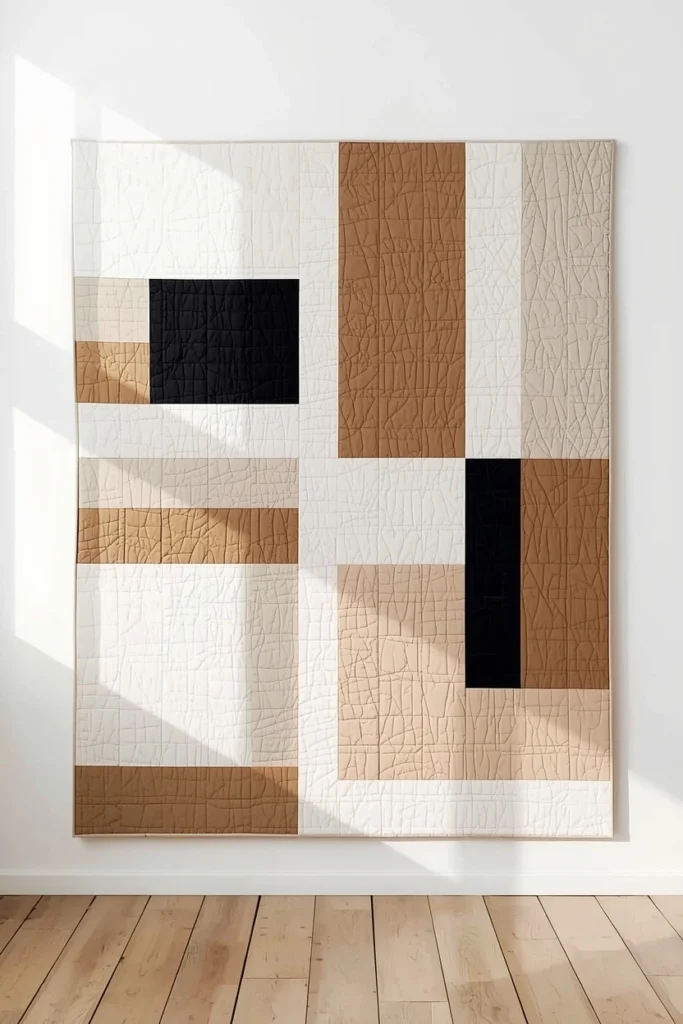
Asymmetrical color block layouts are among the most striking Abstract Quilt Designs because they reject symmetry in favor of visual tension. Instead of evenly spaced squares, this design features oversized rectangles and off-centered panels arranged with deliberate imbalance. Bold neutrals, muted earth tones, or contrasting monochromes enhance the artistic presence. The goal is not perfection but visual rhythm — allowing negative space to interact with saturated fabric blocks.
This design works beautifully as a wall-hung quilt or modern bedspread. Keeping seams crisp and color transitions intentional ensures a refined finish. When displayed vertically, it resembles contemporary canvas art. Asymmetrical Abstract Quilt Designs invite movement across the surface, encouraging the viewer’s eye to travel freely rather than follow predictable patterns.
2. Organic Curve Patchwork Quilt
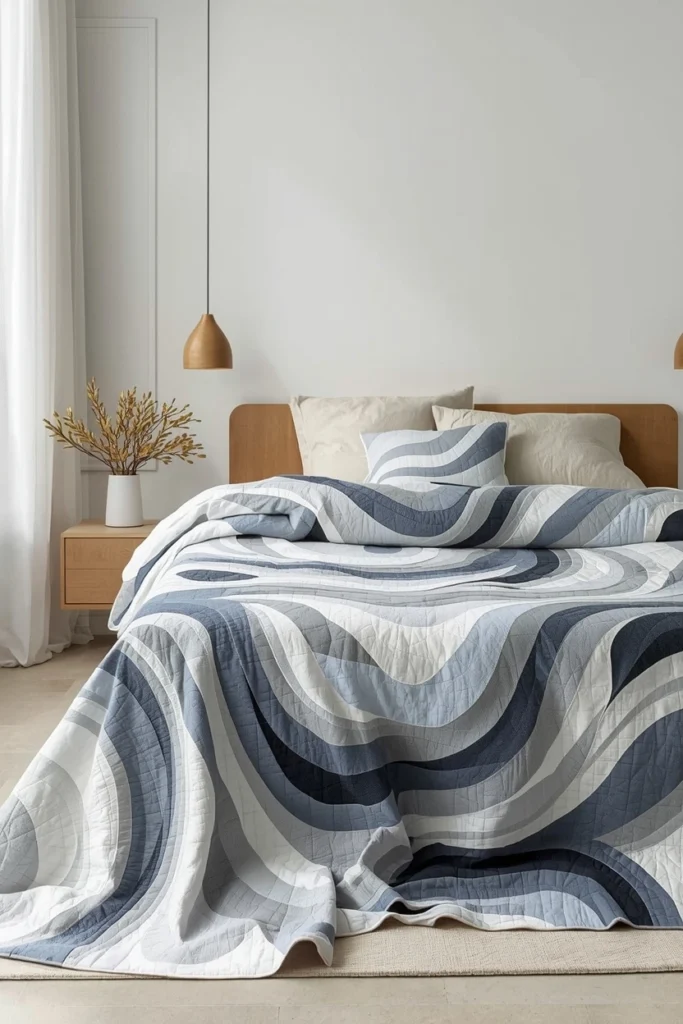
Organic curves introduce softness and fluidity into Abstract Quilt Designs. Instead of straight seams, curved patchwork pieces flow into one another, creating motion reminiscent of topographical lines or abstract landscapes. Soft gradient fabrics or subtle tonal shifts amplify the sense of movement across the surface.
Precision cutting is essential, but the final effect should feel natural rather than mechanical. When draped over furniture, the curved transitions appear almost sculptural. Organic Abstract Quilt Designs create visual calm while maintaining artistic complexity, making them perfect for modern bedrooms seeking warmth without clutter.
3. Monochrome Minimalist Quilt
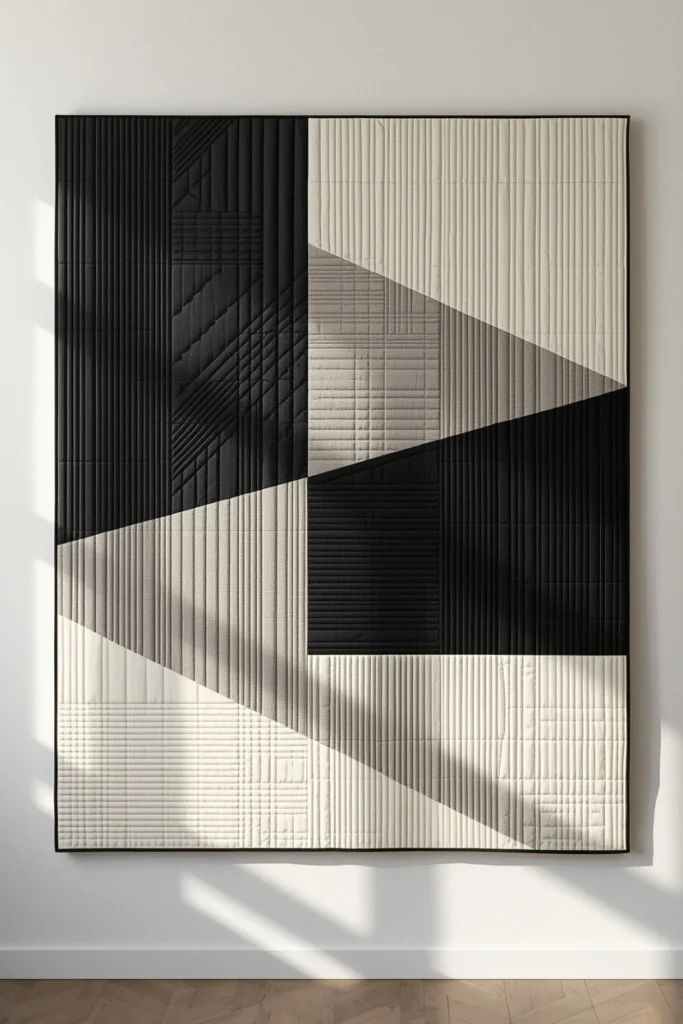
Monochrome Abstract Quilt Designs rely on texture rather than bold color contrast. Using varying shades of one hue — such as charcoal, cream, or muted blue — creates subtle dimension. Stitching patterns become the focal point, with quilting lines forming geometric or organic overlays across the surface.
This style pairs beautifully with minimalist interiors. When hung on a wall, the quilt resembles a relief sculpture due to the shadow cast by stitched layers. Monochrome Abstract Quilt Designs demonstrate that restraint can be powerful. Simplicity allows texture, stitching, and composition to take center stage.
4. Geometric Fragmented Quilt
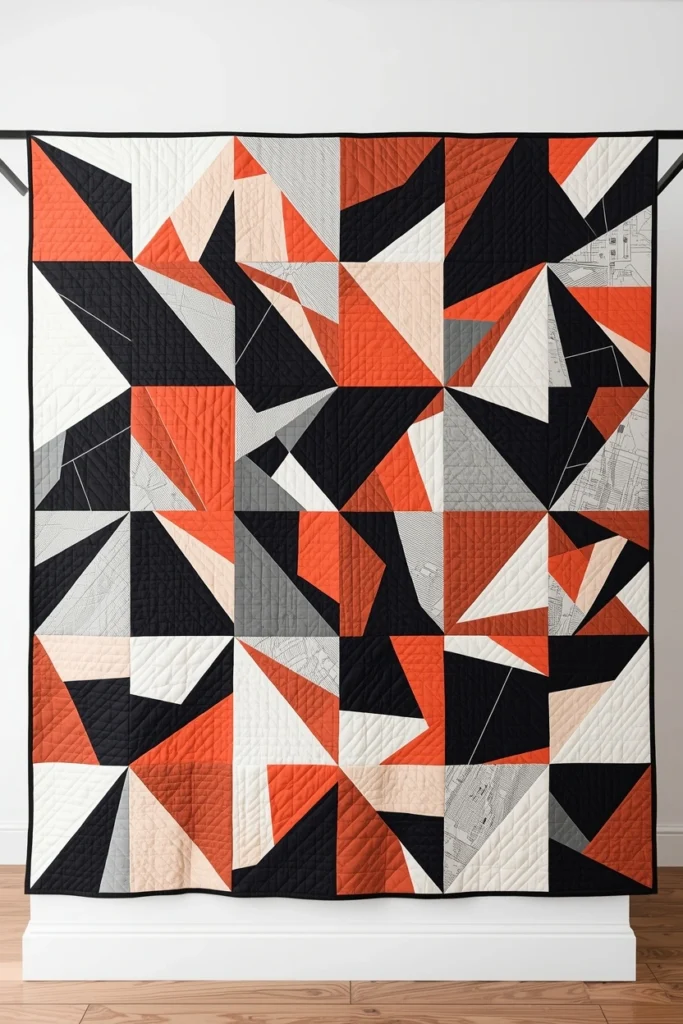
Fragmented geometric patterns break traditional quilt grids into irregular angular pieces. Triangles, trapezoids, and asymmetrical polygons intersect unpredictably, creating dynamic energy. Bold contrast between light and dark fabrics enhances structure.
These Abstract Quilt Designs often resemble shattered glass or architectural blueprints. Careful placement ensures balance despite apparent chaos. When styled in contemporary interiors, the fragmented composition feels edgy yet controlled. The quilt becomes both functional textile and abstract art statement.
5. Watercolor Blend Quilt
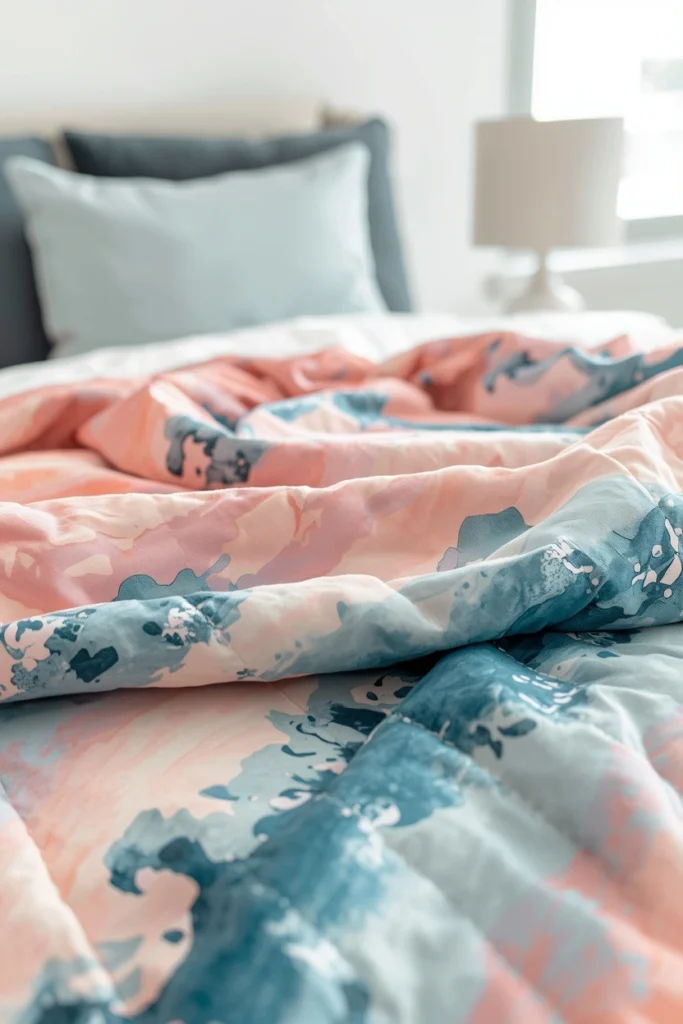
Watercolor-inspired Abstract Quilt Designs mimic the softness of painted washes. Fabrics are selected in gradient tones that blend seamlessly from light to dark. Gentle stitching lines enhance the illusion of pigment diffusion.
This style works particularly well as a statement throw in bright, airy spaces. The softness of blended tones contrasts beautifully with structured furniture. Watercolor Abstract Quilt Designs feel calming and expressive simultaneously, offering artistic depth without overwhelming the room.
6. Linear Stitch Emphasis Quilt
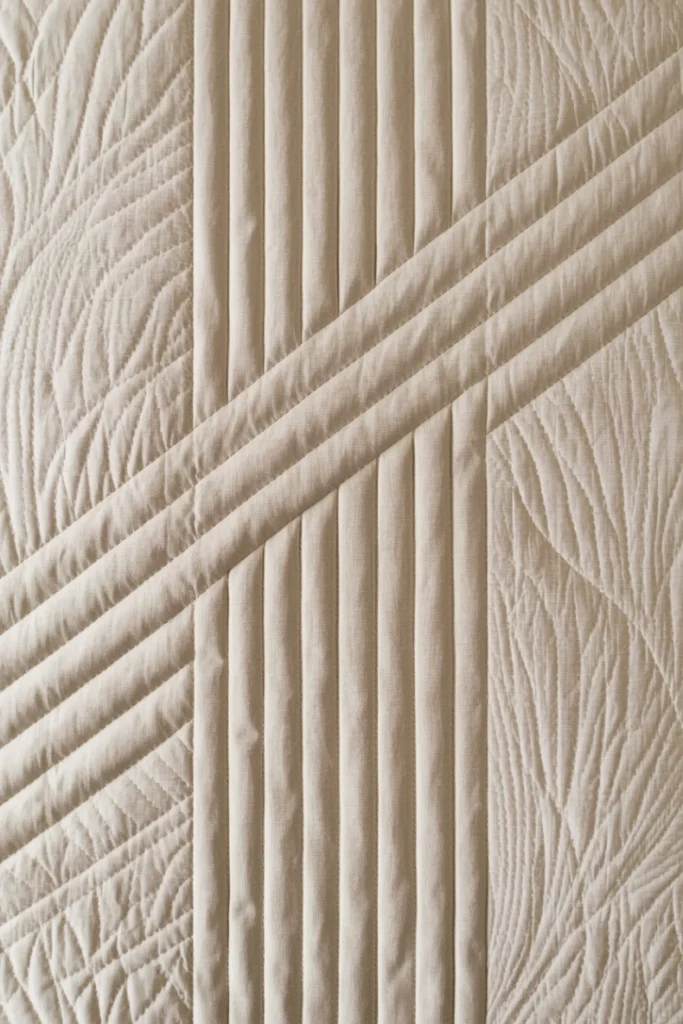
Instead of relying on fabric contrast, linear stitch emphasis focuses on bold quilting lines as the main design element. Parallel or intersecting stitch paths create rhythm across a neutral base.
These Abstract Quilt Designs highlight craftsmanship and texture. When viewed up close, the raised stitched lines cast subtle shadows. Displayed on a bed or wall, the effect feels architectural and structured, elevating quilting into contemporary art.
7. Deconstructed Grid Quilt
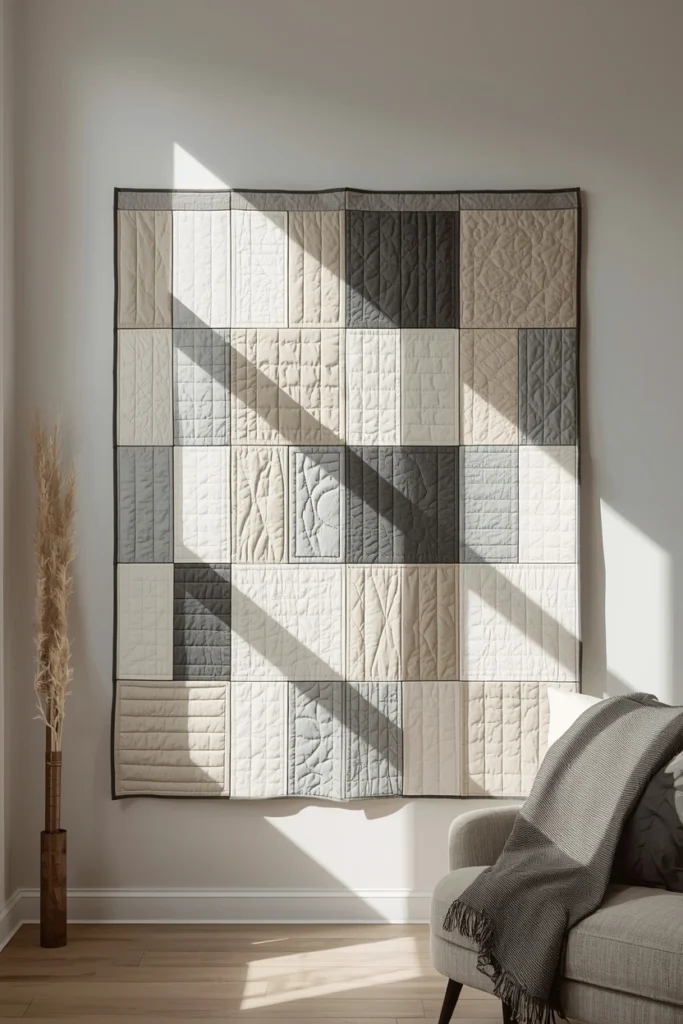
The deconstructed grid disrupts traditional square layouts by shifting rows, misaligning seams, and varying block sizes. This method produces intentional imbalance.
Among Abstract Quilt Designs, this style maintains structure while embracing imperfection. The irregular alignment adds character and artistic spontaneity. Styled in minimalist spaces, it creates interest without excess decoration.
8. Bold Contrast Black and White Quilt
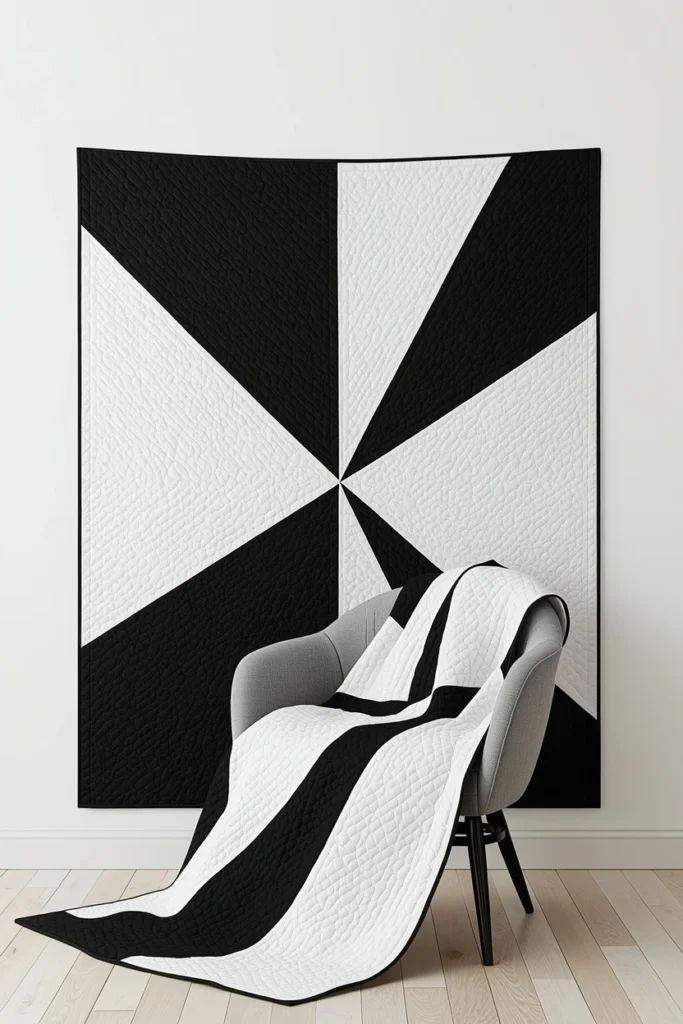
High-contrast black and white palettes create dramatic Abstract Quilt Designs. Sharp divisions between dark and light sections emphasize geometry and visual intensity.
This quilt style feels graphic and modern. Whether folded over a chair or hung as wall art, it instantly draws attention. Black and white Abstract Quilt Designs prove that color limitation can amplify impact.
9. Raw Edge Appliqué Quilt
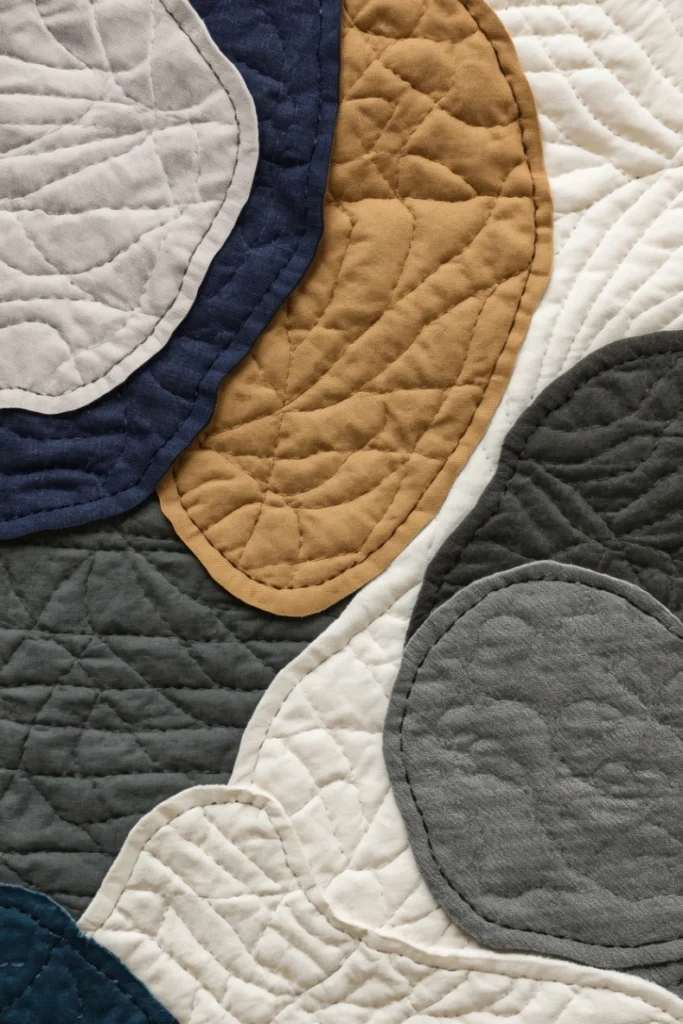
Raw edge appliqué introduces texture and layering. Fabric shapes are stitched without fully concealed edges, creating tactile dimension.
These Abstract Quilt Designs feel expressive and handcrafted while still refined. Layering organic shapes builds depth, transforming flat fabric into soft sculpture.
10. Abstract Landscape Quilt
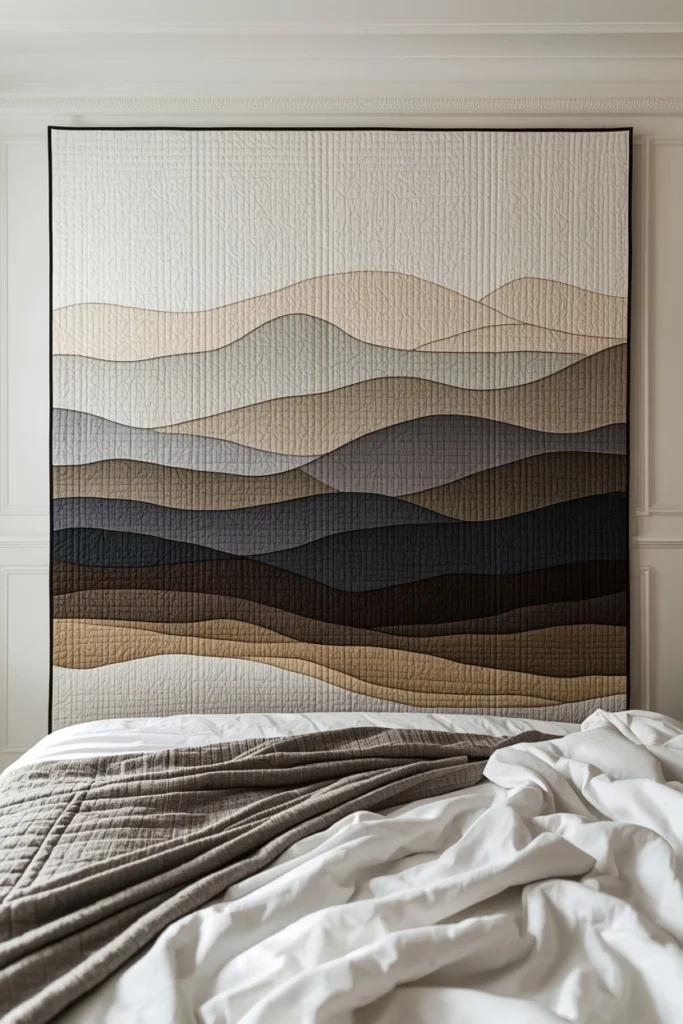
Inspired by horizons and natural scenery, abstract landscapes translate fields, mountains, or skies into simplified fabric shapes.
These Abstract Quilt Designs combine storytelling with abstraction. Soft gradients and layered horizontal bands create calm composition.
11. Improvisational Patchwork Quilt
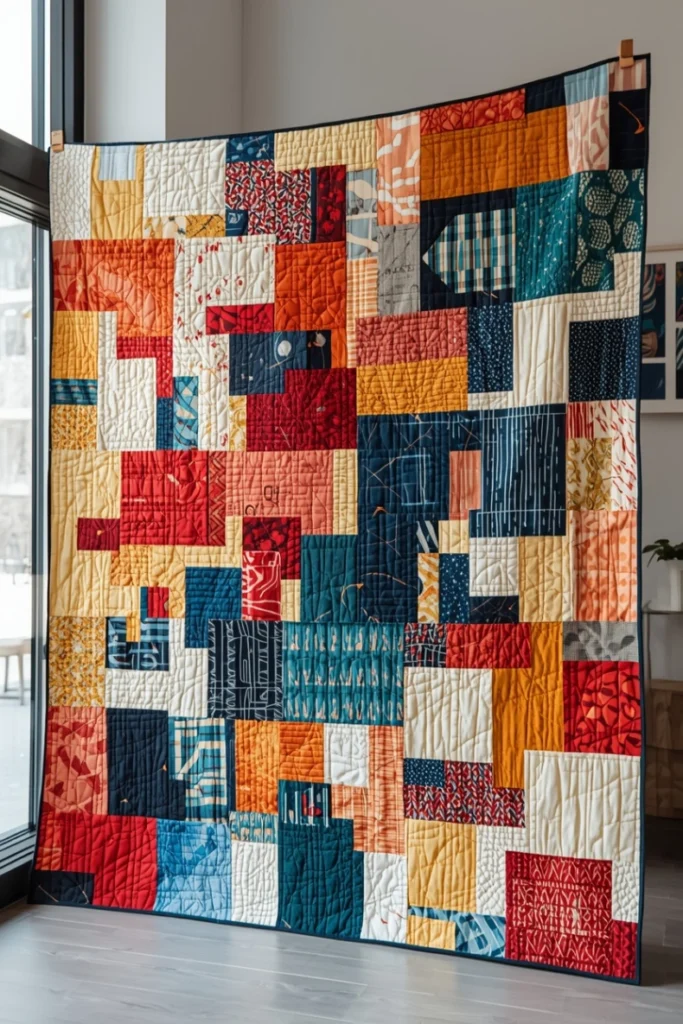
Improvisational quilting abandons strict planning. Fabric pieces are added intuitively, resulting in spontaneous composition.
Despite its freedom, successful Abstract Quilt Designs maintain color cohesion. The unpredictability creates artistic authenticity and movement.
12. Textured Fabric Layer Quilt
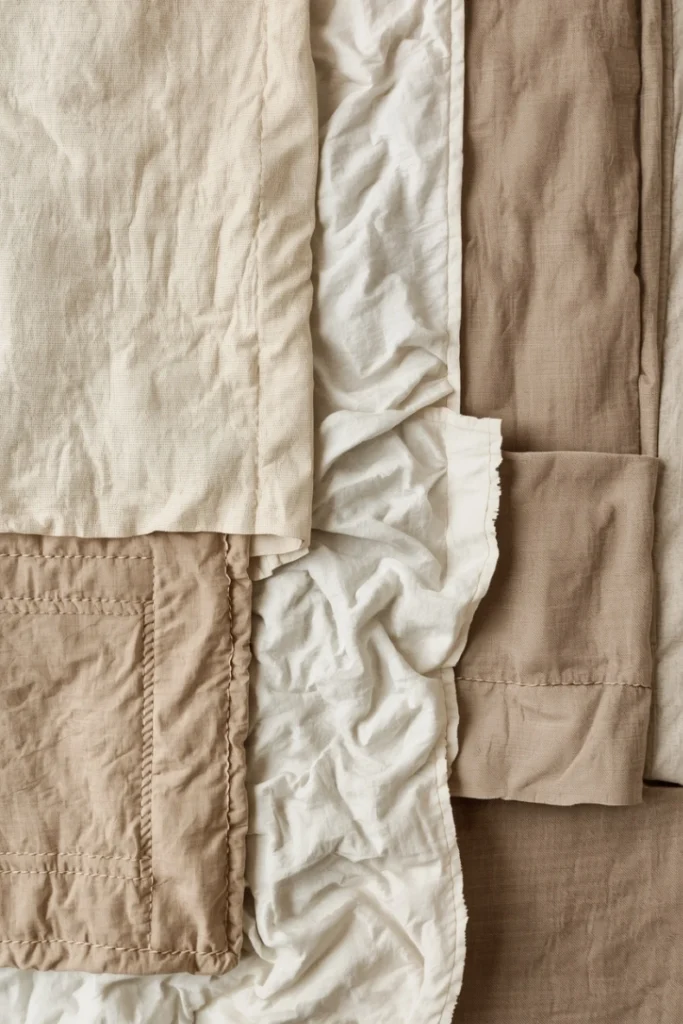
Layering varied fabric types — linen, cotton, canvas — adds dimension. Texture becomes the dominant feature.
These Abstract Quilt Designs feel tactile and sculptural. The mix of materials creates depth without excessive pattern.
13. Circular Motion Quilt
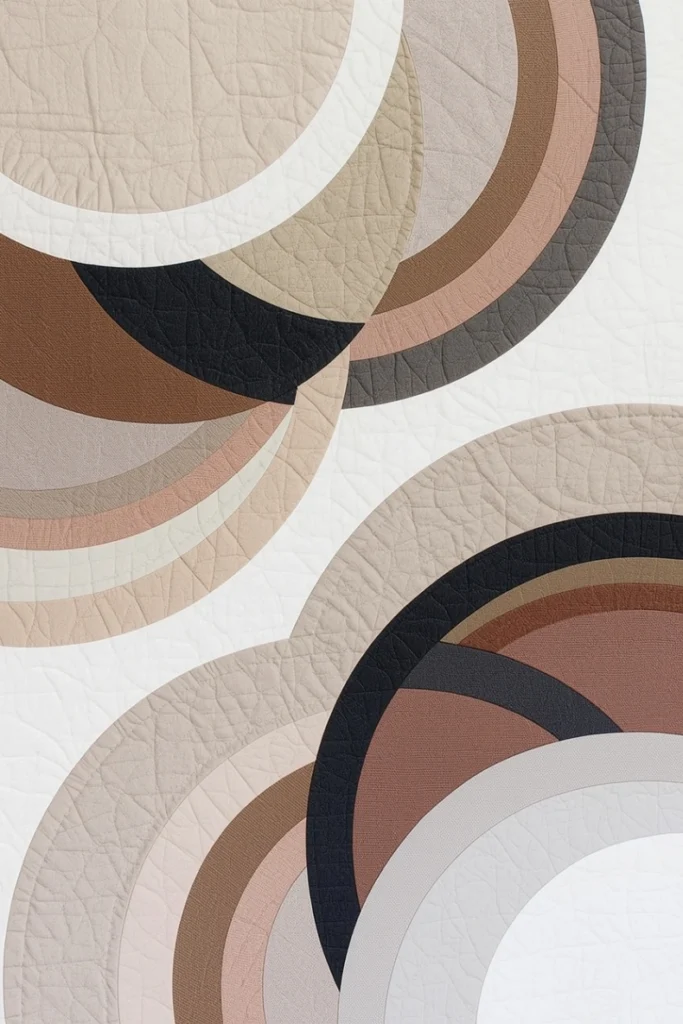
Circular motifs introduce rhythm and repetition. Overlapping arcs create dynamic visual flow.
These Abstract Quilt Designs evoke movement, resembling ripples or celestial forms. Balanced spacing ensures sophistication.
14. Negative Space Quilt
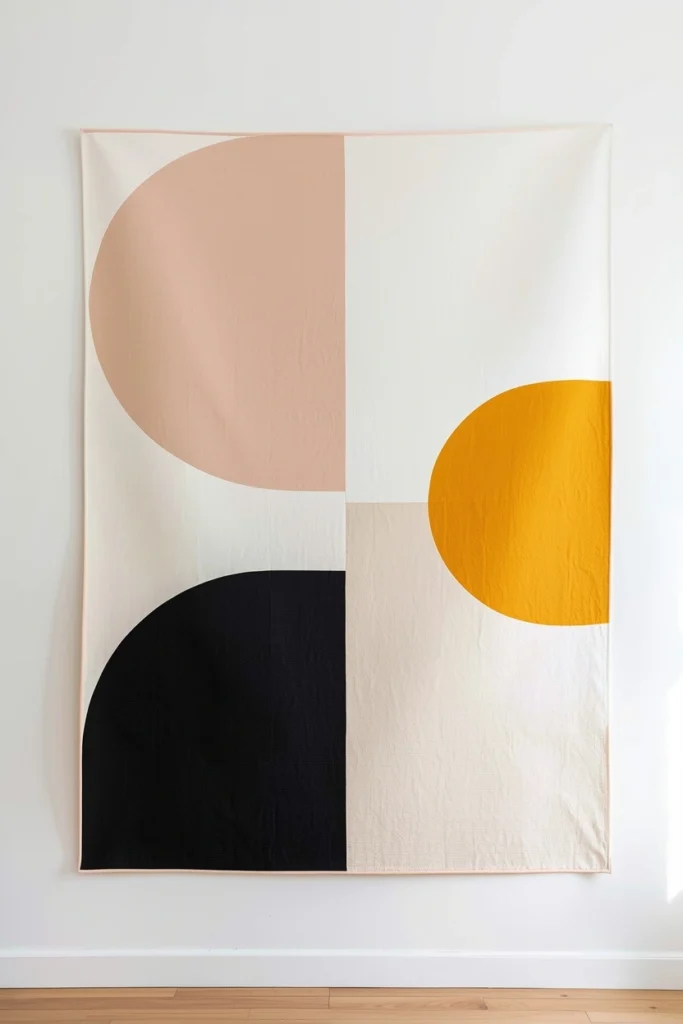
Negative space designs rely on open fabric areas to create contrast. Large empty sections enhance focal shapes.
These Abstract Quilt Designs feel modern and gallery-ready. Minimalism strengthens visual clarity and balance.
15. Layered Transparency Quilt
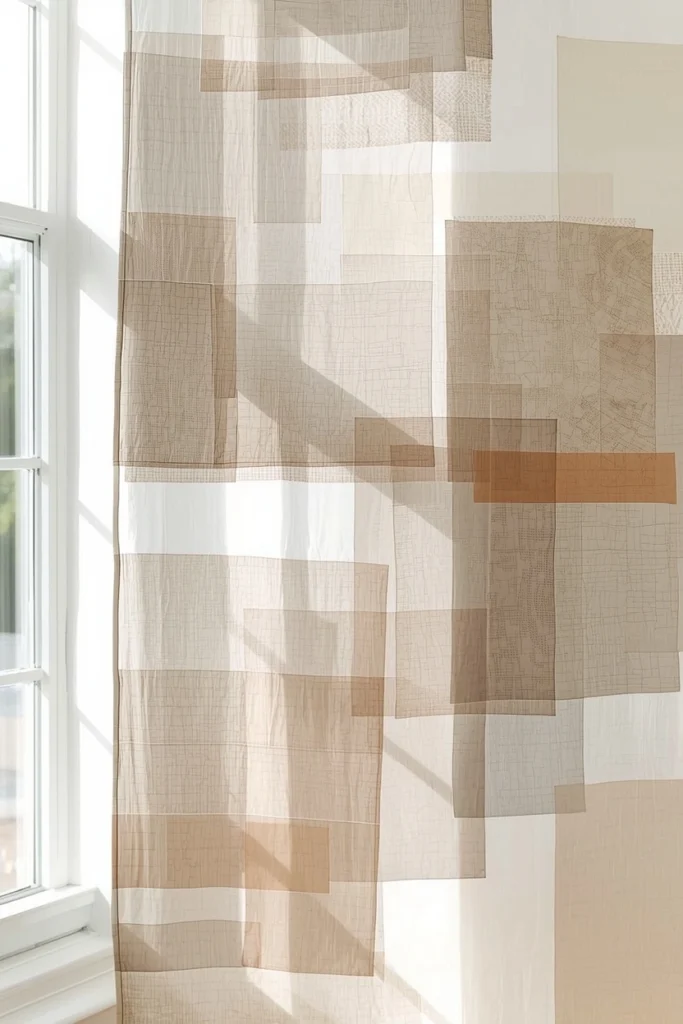
Using sheer fabrics layered over opaque materials creates depth and subtle tonal shifts.
These Abstract Quilt Designs play with light and shadow. The transparency effect gives the quilt a delicate, artistic presence.
Conclusion
Abstract quilting merges craftsmanship with artistic exploration. These Abstract Quilt Designs demonstrate how geometry, color, texture, and negative space can transform traditional quilting into contemporary textile art. Whether bold and graphic or soft and minimal, each design concept encourages creative experimentation.
By focusing on composition, balance, and thoughtful color selection, you can create quilts that function as both decor and artistic expression. Abstract Quilt Designs allow fabric to become a sculptural medium — one that brings warmth, movement, and modern artistry into any space.