14 Small Home Theater Layouts That Feel Cinematic
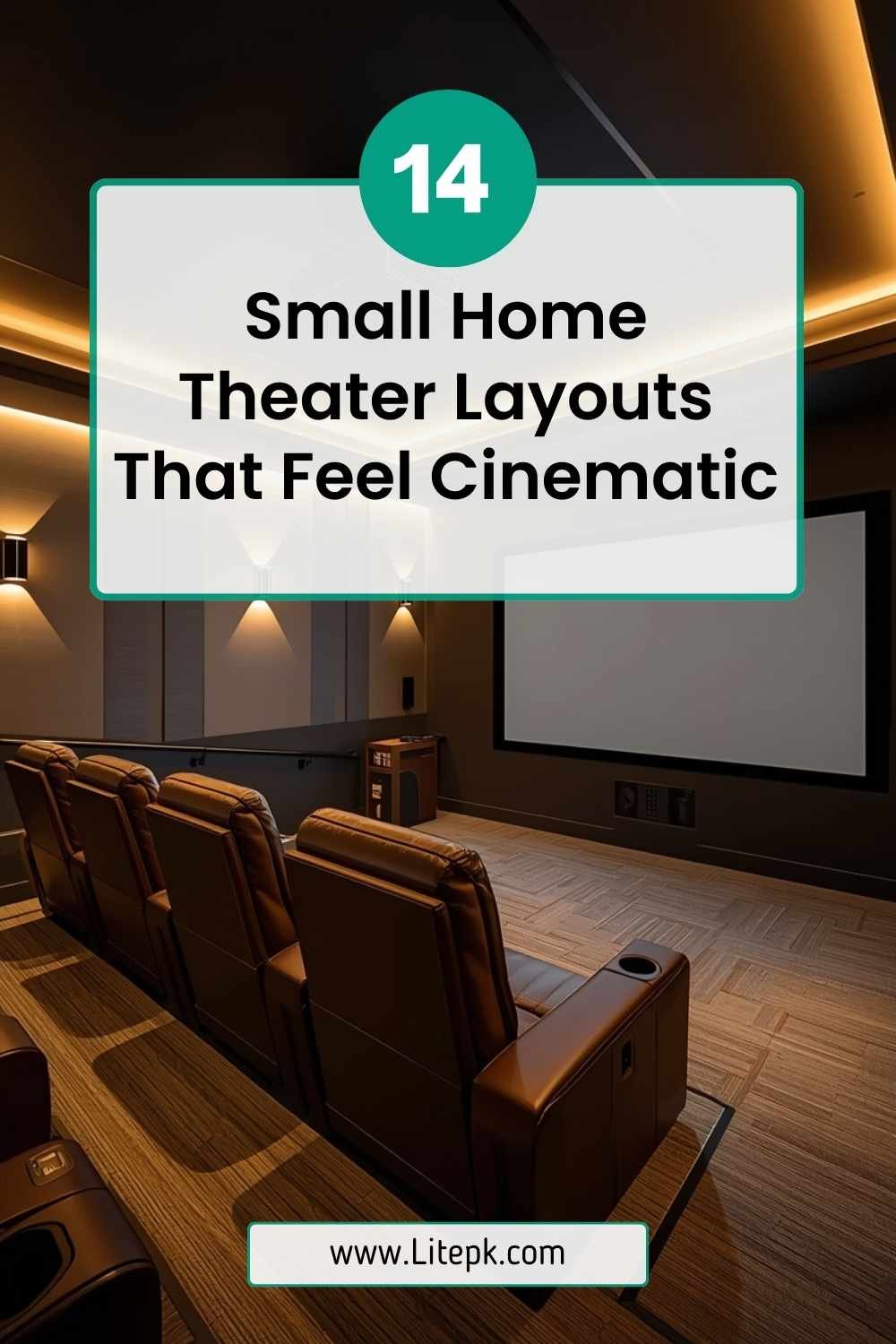
Creating a cinematic experience at home no longer requires a massive dedicated room. With smart planning, the right layout, and thoughtful design choices, even the smallest spaces can deliver an immersive, theater-like feel. Today’s home theaters focus less on size and more on acoustics, sightlines, lighting, and comfort.
From compact apartments to spare bedrooms and basement corners, small home theater layouts are redefining how people experience movies, sports, and gaming at home. With the right configuration, a limited footprint can feel intentional, luxurious, and surprisingly powerful.
This guide explores 14 small home theater layouts that feel cinematic, each designed to maximize space while delivering an authentic big-screen experience.
1. Single-Row Seating Home Theater Layout
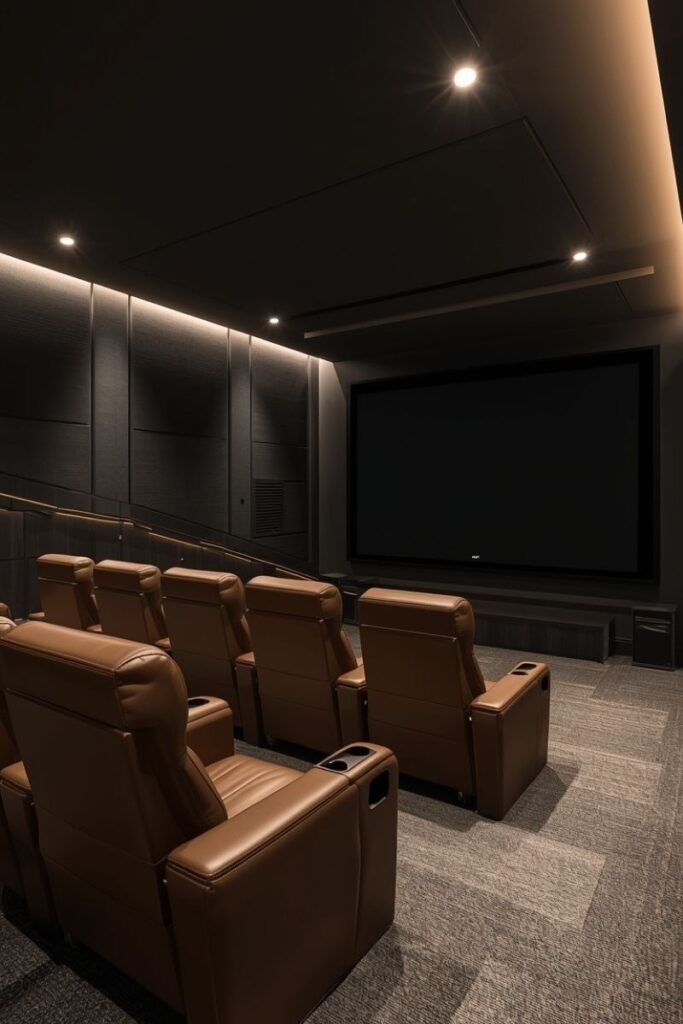
A single-row seating layout is one of the most effective solutions for small home theaters. By limiting seating to one row, you eliminate the need for risers, preserve ceiling height, and maintain clean sightlines to the screen. This layout works especially well in narrow rooms or converted bedrooms where depth is limited.
Placing a comfortable row of recliners or a compact sofa at the ideal viewing distance creates a balanced, immersive experience. Acoustic panels can be installed along side walls without crowding the space, and a streamlined speaker setup ensures powerful sound without visual clutter. This layout proves that simplicity can still feel cinematic.
2. Wall-to-Wall Screen Layout
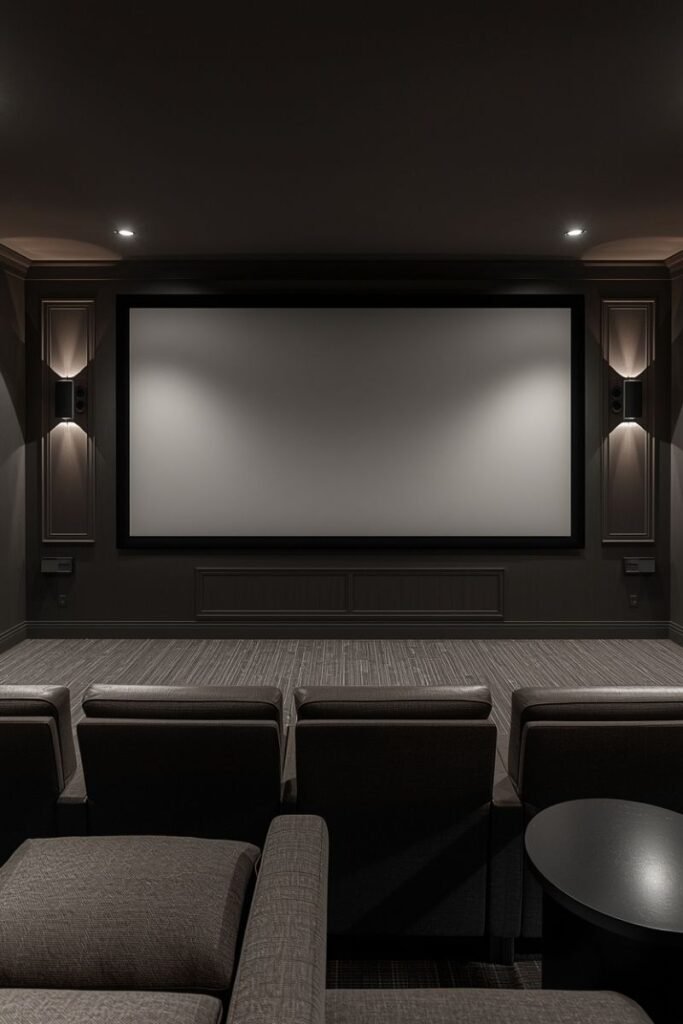
A wall-to-wall screen layout uses the entire front wall to create a bold visual impact. Whether using a large TV or a projector screen, extending the display across the wall makes the room feel bigger and more immersive. This approach works particularly well in small rectangular rooms.
To support this layout, seating is positioned closer than in traditional theaters, creating a personal cinema feel. Minimal décor, hidden wiring, and flush-mounted speakers help maintain a clean aesthetic. When done right, this layout transforms a small room into a dramatic viewing space without overwhelming it.
3. Corner Home Theater Layout
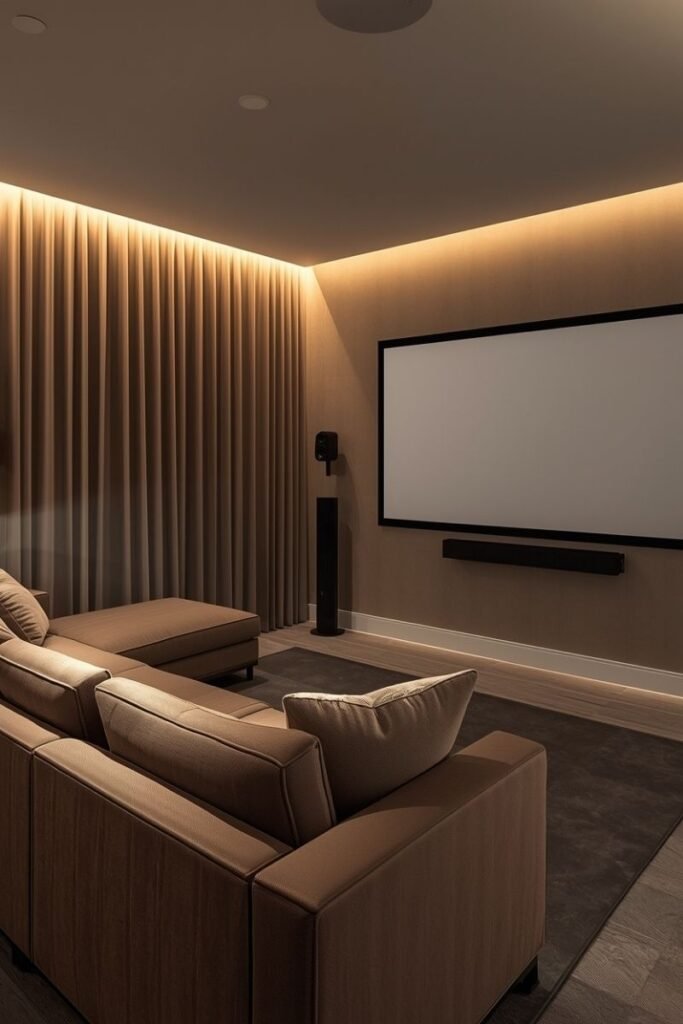
A corner home theater layout makes use of underutilized space in apartments or open-plan homes. By placing the screen diagonally in a corner, you free up wall space while creating a focused viewing zone. This layout is ideal for multipurpose rooms.
Compact seating angled toward the screen enhances immersion without requiring structural changes. Soundbars or compact surround speakers work well here, while curtains or acoustic panels help control sound reflections. The result is a cozy, intimate theater that blends seamlessly into the rest of the home.
4. Bedroom Home Theater Layout
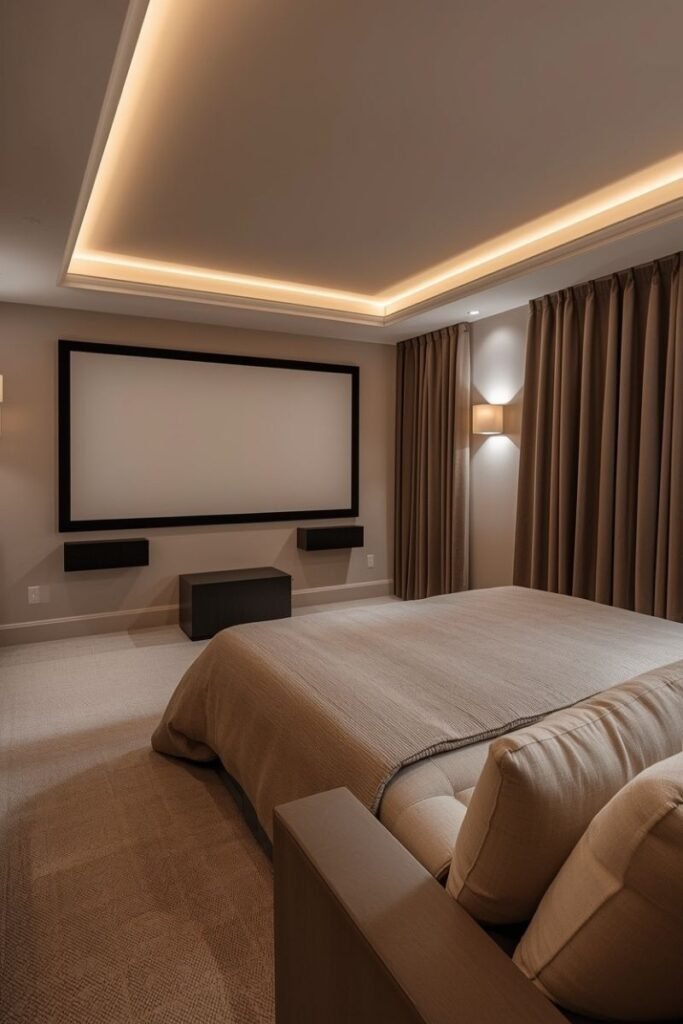
A bedroom home theater layout combines comfort and entertainment in one space. This setup is perfect for homeowners who want a private cinema without dedicating an entire room. The key is balancing relaxation with optimal viewing angles.
Mounting the screen at eye level from the bed or a small sofa ensures comfortable viewing. Blackout curtains, soft wall colors, and controlled lighting help reduce distractions. With proper sound calibration, even a bedroom can deliver a rich, cinematic experience without disturbing the rest of the house.
5. Basement Compact Theater Layout
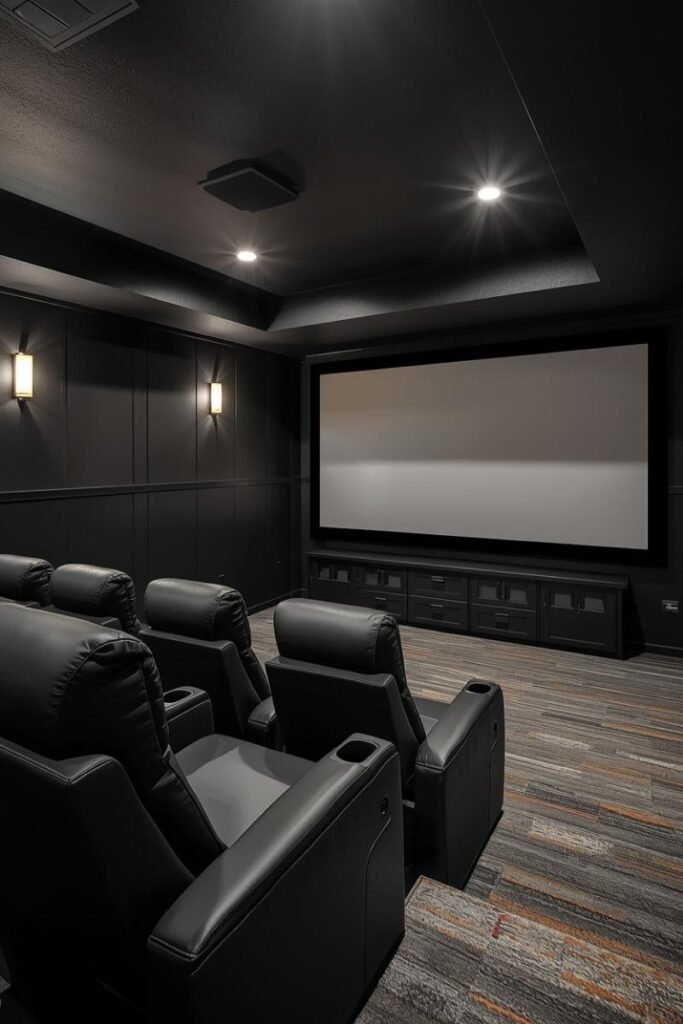
Basements are naturally suited for home theaters due to limited natural light. A compact basement theater layout takes advantage of this by focusing on sound quality and screen immersion rather than size. Even a narrow basement can feel cinematic with the right setup.
Low-profile seating, dark wall finishes, and ceiling-mounted speakers enhance acoustics. Strategic lighting guides movement without distracting from the screen. This layout turns an often overlooked space into a dedicated entertainment zone that feels intentional and immersive.
6. Loft-Style Home Theater Layout
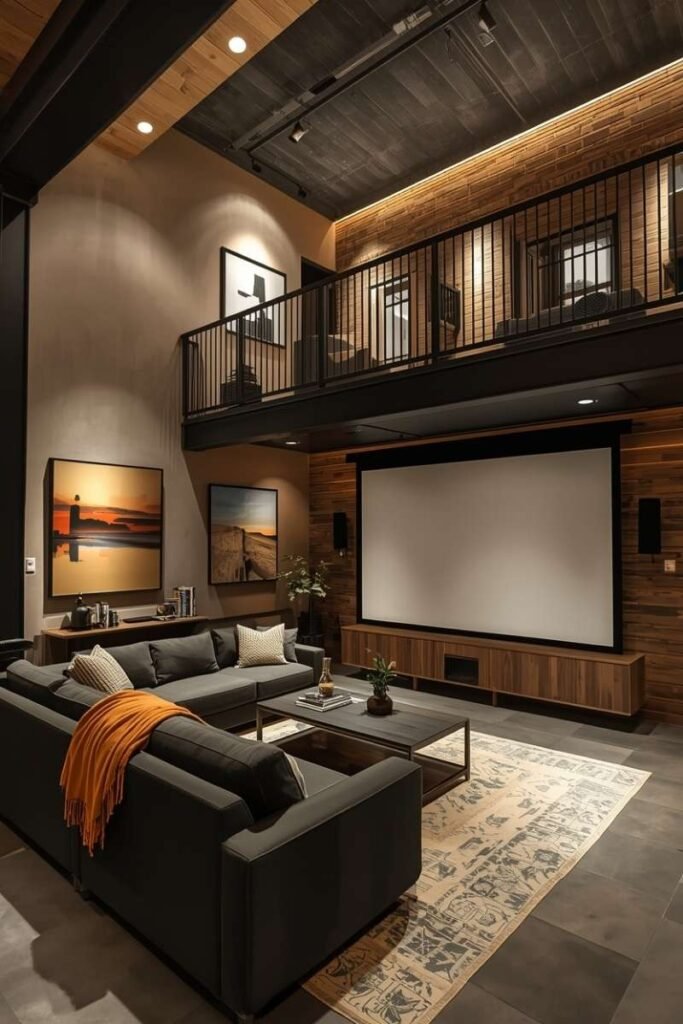
A loft-style home theater layout embraces open architecture while defining a clear viewing area. This layout works well in apartments or homes with mezzanine levels. The challenge is controlling sound and light in an open space.
Area rugs, fabric wall panels, and directional speakers help manage acoustics. A projector paired with a retractable screen keeps the space flexible. This layout offers a cinematic experience without sacrificing the open feel of a loft.
7. Narrow Room Theater Layout
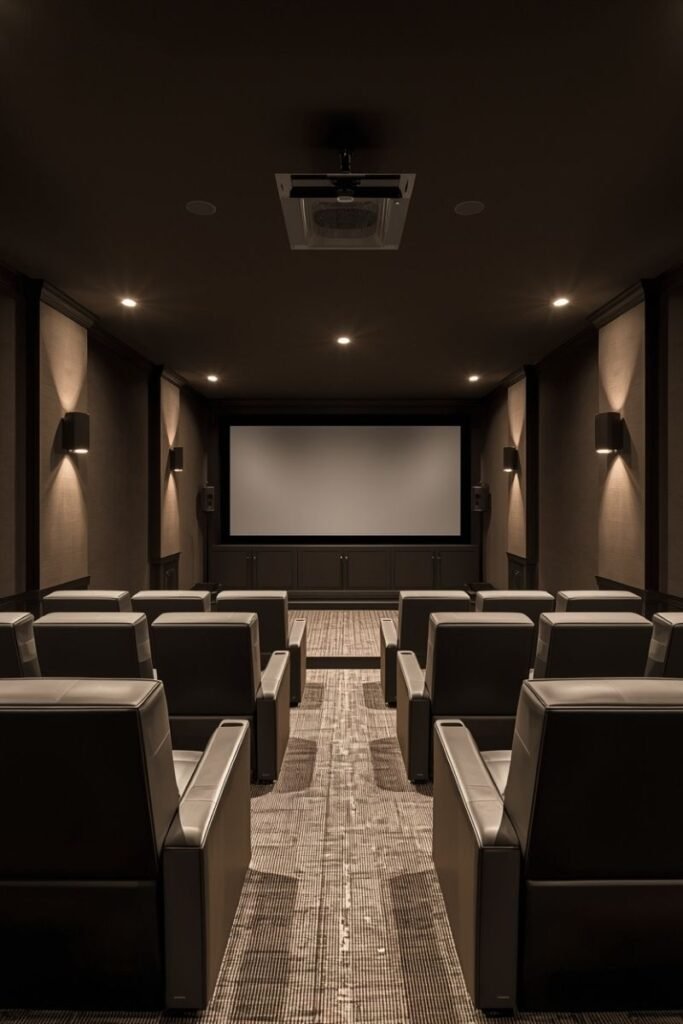
Narrow rooms often feel unsuitable for home theaters, but the right layout can turn them into cinematic tunnels of sound and visuals. This layout focuses on aligning seating, speakers, and screen along a central axis.
Wall-mounted speakers and slim seating keep pathways clear. Dark side walls reduce visual distractions and enhance perceived depth. The result is a focused viewing experience that feels immersive rather than restrictive.
8. Minimalist Home Theater Layout
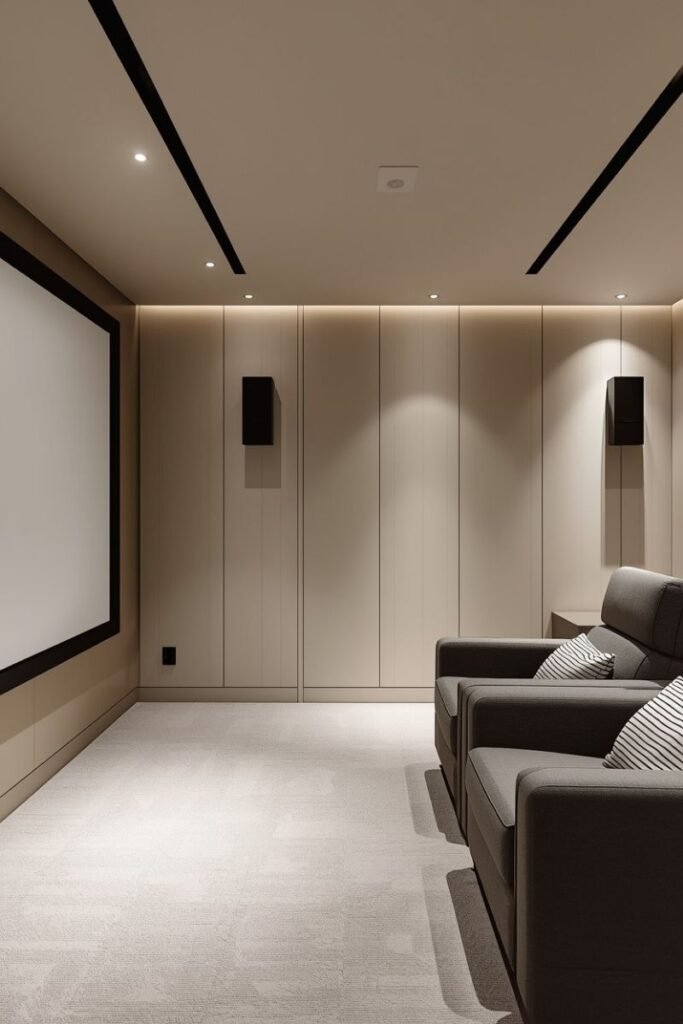
A minimalist home theater layout prioritizes clean lines and uncluttered design. This approach works especially well in small spaces where visual noise can feel overwhelming. Every element serves a purpose.
Hidden storage, recessed lighting, and neutral color palettes keep the room calm and focused. Despite its simplicity, this layout delivers strong visual and audio impact, proving that cinematic does not have to mean complex.
9. Sofa-Based Theater Layout
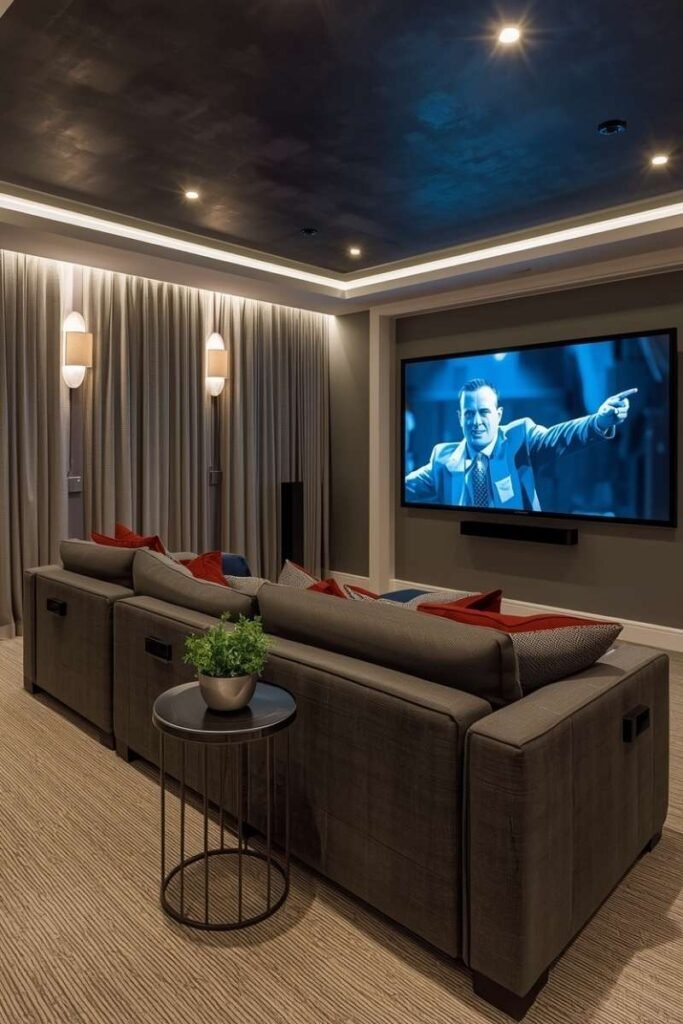
Not every home theater needs recliners. A sofa-based layout offers flexibility and comfort, especially in family homes. This setup works well in living rooms or shared spaces.
Positioning the sofa at the correct distance from the screen ensures comfort during long viewing sessions. Adding side tables, soft lighting, and compact speakers enhances usability without clutter. This layout blends everyday living with cinematic entertainment.
10. Projector-Focused Small Theater Layout
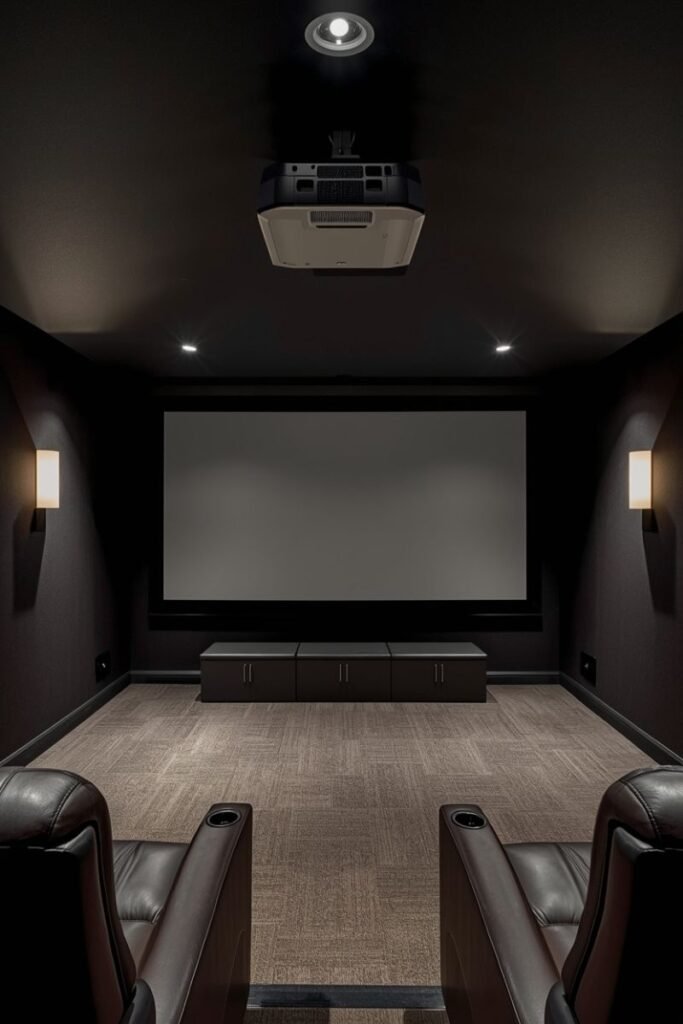
Projectors are ideal for small home theaters because they deliver large visuals without taking up wall space. A projector-focused layout emphasizes screen size and viewing angles over furniture quantity.
Ceiling-mounted projectors and retractable screens keep the room adaptable. Proper calibration ensures bright, sharp images even in compact spaces. This layout delivers a true cinema feel without requiring a large room.
11. Multi-Purpose Room Theater Layout
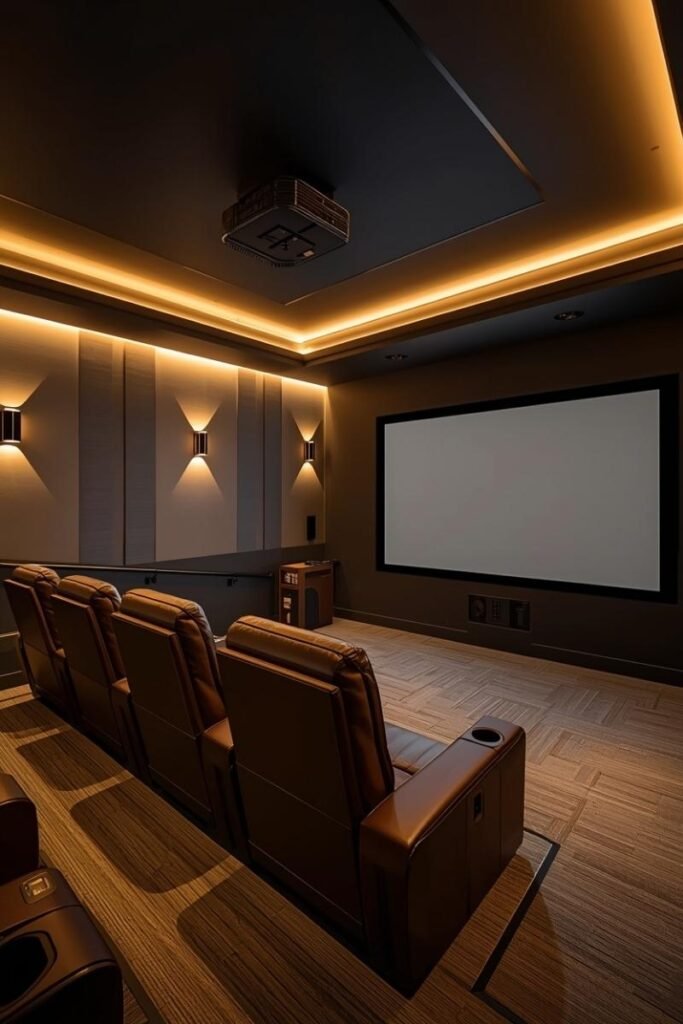
A multi-purpose home theater layout allows a single room to serve multiple functions. This is ideal for small homes where space is limited. The key is flexibility.
Foldable seating, motorized screens, and smart lighting systems allow the room to transition easily. When movie time begins, the space transforms into a cinematic environment. When not in use, it remains practical and open.
12. Kids-Friendly Small Theater Layout
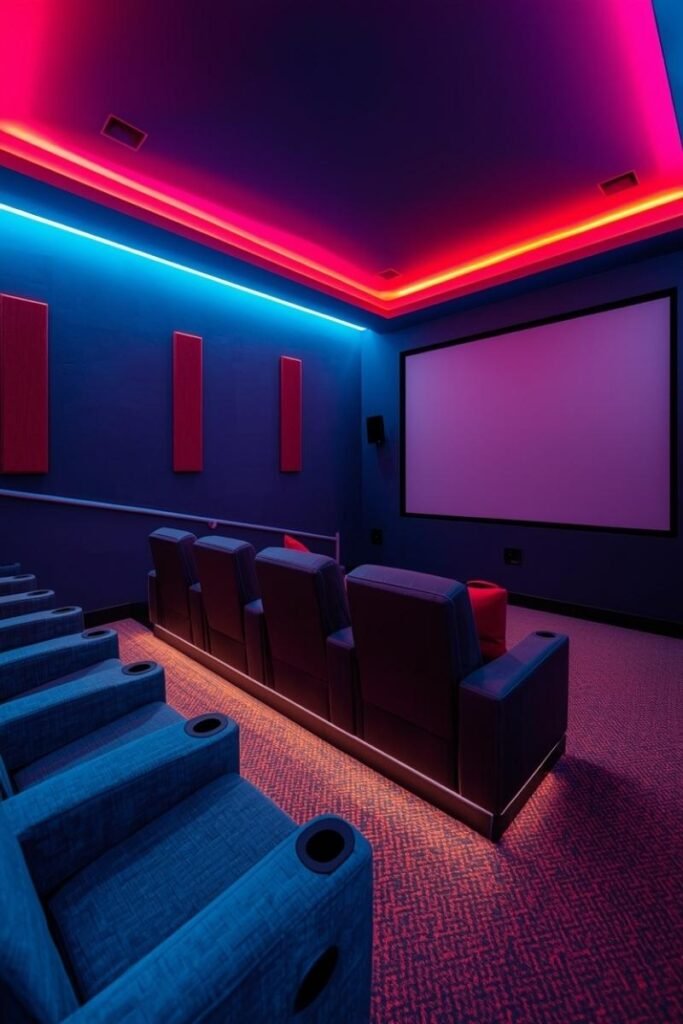
A kids-friendly home theater layout focuses on durability, comfort, and safety. Soft seating, rounded furniture edges, and controlled sound levels make the space enjoyable for all ages.
Bright accent lighting and playful textures keep the room welcoming without compromising sound quality. This layout proves that small home theaters can be both cinematic and family-oriented.
13. Gaming and Theater Hybrid Layout
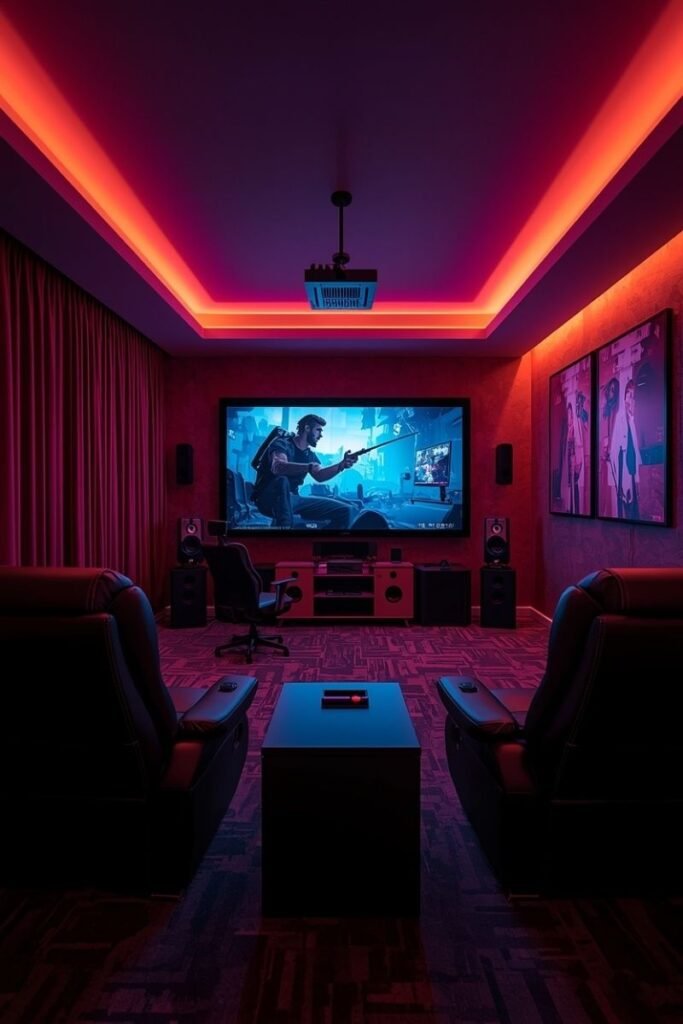
A gaming and theater hybrid layout serves both movie lovers and gamers. This setup prioritizes low latency, immersive sound, and comfortable seating for long sessions.
A large screen or projector paired with responsive audio creates an engaging environment. LED accent lighting enhances mood without distracting from gameplay or movies. This layout maximizes entertainment value in a small footprint.
14. Ultra-Dark Cinema Layout
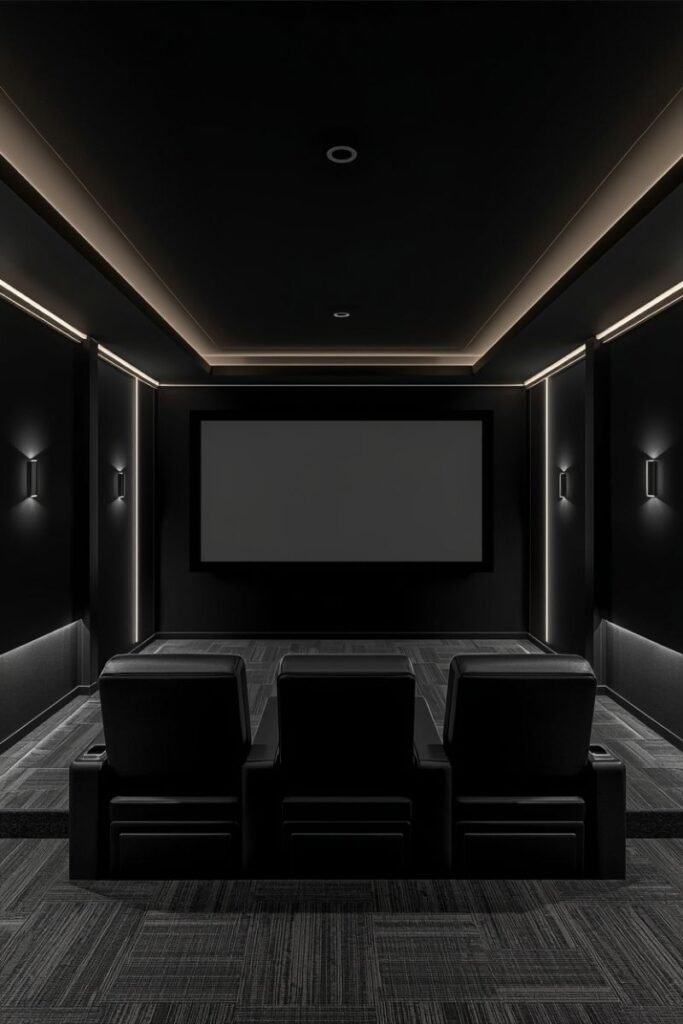
An ultra-dark cinema layout focuses on eliminating distractions. Dark walls, ceilings, and flooring absorb light and enhance screen contrast. This layout is ideal for serious movie enthusiasts with limited space.
Carefully placed lighting ensures safety without breaking immersion. Compact seating and precise speaker placement complete the experience. Even in a small room, this layout delivers a professional-grade cinematic feel.
Conclusion
Small home theater layouts prove that cinematic experiences are not defined by square footage. With thoughtful design, proper acoustics, and intentional layout choices, even the smallest rooms can deliver immersive entertainment. From minimalist setups to ultra-dark cinemas, these layouts offer practical inspiration for every type of home.
By focusing on comfort, sound, and visual impact, you can transform any compact space into a personal theater that feels intentional, luxurious, and unforgettable.