15 Layered Neutral Decor Ideas That Add Depth
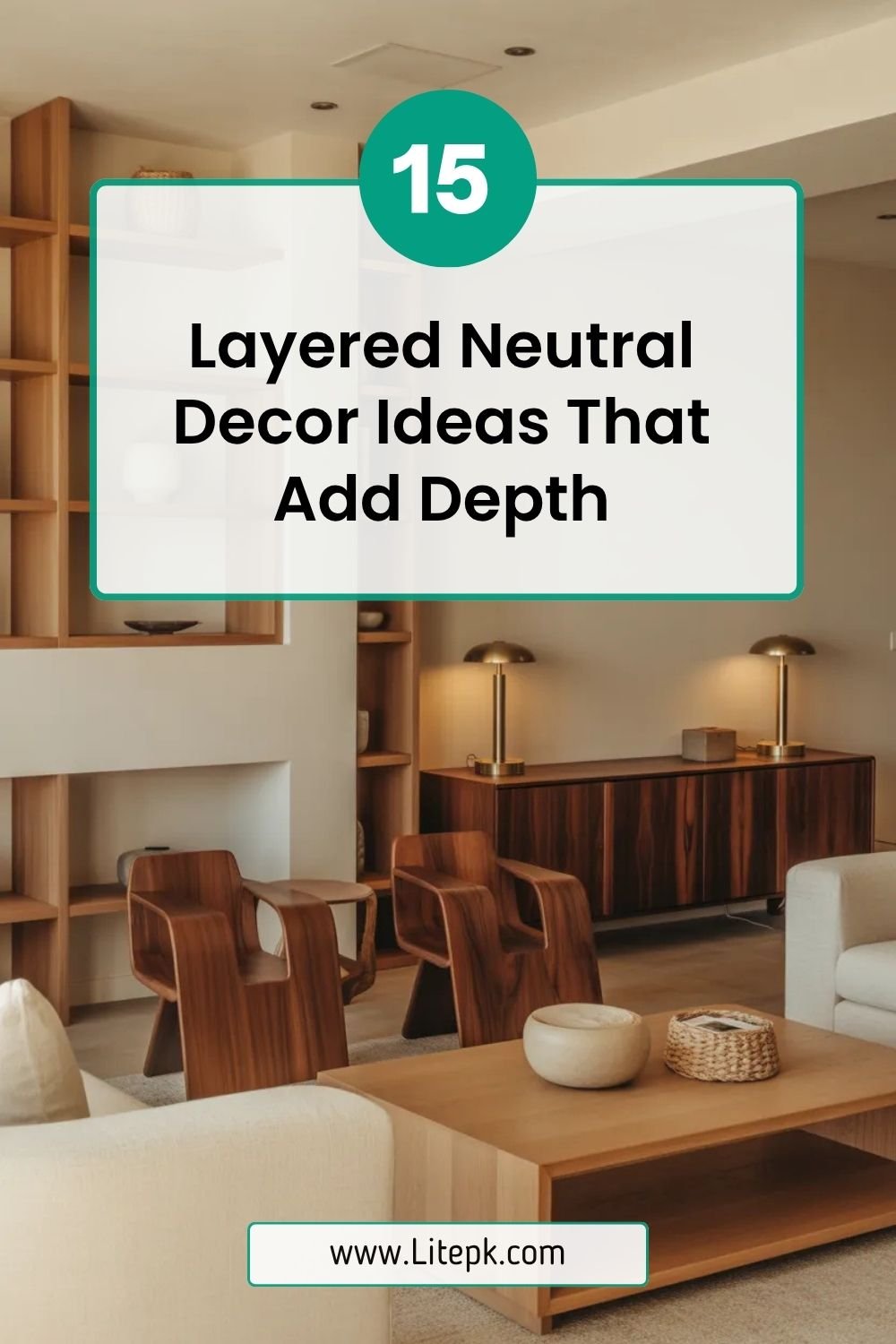
Layered neutral decor is the secret behind interiors that feel calm yet visually rich. While neutral palettes are often associated with simplicity, designers know that the real magic happens in the layers. By combining tones, textures, and materials thoughtfully, you can create a space that feels warm, dimensional, and effortlessly sophisticated.
Instead of relying on bold colors, layered neutral decor focuses on subtle variation and intentional contrast. From soft textiles to natural finishes, each element works together to build depth without overwhelming the space. If you want your home to feel refined, cozy, and timeless, these layered neutral decor ideas will guide you step by step.
1. Build a Multi-Tonal Neutral Base
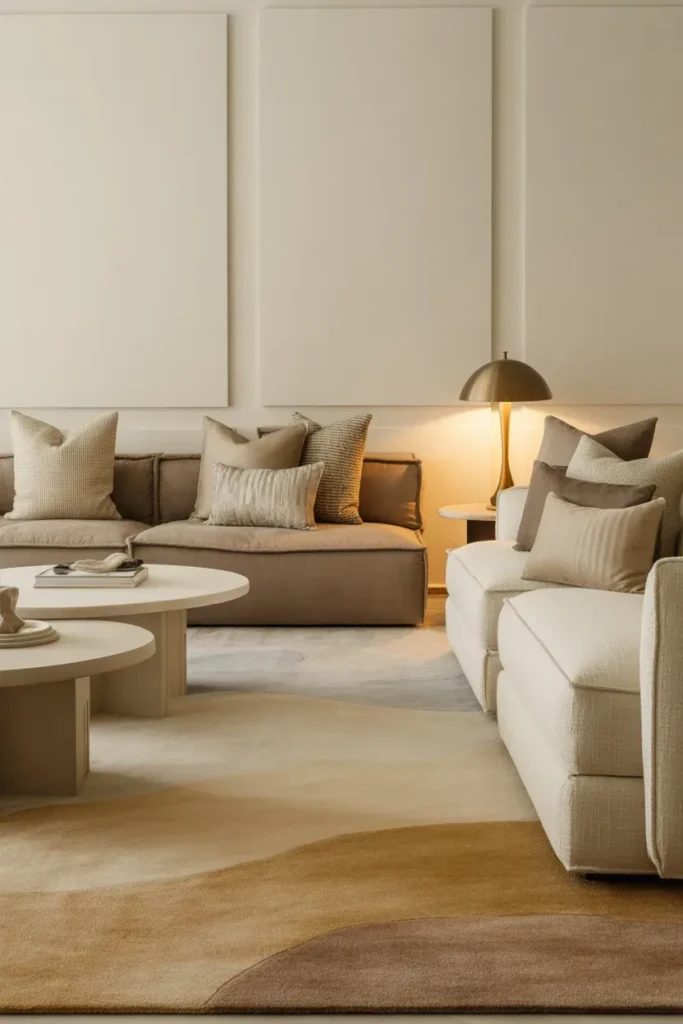
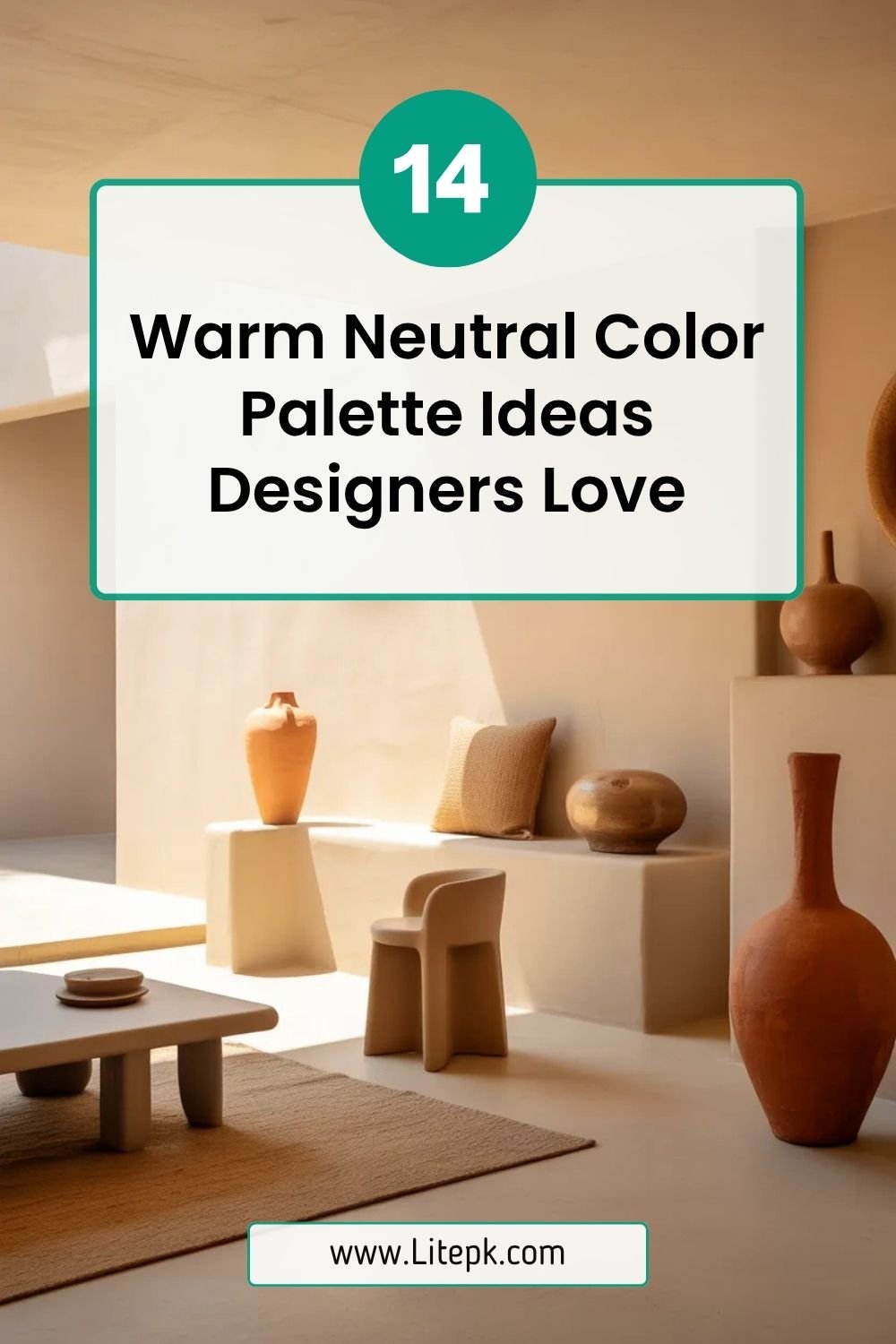
A strong layered neutral decor scheme begins with a multi-tonal foundation. Instead of using a single shade, designers combine variations of beige, cream, ivory, and taupe to create visual movement. This layered palette prevents the space from feeling flat while maintaining a cohesive look.
Start with walls in a soft neutral tone, then add furniture in slightly deeper or lighter shades. Incorporate accents like cushions and rugs in complementary hues. This layering approach ensures that each element contributes to a unified yet dynamic interior.
2. Combine Soft and Structured Textures
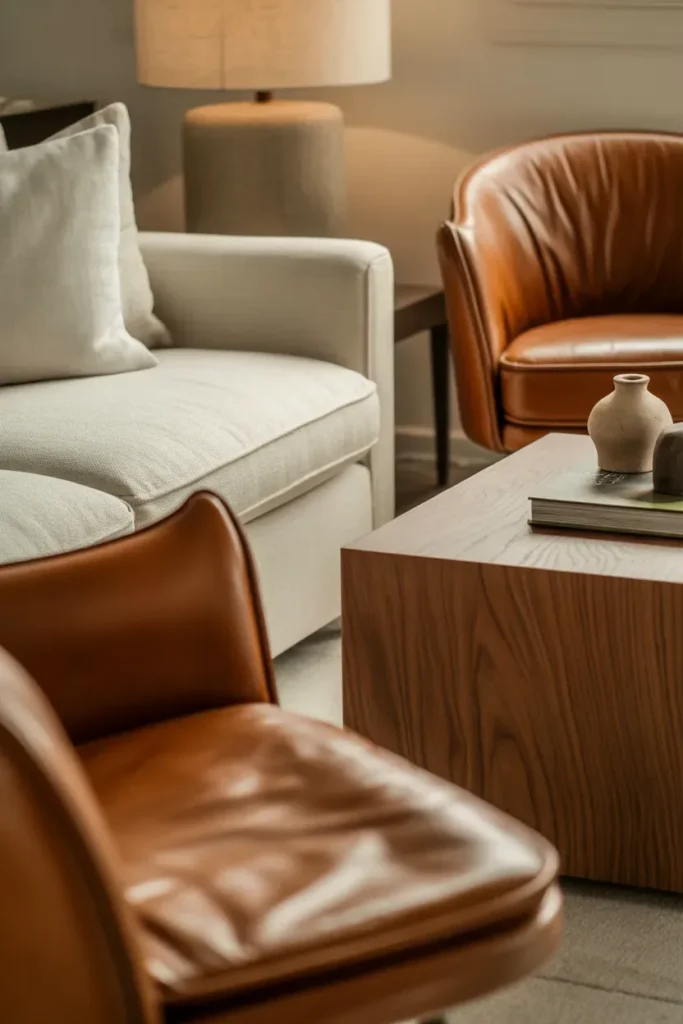
Texture is essential for adding depth to neutral interiors. Designers often mix soft materials like linen and wool with structured finishes such as leather or wood. This contrast creates balance and prevents the space from feeling overly uniform.
For example, a linen sofa paired with a leather chair and a wooden coffee table introduces variety while maintaining harmony. This combination enhances both comfort and visual interest, making the space feel thoughtfully designed.
3. Layer Rugs for Added Dimension
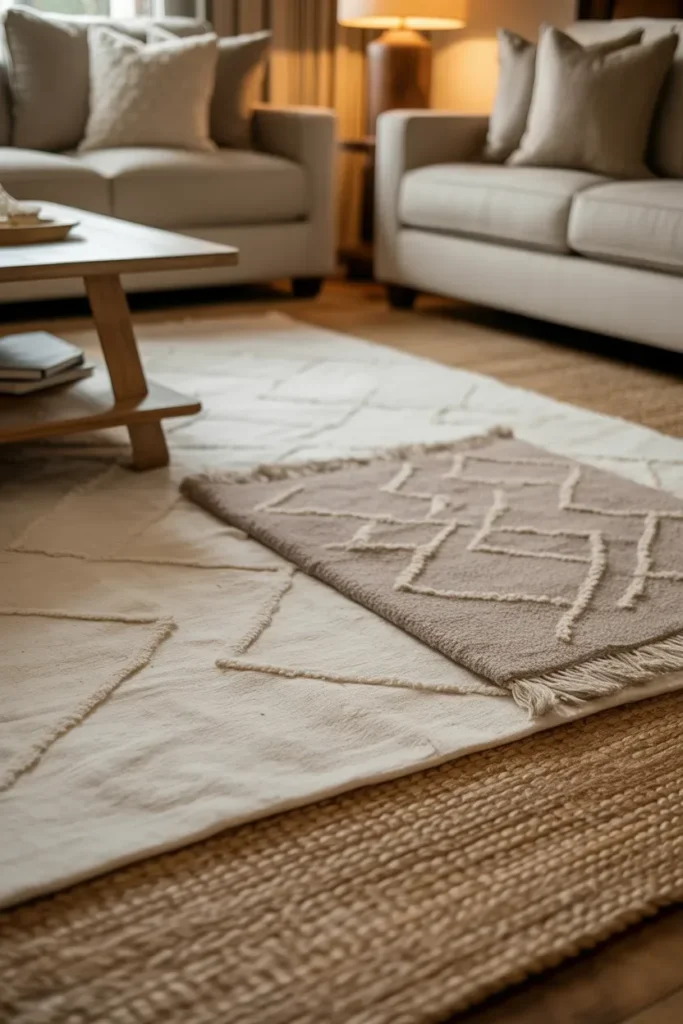
Layering rugs is a designer-approved technique for creating depth in neutral spaces. A larger neutral base rug can be paired with a smaller textured or patterned rug on top. This adds visual complexity without introducing bold colors.
Choose rugs with subtle patterns or tonal variations to maintain a cohesive look. This approach works particularly well in living rooms and bedrooms, adding warmth and grounding the space.
4. Use Tonal Upholstery Combinations
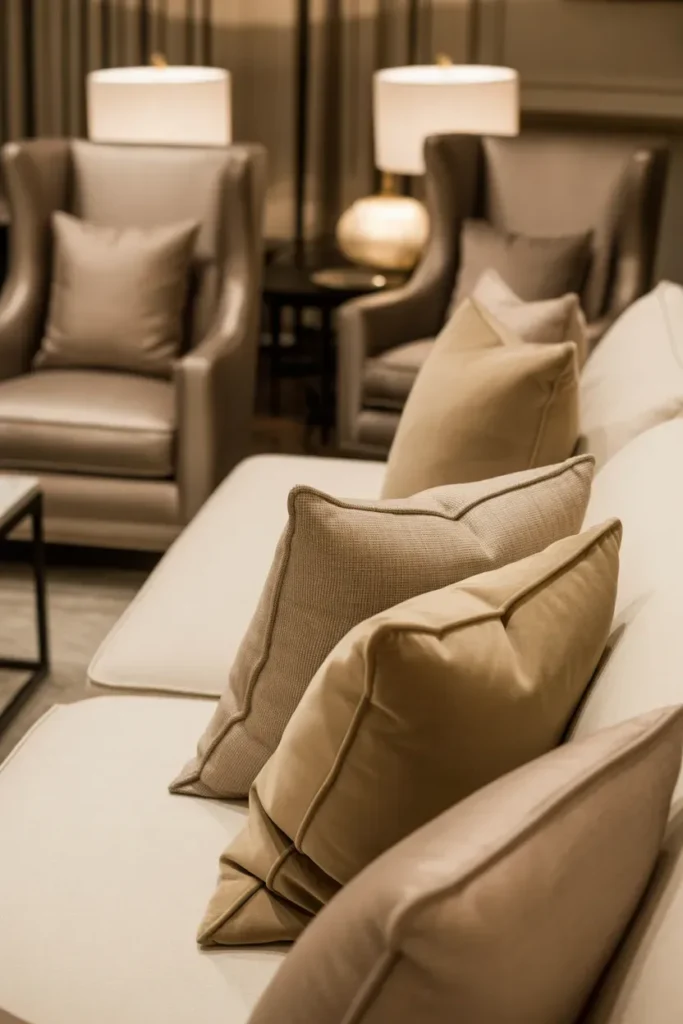
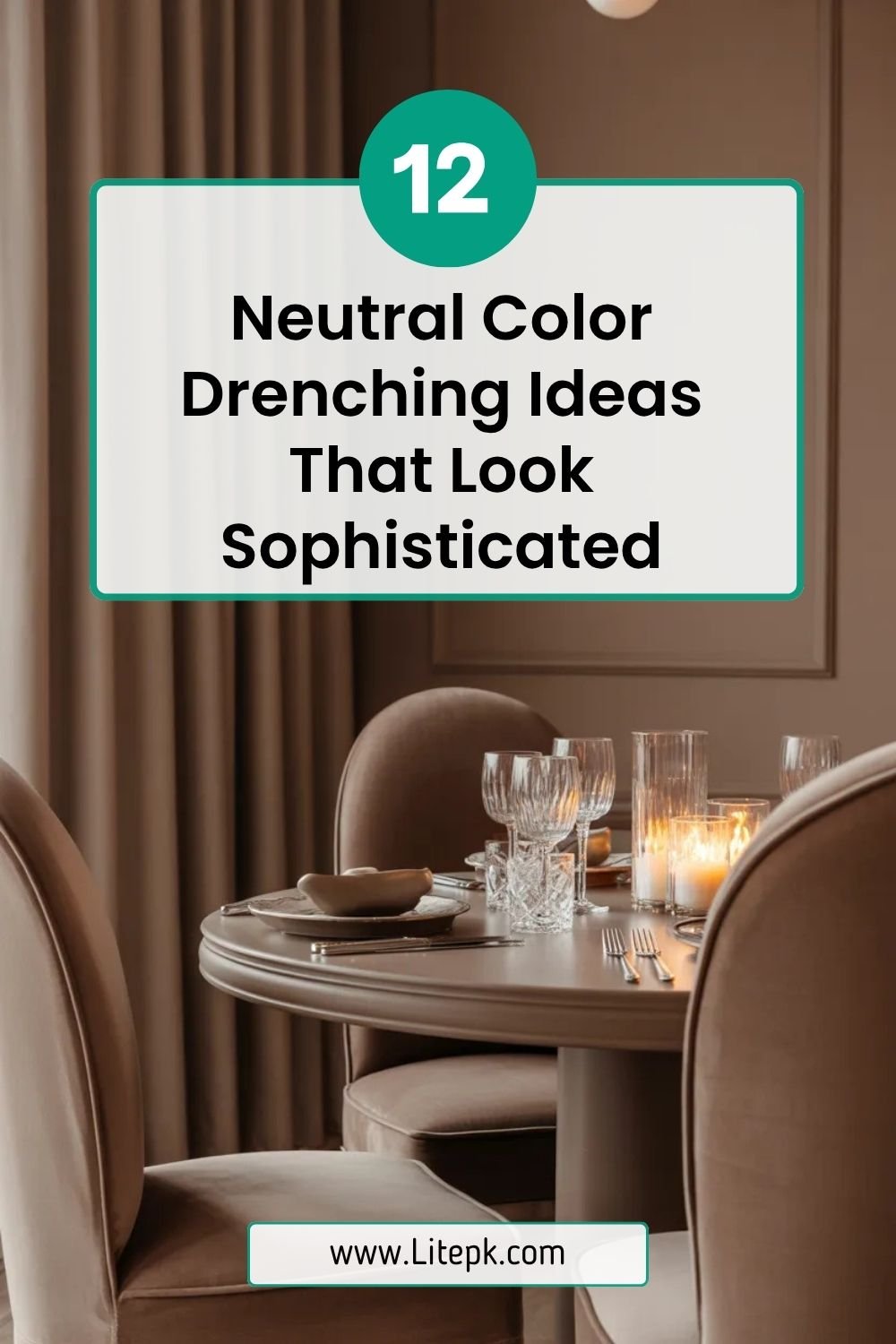
Mixing different upholstery tones is another effective way to build depth. Instead of matching furniture exactly, designers opt for slightly varied shades within the same color family.
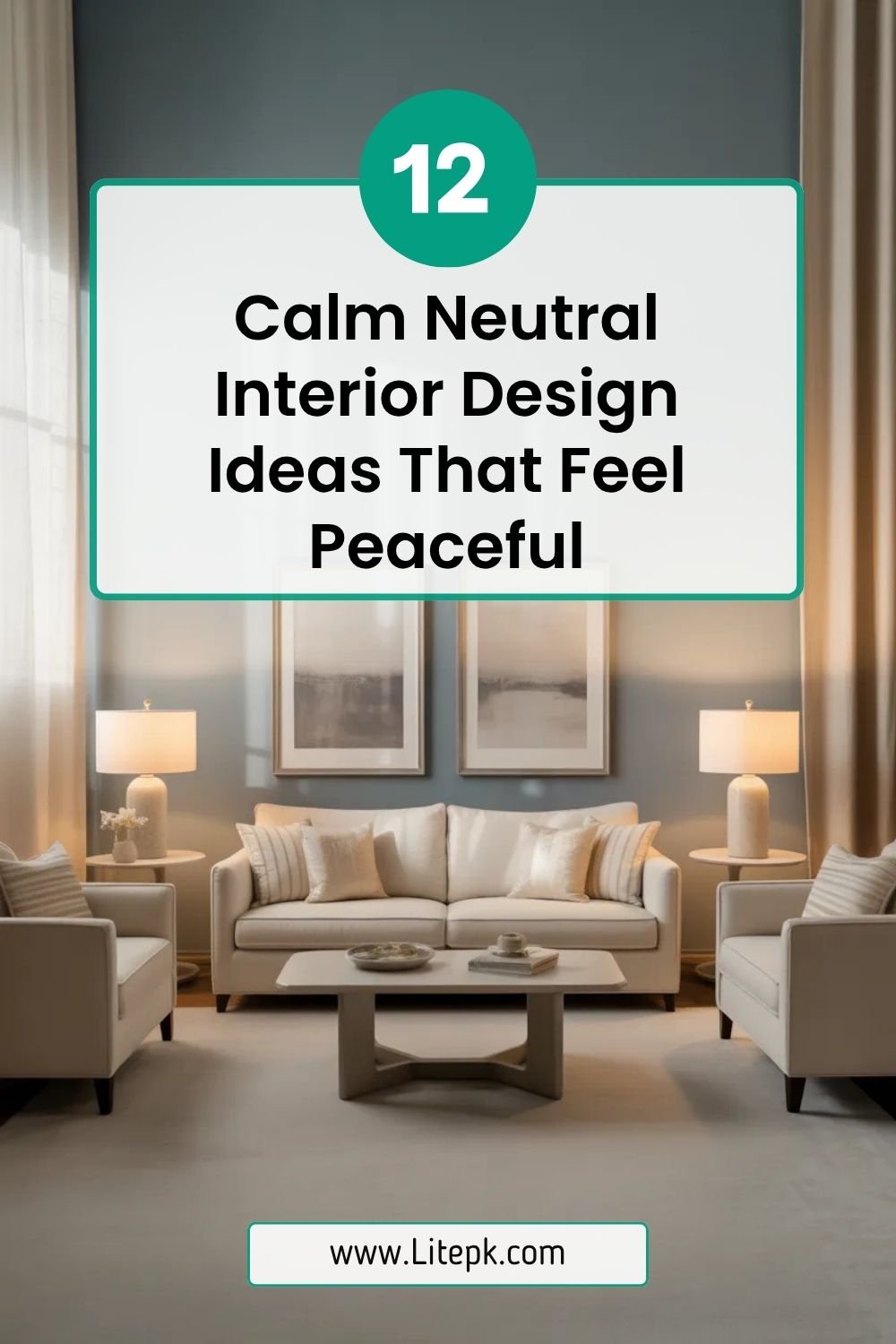
For instance, a cream sofa can be paired with taupe armchairs and beige cushions. This tonal variation creates a layered look that feels intentional and refined.
5. Add Depth with Layered Curtains
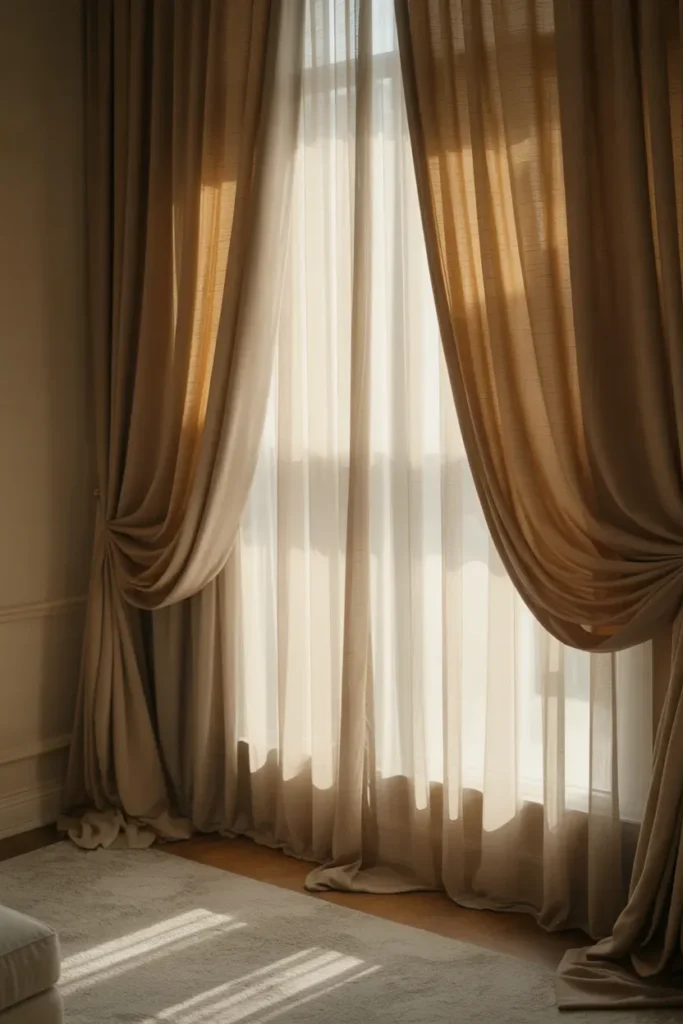
Curtains are often overlooked, but they play a major role in layered neutral decor. Designers use sheer curtains combined with heavier drapes to create dimension and softness.
This layering allows light to filter gently while adding visual richness to the space. Neutral tones like ivory, sand, and soft gray work beautifully together.
6. Incorporate Natural Wood Variations
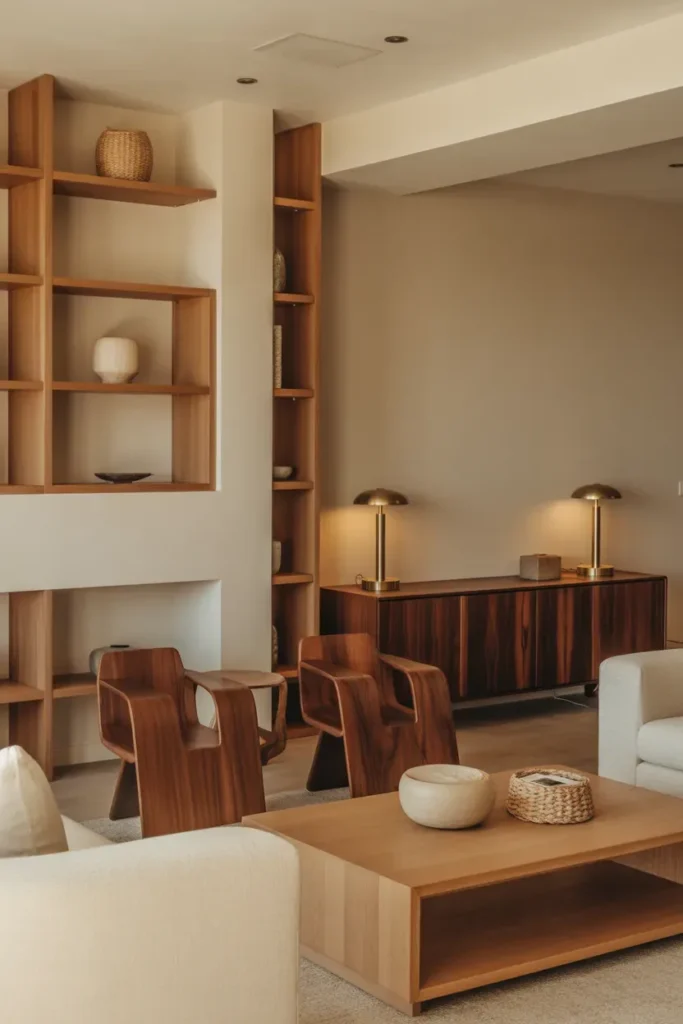
Wood adds warmth and depth to neutral interiors, especially when different tones are combined. Designers often mix light oak with medium walnut or warm brown finishes.
This variation creates contrast while maintaining a natural and cohesive feel. Wood elements can be introduced through furniture, flooring, or decor pieces.
7. Style with Layered Decorative Objects
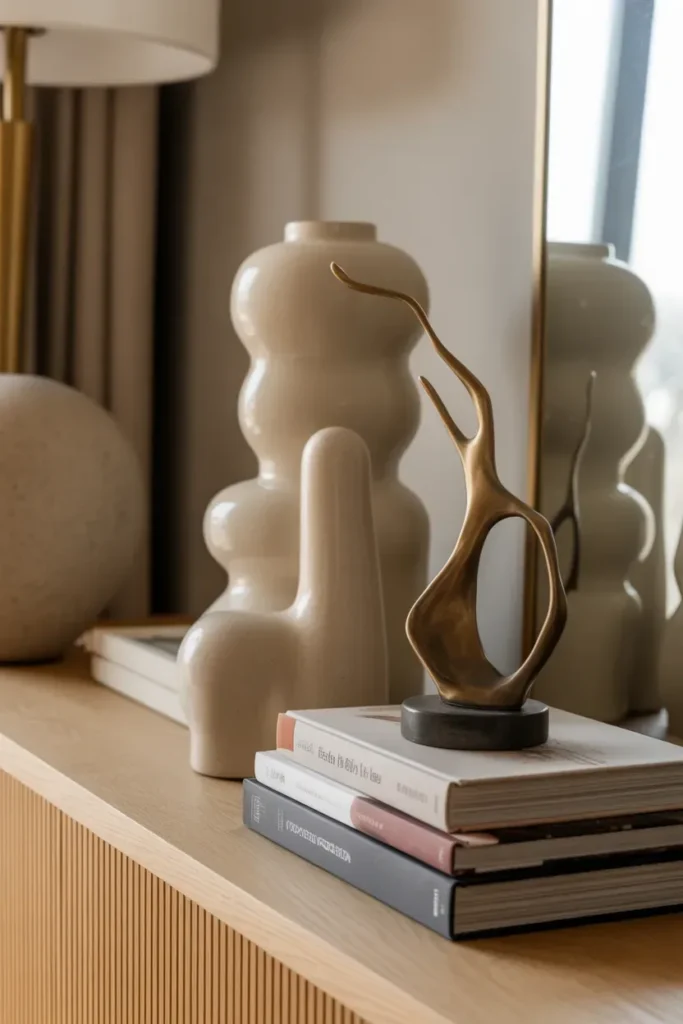
Decorative objects should be layered thoughtfully to enhance depth. Designers often group items in varying heights, shapes, and textures to create visual interest.
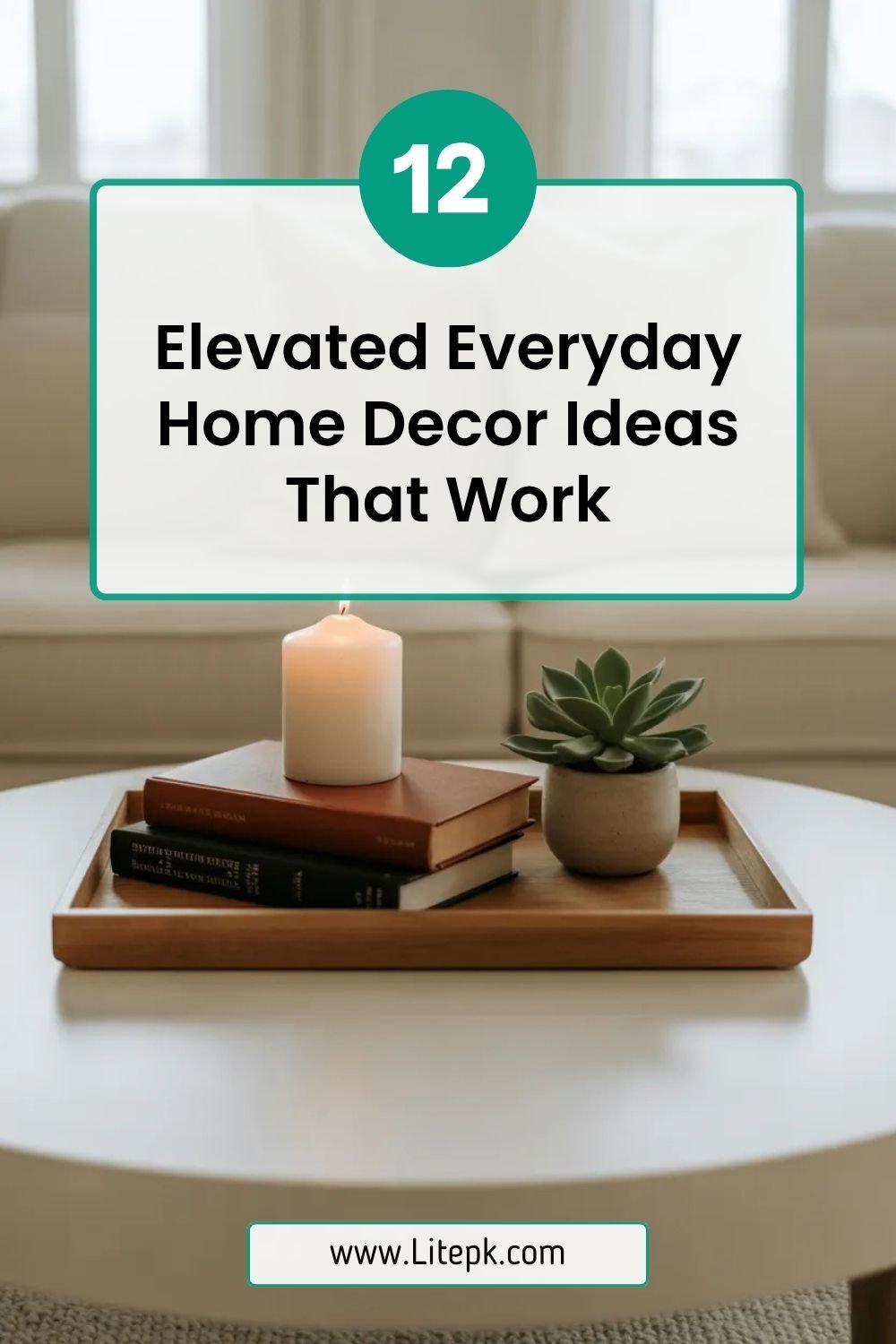
For example, combining a ceramic vase, stacked books, and a small sculpture creates a balanced arrangement. This layering technique adds personality without cluttering the space.
8. Introduce Subtle Pattern Mixing
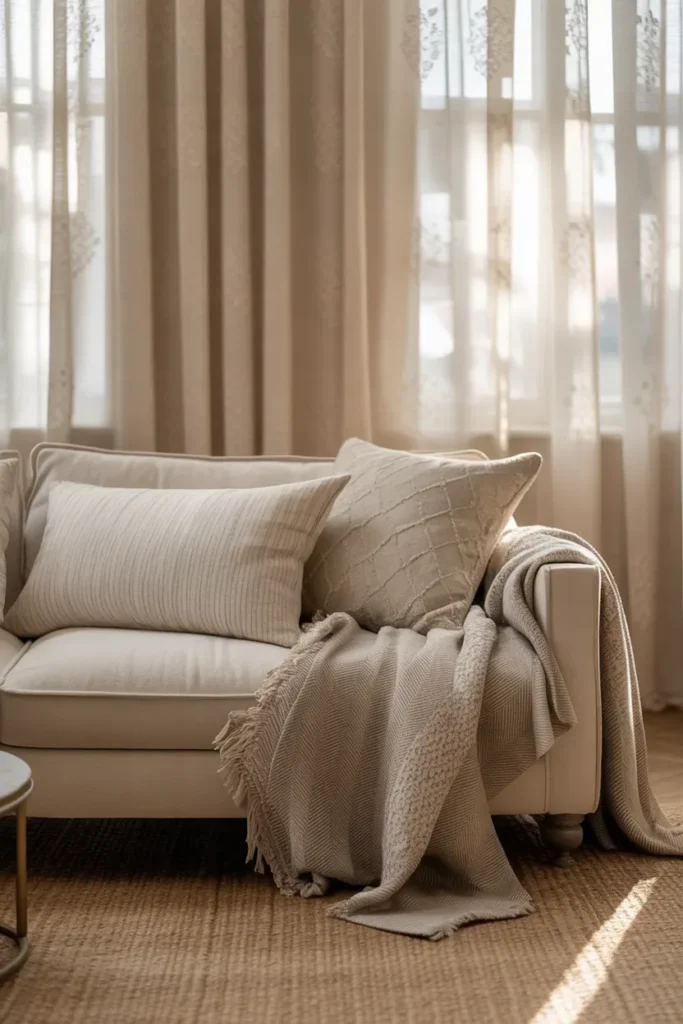
Patterns can be used in neutral decor as long as they remain subtle. Designers often mix soft stripes, minimal geometric designs, or textured weaves.
The key is to keep patterns within the same color palette. This ensures the space remains calm while still feeling visually engaging.
9. Layer Bedding for a Luxurious Look
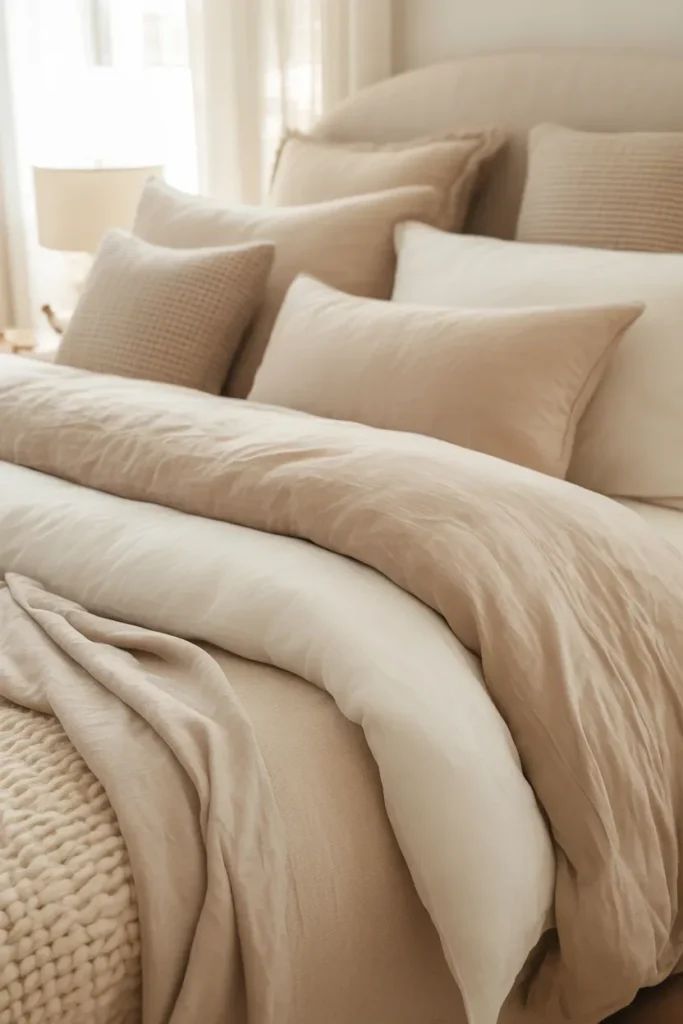
In bedrooms, layered bedding is essential for achieving depth. Designers combine sheets, duvets, throws, and cushions in complementary neutral tones.
This approach creates a plush, inviting environment while maintaining a cohesive aesthetic. Mixing textures like cotton, linen, and wool enhances the overall look.
10. Use Soft Lighting Layers
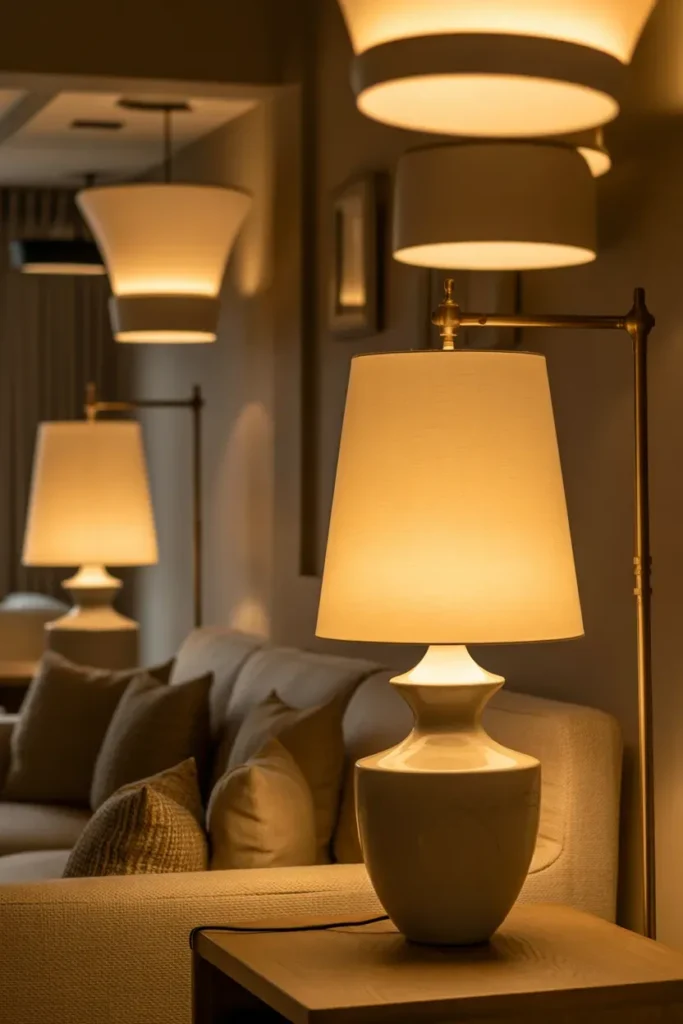
Lighting is a powerful tool for adding depth. Instead of relying on a single light source, designers layer different types of lighting, including ambient, task, and accent lighting.
This creates a warm and inviting atmosphere while highlighting different elements of the decor. Soft, warm-toned lighting enhances the neutral palette beautifully.
11. Blend Matte and Glossy Finishes
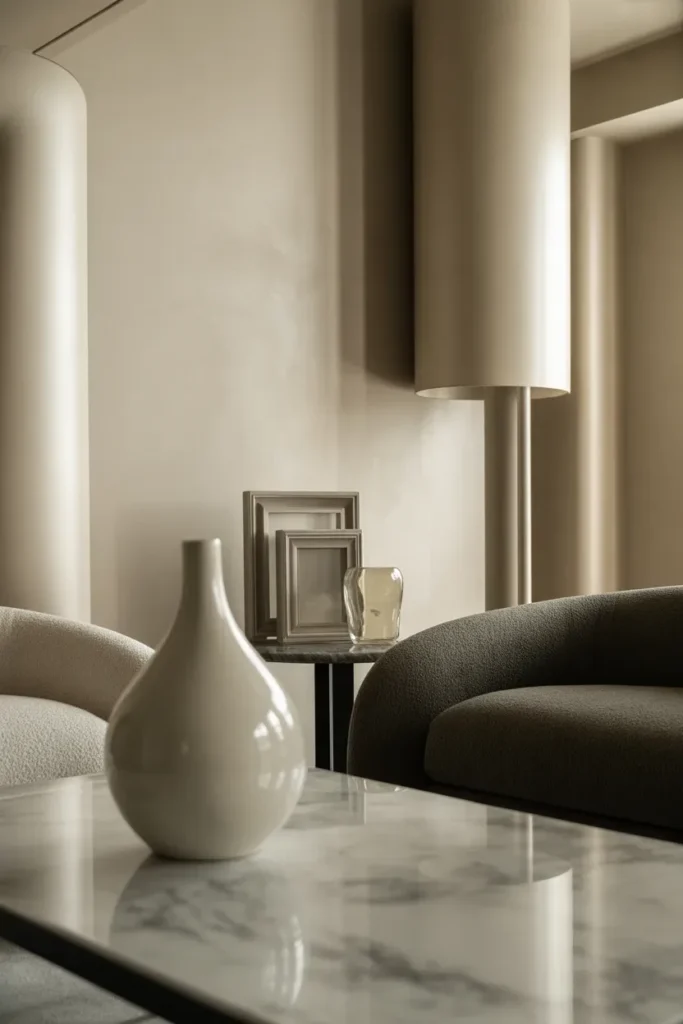
Combining different finishes adds subtle contrast to neutral spaces. Designers often mix matte surfaces with glossy accents to create visual interest.
For example, a matte wall paired with a glossy ceramic vase or polished stone surface creates depth without disrupting the neutral palette.
12. Incorporate Stone and Natural Elements
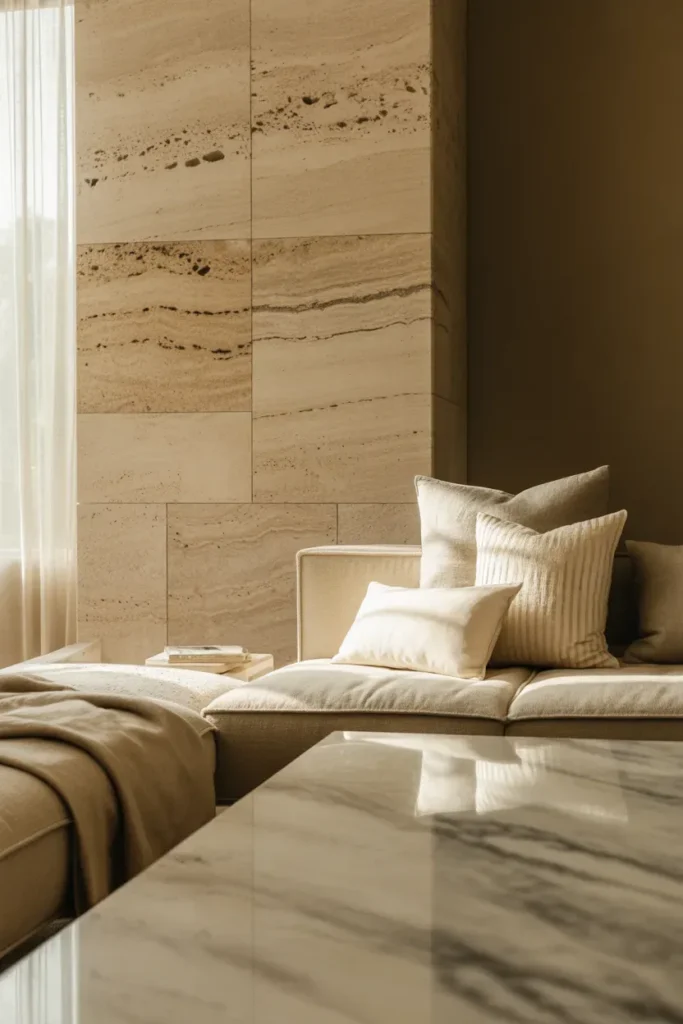
Stone surfaces like marble, travertine, or limestone add texture and sophistication. These materials introduce natural variation that enhances layered decor.
Pairing stone with soft textiles creates a balanced look. This combination is both timeless and elegant.
13. Add Greenery for Organic Contrast
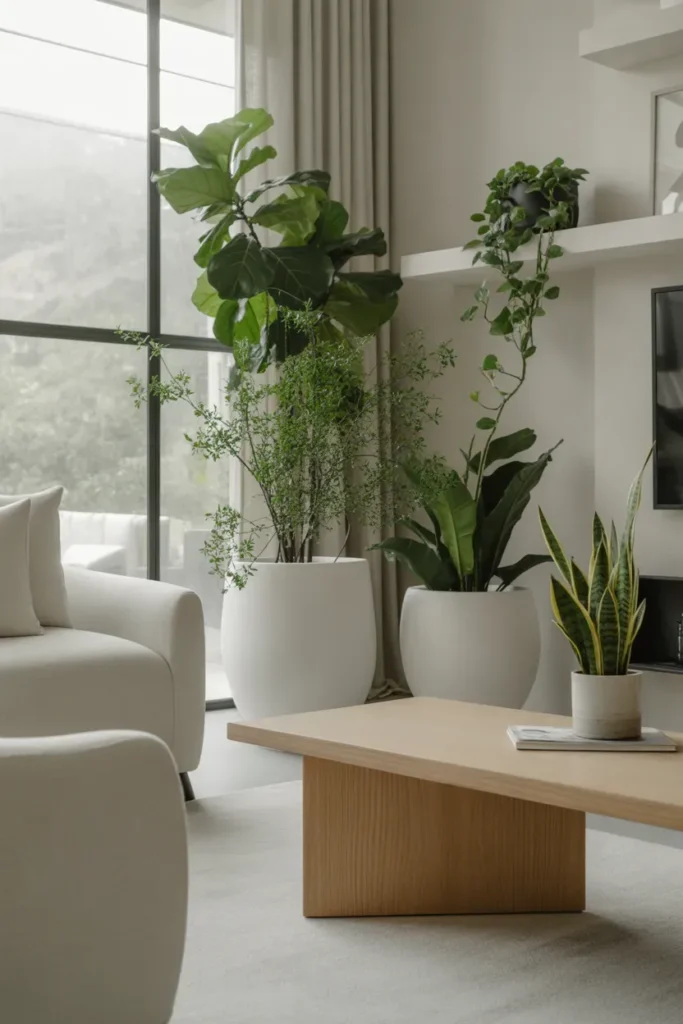
Plants bring life and contrast to neutral interiors. Their natural green tones complement neutral palettes while adding freshness.
Designers use simple planters to maintain a clean look. This addition enhances the overall depth of the space.
14. Create Depth with Wall Treatments
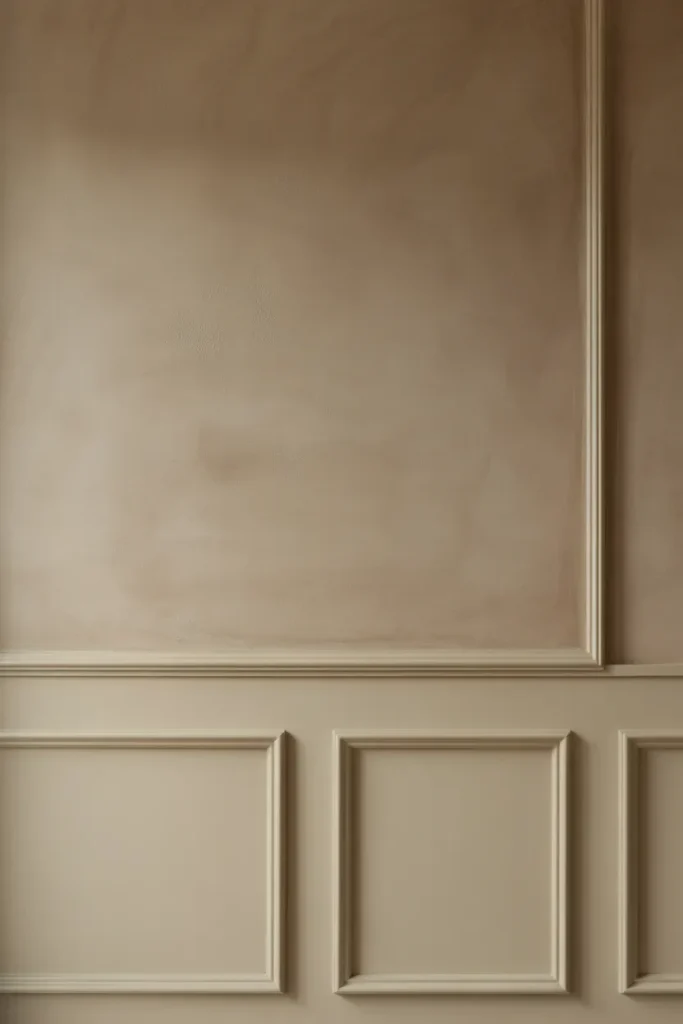
Walls offer an opportunity to add subtle depth through paneling, textured paint, or wallpaper. Designers often use these techniques to enhance neutral interiors.
These treatments add dimension without relying on bold colors, making the space feel more refined and complete.
15. Maintain Balance and Cohesion
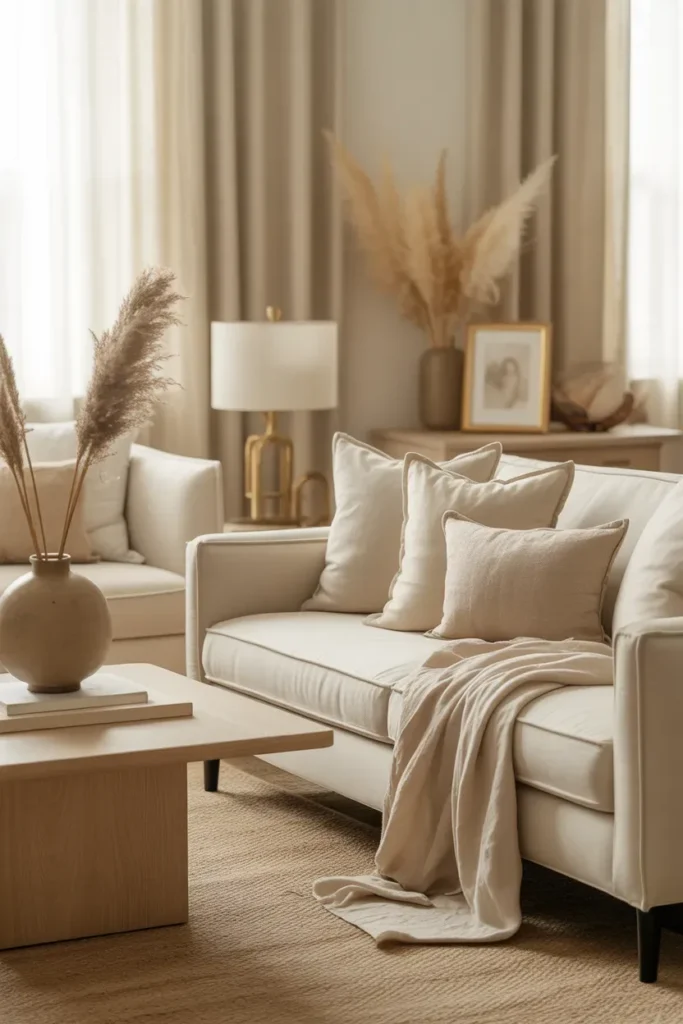
The final step in layered neutral decor is maintaining balance. Every element should complement the others, creating a cohesive and harmonious space.
Designers carefully edit each layer to avoid clutter while ensuring depth. This approach results in a polished and timeless interior.
Final Thoughts
Layered neutral decor proves that simplicity doesn’t have to be boring. By thoughtfully combining tones, textures, and materials, you can create interiors that feel rich, inviting, and timeless. The beauty of this approach lies in its subtlety—every detail contributes to the overall harmony without overpowering the space.
Focus on layering gradually, experimenting with textures, and maintaining balance. With these ideas, you can transform any room into a sophisticated retreat that feels both calm and visually engaging.