
12 Fall Bedding Color Psychology Ideas For Better Sleep

As the weather cools and nights grow longer, fall becomes the perfect season to reset your sleep space. Bedding colors play a bigger role in sleep quality than most people realize. The right shades can calm your mind, lower stress, and help your body relax after a long day.
Fall bedding is not just about style. It is about comfort, mood, and emotional balance. Warm, grounded colors inspired by nature can create a sense of safety and calm that supports deeper rest. In this guide, you will discover how fall color psychology works and how to use it in your bedroom for better sleep.
1. Warm Beige for Emotional Comfort
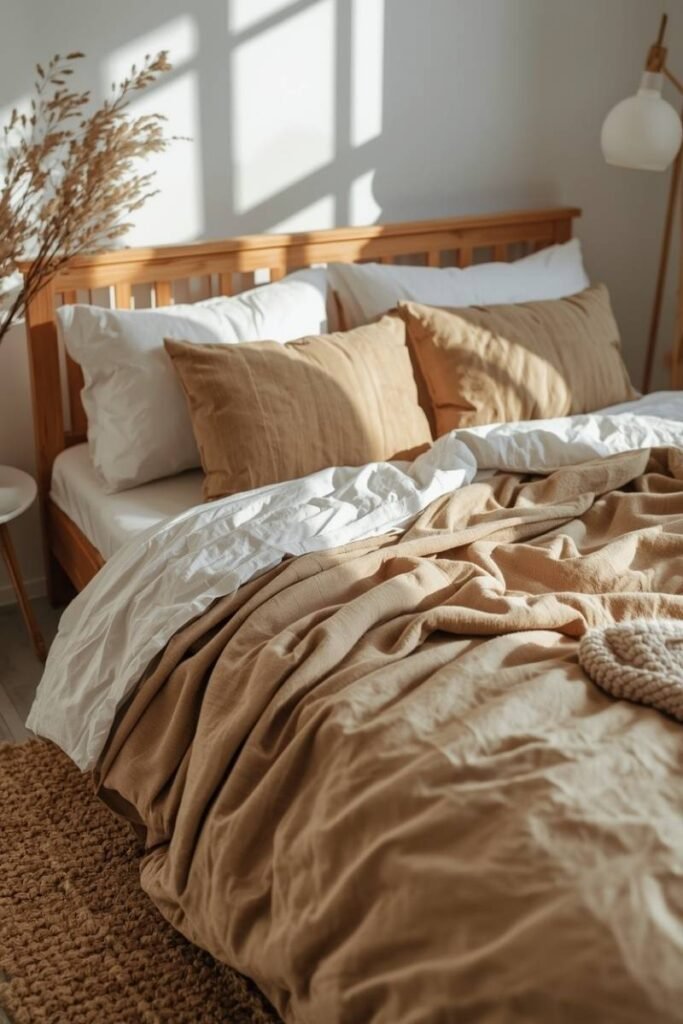
Warm beige is one of the most underrated fall bedding colors. It creates a sense of safety and emotional stability, which is essential for quality sleep. Beige mimics natural elements like sand and stone, helping the mind feel grounded and secure at night.
This color works well if you feel overstimulated or anxious before bedtime. Warm beige bedding pairs beautifully with wooden furniture and soft lighting. It keeps the bedroom calm without feeling boring or cold, making it ideal for fall nights.
2. Soft Taupe for Mental Balance
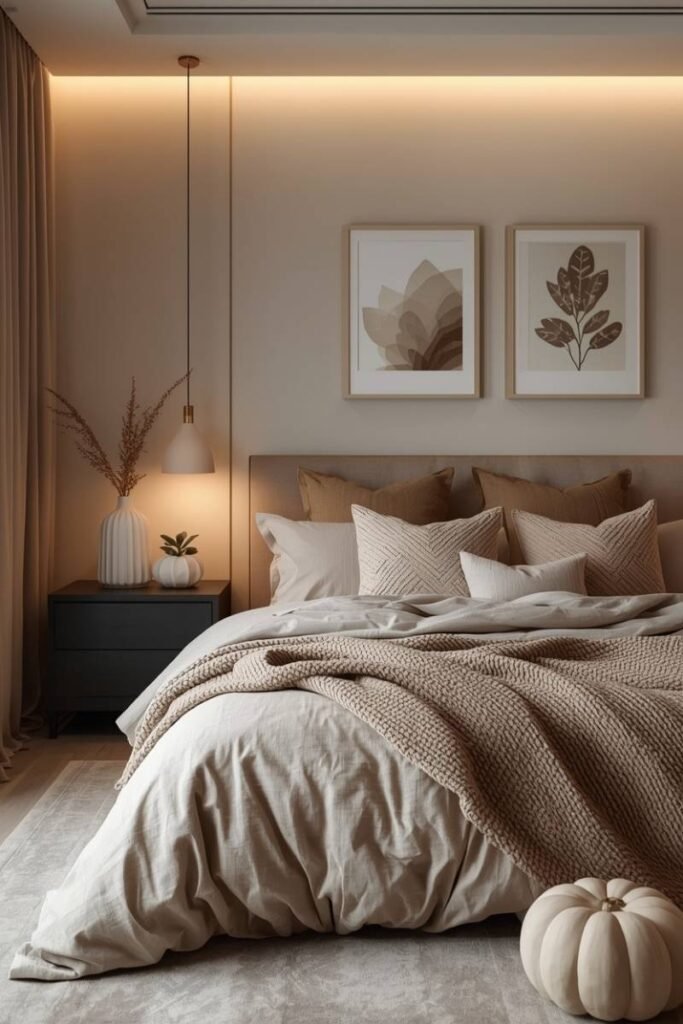
Taupe blends gray and brown, making it a balanced and calming fall color. Psychologically, taupe reduces mental clutter and promotes emotional neutrality. This makes it perfect for people who struggle with racing thoughts at night.
Taupe bedding creates a peaceful visual flow that helps the brain slow down. It works especially well in modern and minimal bedrooms. When paired with textured throws or linen sheets, taupe adds warmth without overstimulation.
3. Muted Olive Green for Grounding Energy
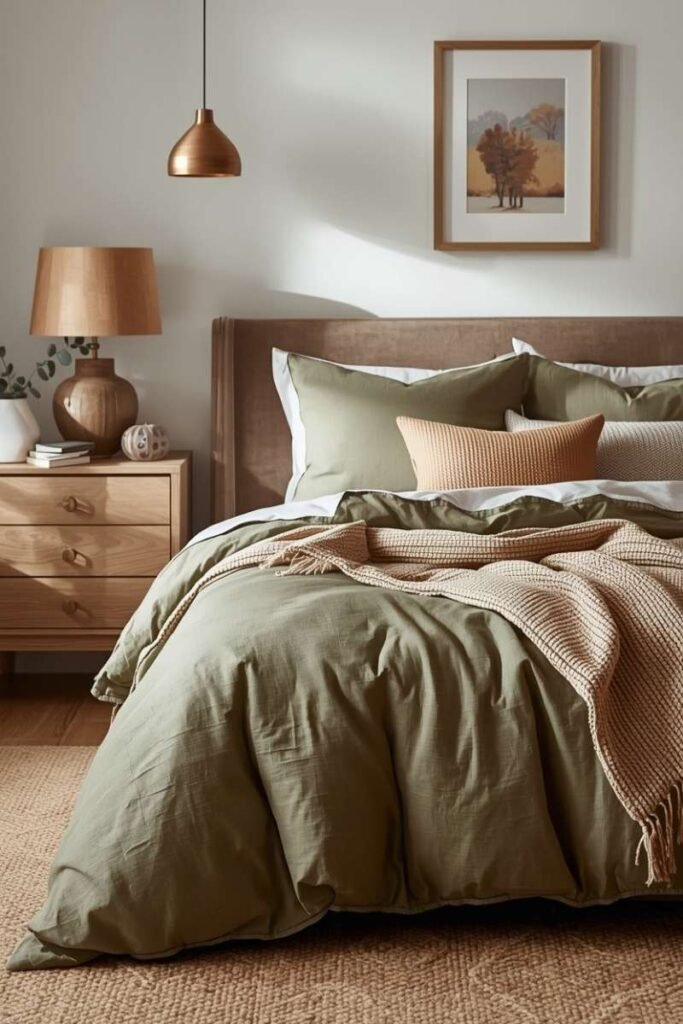
Olive green connects directly to nature, which naturally lowers stress levels. This muted green shade provides grounding energy that helps the nervous system relax. It is especially effective for people who feel mentally drained by screens and daily pressure.
Olive green bedding brings a calm, earthy feel without being too dark. It pairs well with cream, beige, and light wood accents. In fall, this color creates a restful retreat that feels both cozy and refreshing.
4. Dusty Blue for Deep Relaxation
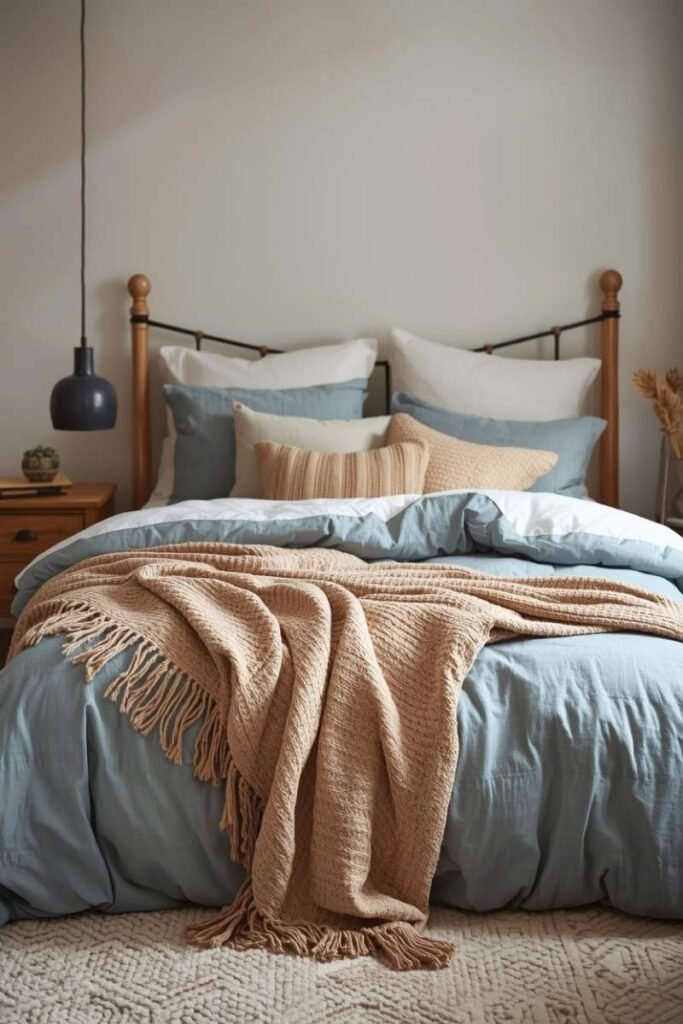
Dusty blue has a cooling psychological effect that slows heart rate and breathing. Unlike bright blues, dusty blue feels soft and muted, making it ideal for fall bedding. It encourages deep relaxation and emotional clarity before sleep.
This color is perfect if you struggle with restlessness or light sleep. Dusty blue bedding works well in both warm and cool-toned bedrooms. It creates a peaceful sleep environment without feeling cold or distant.
5. Warm Gray for Stress Reduction
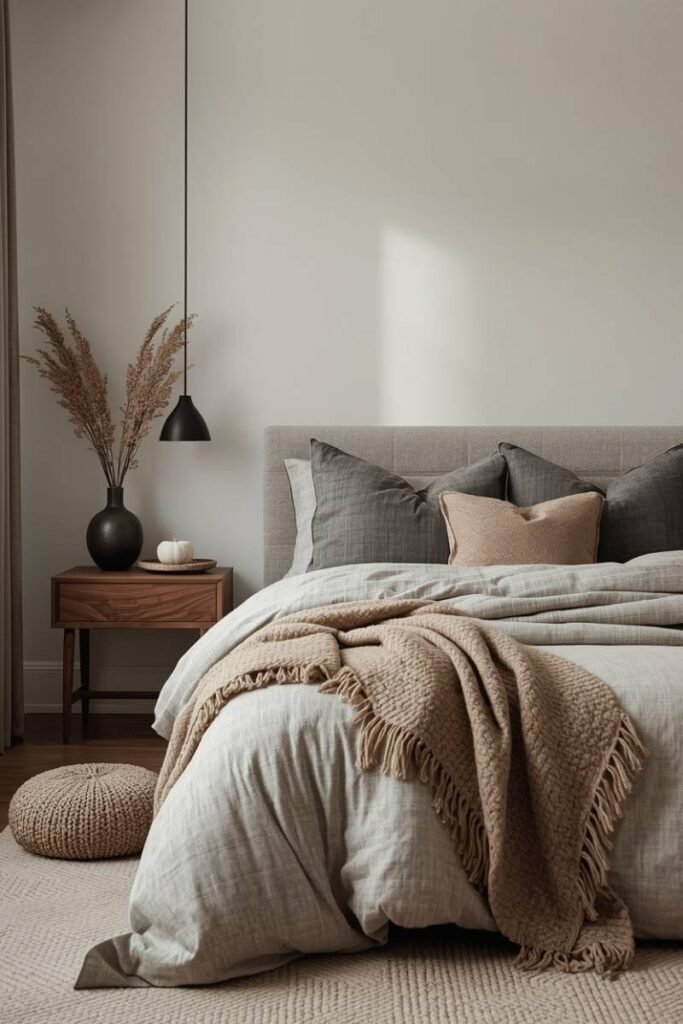
Warm gray is a neutral that promotes calm without emotional dullness. Psychologically, it reduces overstimulation and visual stress. Unlike cool gray, warm gray feels inviting and supportive, especially during fall.
Warm gray bedding is ideal for people who want a clean, modern look while still feeling cozy. It allows the mind to rest without distraction and works well with layered textures like quilts and knit throws.
6. Soft Terracotta for Emotional Warmth
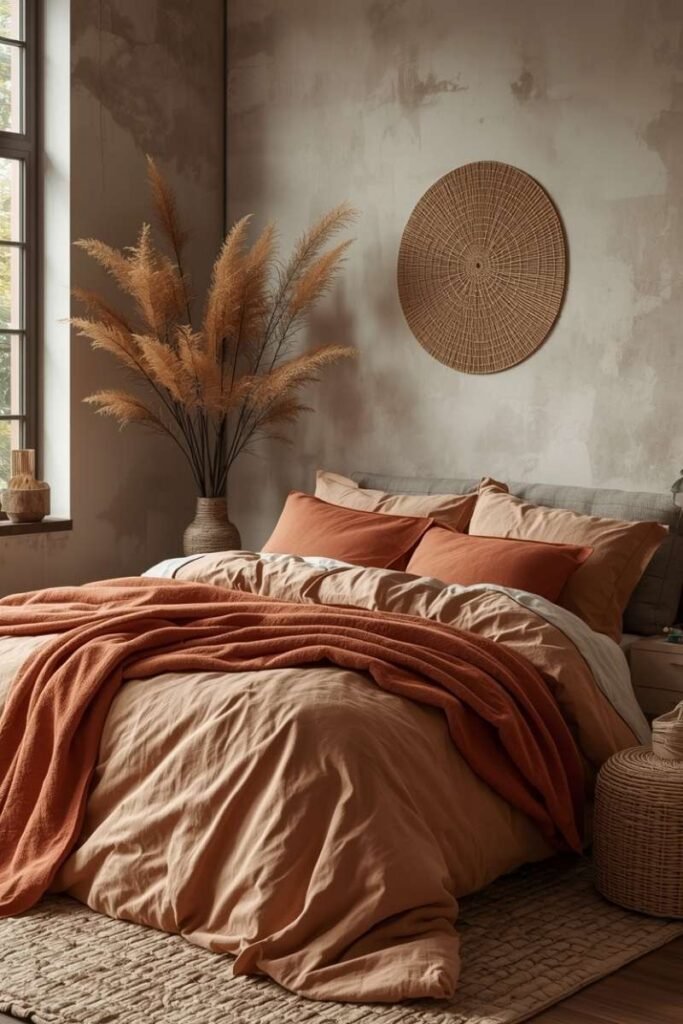
Terracotta is a warm earth tone that creates emotional comfort and stability. This color is associated with safety, warmth, and grounding, which are essential for restful sleep. Soft terracotta works better than bold orange tones for bedrooms.
Terracotta bedding is perfect for fall because it reflects seasonal warmth without being overwhelming. It pairs well with cream or beige sheets and adds a cozy, nurturing feel to the bedroom environment.
7. Creamy Ivory for Calm Simplicity
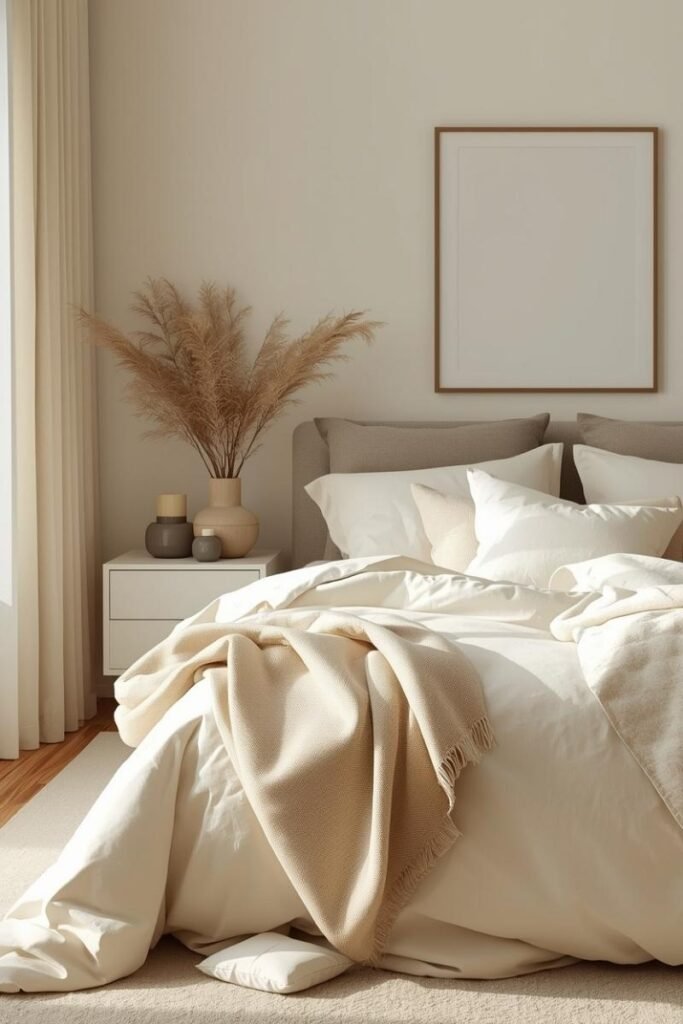
Ivory creates a clean and calming sleep environment that feels warm rather than stark. Psychologically, it reduces mental noise and creates visual softness. Ivory bedding is ideal if you want a light, airy fall bedroom.
This color reflects light gently, making small bedrooms feel more open while still cozy. Ivory works well as a base color and pairs beautifully with fall accent tones like rust, olive, or taupe.
8. Muted Rust for Cozy Security
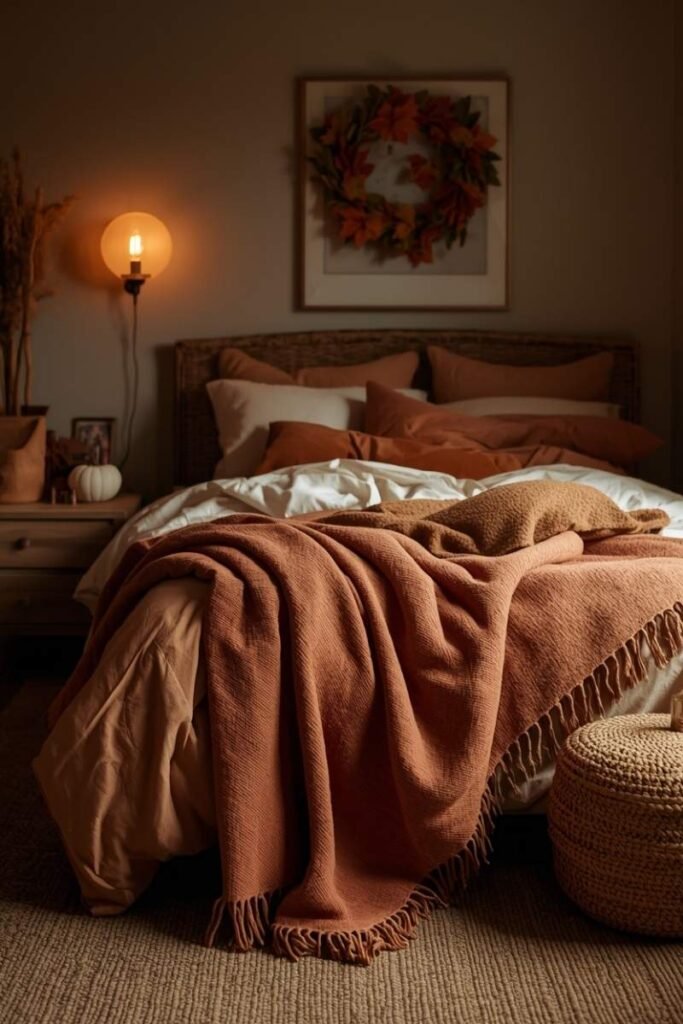
Muted rust is a fall favorite that promotes feelings of warmth and protection. Unlike bright red, rust tones feel grounded and stable. Psychologically, this color helps the body feel safe and relaxed.
Rust bedding works best when softened with neutral layers. It adds depth and seasonal charm without disrupting sleep. This color is ideal for people who want a cozy, enveloping bedroom feel in fall.
9. Sage Green for Nervous System Calm
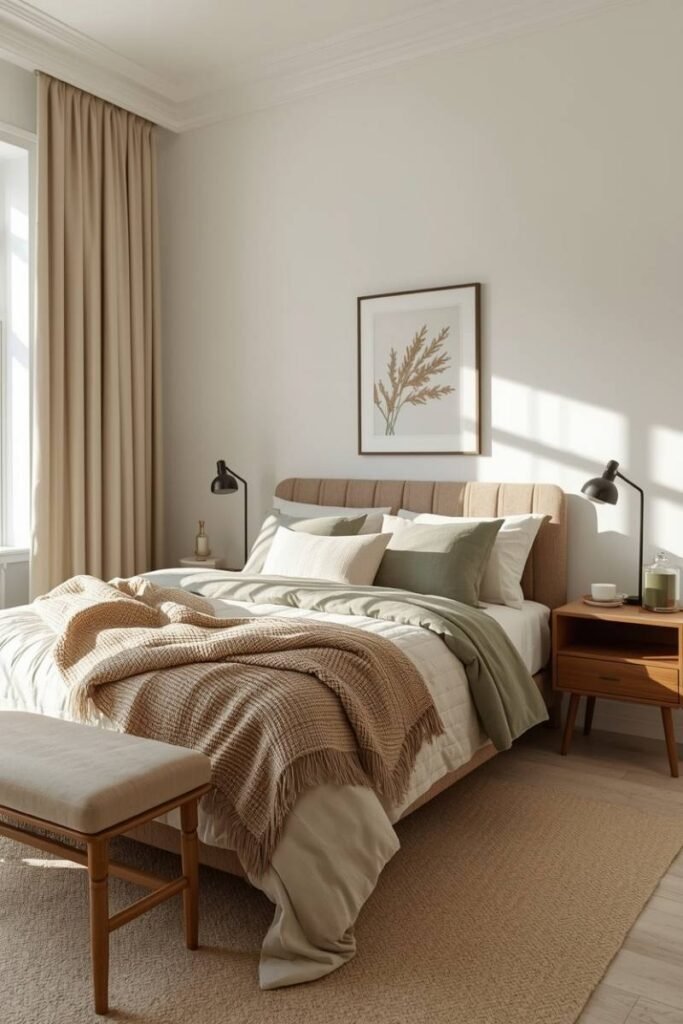
Sage green is known for its soothing effect on the nervous system. It reduces anxiety and promotes emotional balance, making it perfect for bedtime. Sage feels lighter than olive, which makes it suitable for smaller bedrooms.
Sage green bedding creates a gentle, calming atmosphere that supports deep rest. It pairs well with white, beige, and light wood. This color is especially helpful for people who struggle with stress-related sleep issues.
10. Warm Mocha Brown for Deep Comfort
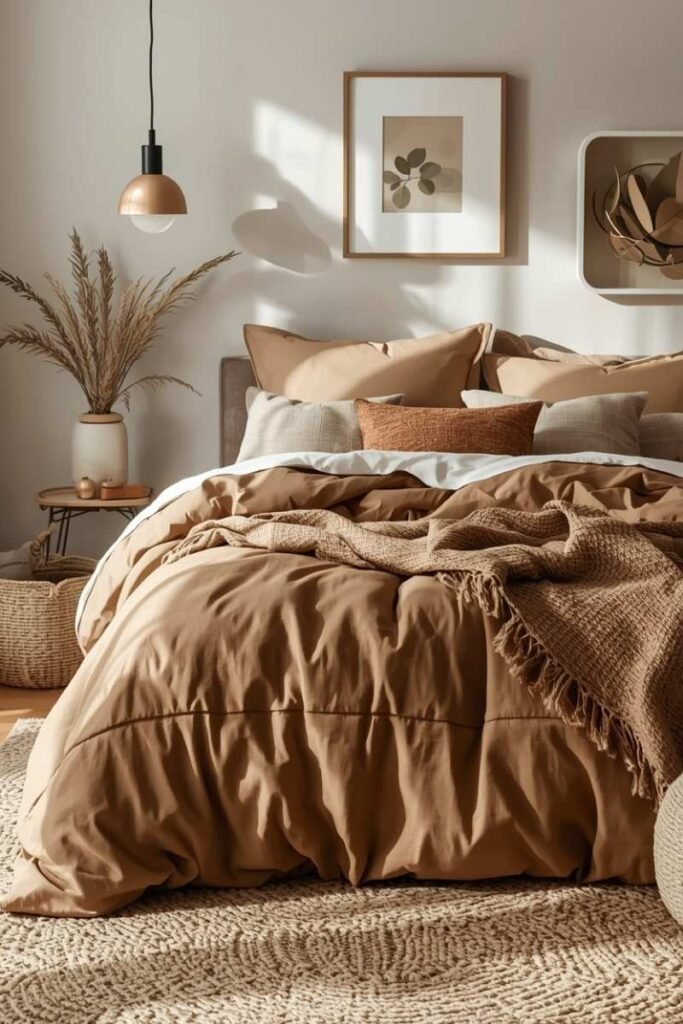
Mocha brown creates a cocoon-like effect that promotes emotional security. This color helps the brain feel grounded and safe, which is essential for uninterrupted sleep. Warm brown tones are deeply comforting in fall.
Mocha bedding works best in well-lit rooms to avoid heaviness. When paired with lighter sheets or pillows, it creates a balanced, cozy sleep space that feels restful and inviting.
11. Muted Lavender for Gentle Calm
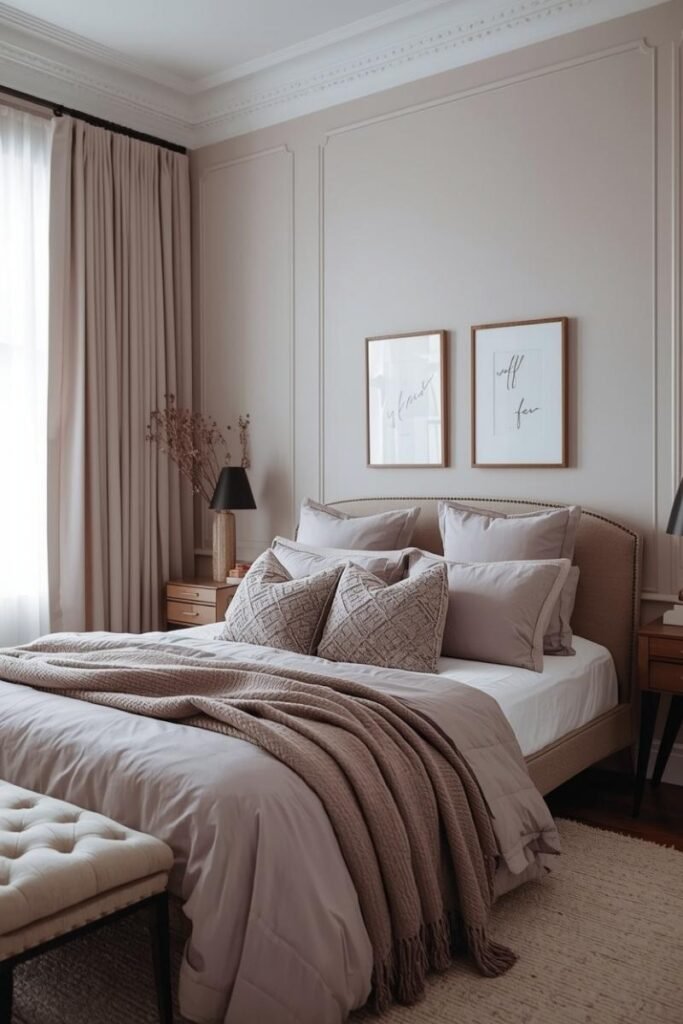
Muted lavender offers relaxation without stimulation. Unlike bright purple, soft lavender calms the mind and reduces stress. Psychologically, it supports emotional healing and mental quiet before sleep.
Lavender bedding works well if you want something different from traditional fall colors. It pairs nicely with gray or cream and creates a peaceful, slightly romantic atmosphere without overpowering the senses.
12. Charcoal with Warm Undertones for Sleep Depth
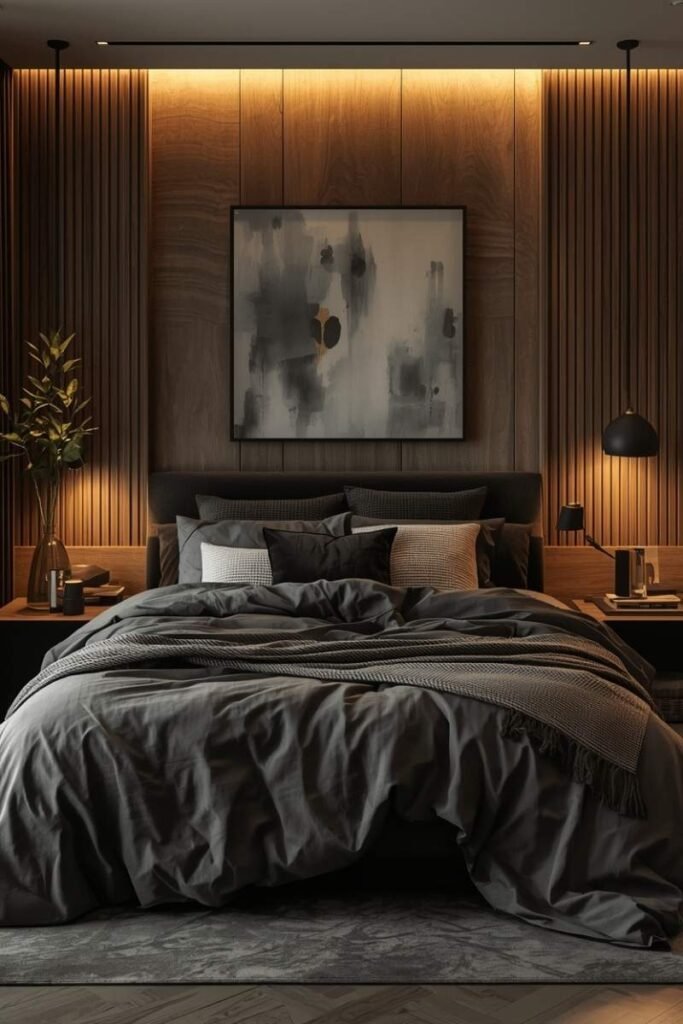
Charcoal with warm undertones creates a sense of enclosure that supports deep sleep. This color helps block visual distractions and signals nighttime to the brain. Warm charcoal feels cozy rather than cold.
This bedding color is ideal for people sensitive to light or noise. Pair it with warm textures and soft lighting to maintain balance. It adds sophistication while supporting restful sleep.
How to Layer Fall Bedding Colors Correctly
Layering matters as much as color choice. Start with a neutral base, then add one or two fall tones for depth. Too many colors can disrupt visual calm and affect sleep quality.
Use texture to add interest instead of contrast. Quilts, knit throws, and linen sheets enhance comfort without overstimulation. The goal is harmony, not bold design.
Common Mistakes to Avoid with Fall Bedding Colors
Avoid bright or high-contrast colors in bedding. These keep the brain alert. Also avoid mixing too many warm tones, which can feel heavy and overwhelming.
Another mistake is ignoring lighting. Warm colors need soft lighting to feel calming. Harsh white light can change how colors affect mood and sleep.
Final Thoughts on Fall Bedding Color Psychology
Fall is the ideal time to reset your bedroom for better sleep. Bedding colors influence emotions, stress levels, and overall rest quality. Choosing psychologically calming fall shades can make a noticeable difference in how you sleep and wake up.
Focus on colors that feel safe, grounded, and soothing. Pair them with comfortable textures and warm lighting. A calm bedroom supports a calm mind, and that leads to better sleep.