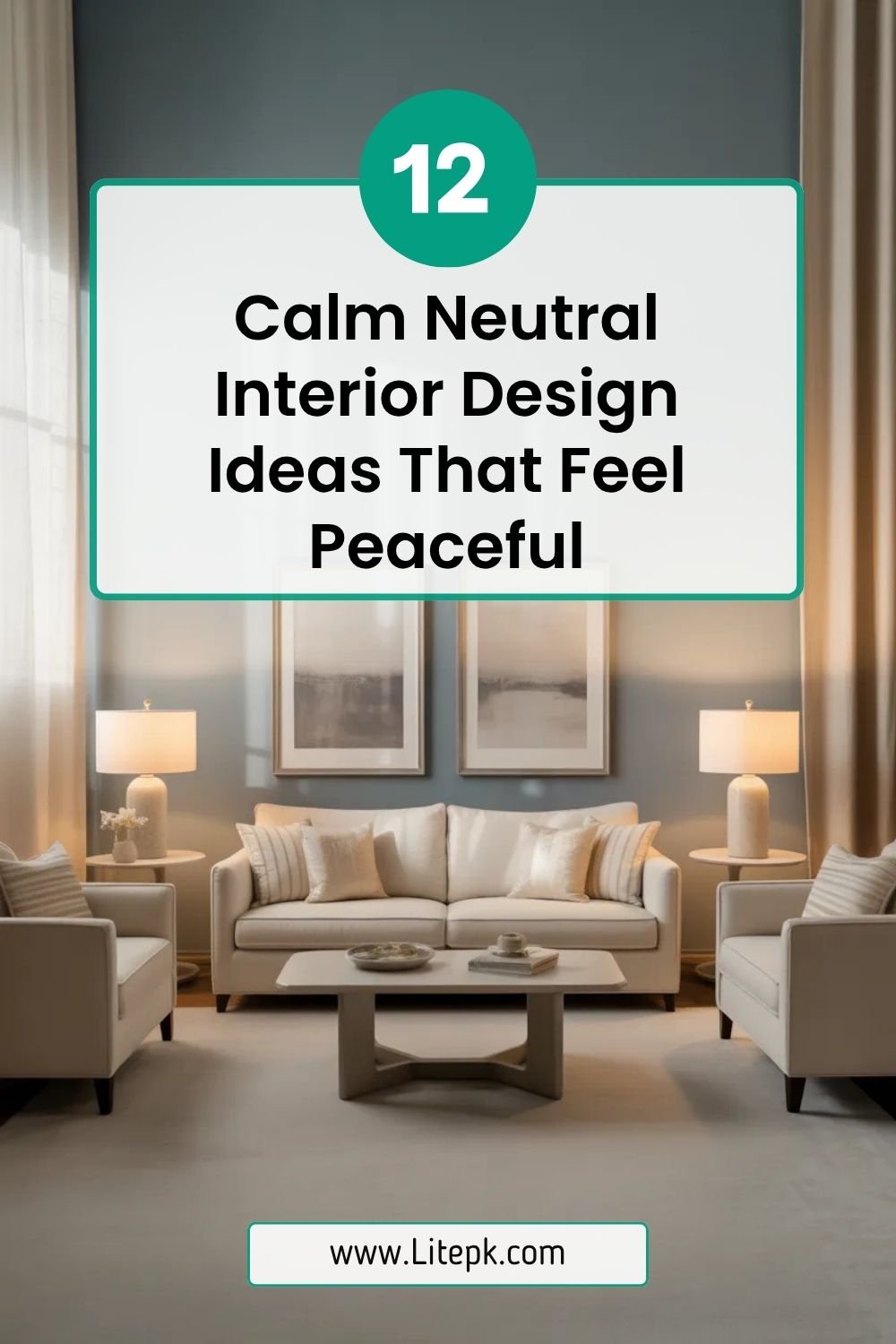
12 Calm Neutral Interior Design Ideas That Feel Peaceful
Creating a home that feels calm, balanced, and visually soothing is no longer a luxury—it’s a necessity. In a fast-paced world filled with constant stimulation, a calm neutral interior offers a retreat that restores mental clarity and emotional peace.
Calm neutral interior design is not just about using beige or white tones. It’s a thoughtful approach that blends color, texture, light, and spatial harmony to create an environment that feels effortlessly serene, timeless, and deeply comforting.
1. Layered Neutral Color Palette for Depth and Warmth
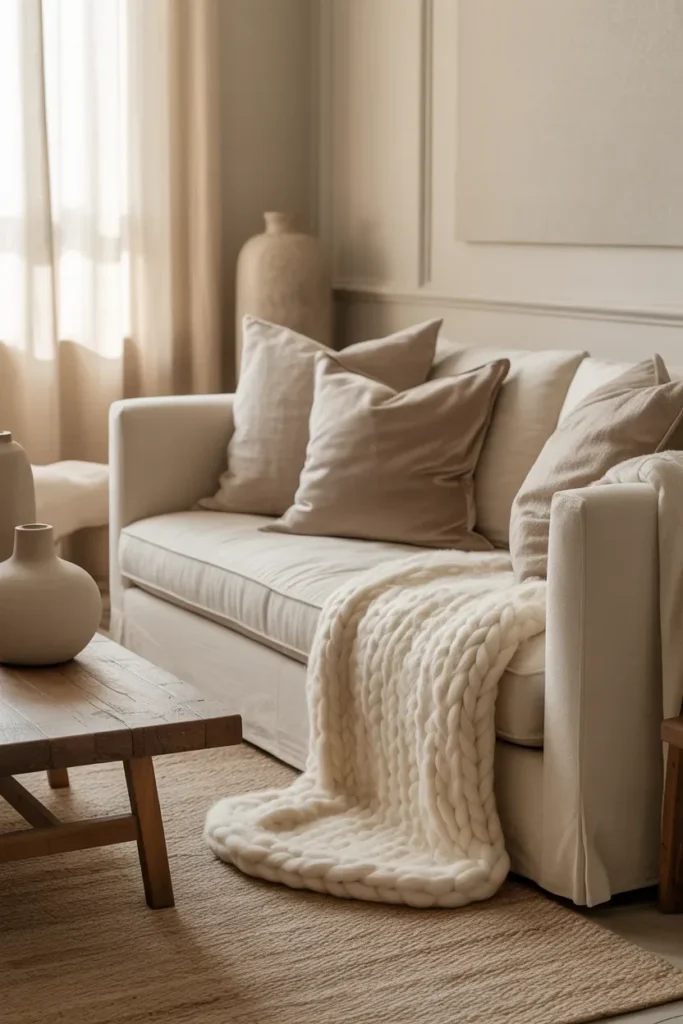
A calm neutral interior begins with a well-curated color palette. Instead of relying on a single shade, layering multiple neutral tones—such as warm beige, soft ivory, muted taupe, and greige—adds visual depth without overwhelming the senses. This layering prevents the space from feeling flat or sterile while maintaining a cohesive, tranquil atmosphere.
To achieve this, combine different shades across walls, furniture, and décor. For example, pair off-white walls with a light beige sofa and taupe cushions. Subtle variations create harmony while allowing each element to stand out gently. This approach ensures your space feels rich, inviting, and balanced.
2. Soft Natural Lighting to Enhance Calmness
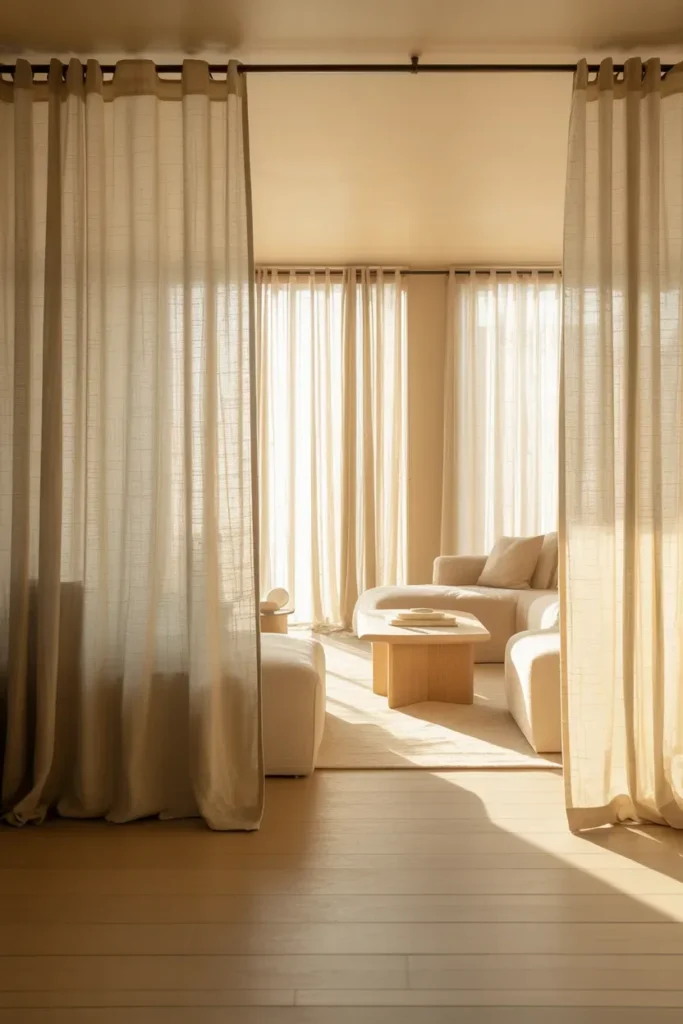
Lighting plays a critical role in defining the mood of a calm neutral interior. Harsh artificial lighting disrupts the peaceful aesthetic, while soft, natural light enhances textures and creates a gentle ambiance. Large windows, sheer curtains, and open layouts help maximize daylight.
Incorporate light-diffusing elements such as linen curtains or frosted glass. During evenings, use warm-toned lighting with dimmable fixtures to maintain a soothing environment. The goal is to mimic natural light as closely as possible, ensuring the space feels comfortable at all times.
3. Minimalist Furniture with Clean Lines
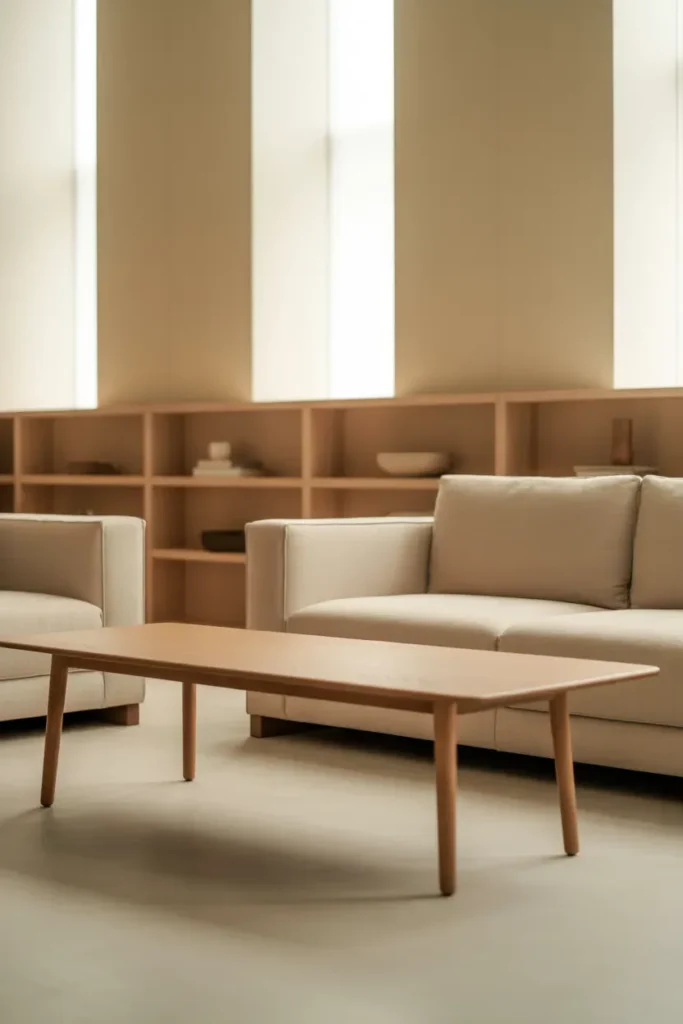
Minimalism is a core principle of calm neutral interior design. Furniture with clean lines and simple silhouettes reduces visual clutter and promotes a sense of order. Avoid overly ornate or bulky pieces that can disrupt the tranquility of the space.
Choose functional, well-proportioned furniture in neutral tones. A sleek sofa, a simple wooden coffee table, and streamlined shelving can create a refined yet relaxed environment. The emphasis should always be on simplicity, comfort, and intentional design.
4. Natural Materials for Organic Warmth
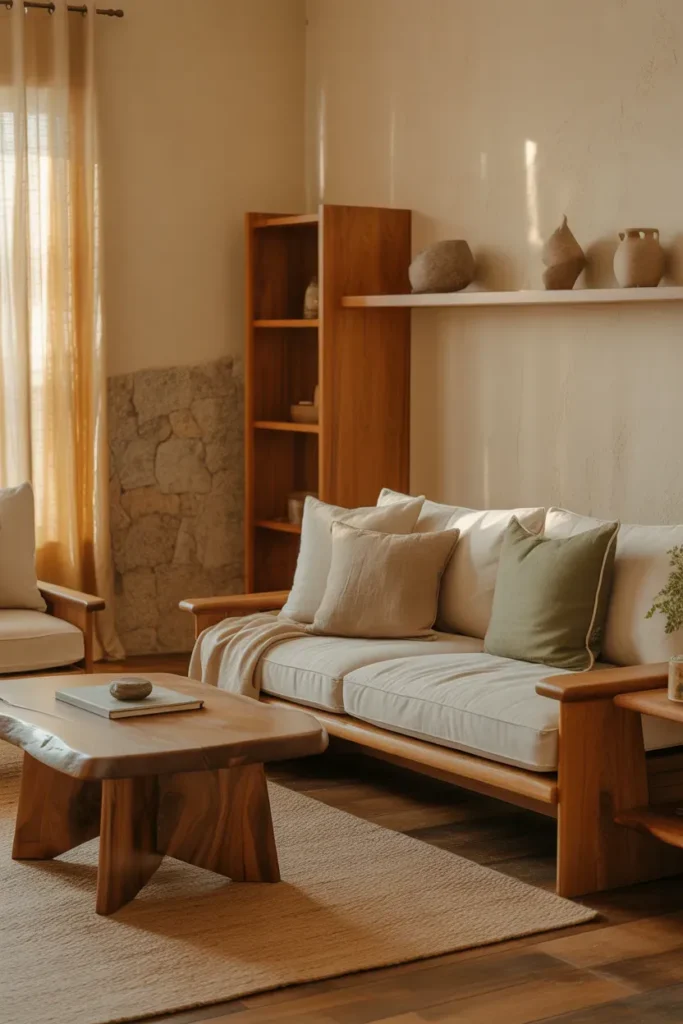
Introducing natural materials is essential for achieving a calming interior. Wood, stone, linen, cotton, and clay bring an organic feel that connects the space to nature. These materials add warmth and texture without overwhelming the design.
Use wooden furniture, stone accents, and woven textiles to create a balanced environment. Even small elements like a wooden tray or a linen throw can significantly enhance the overall aesthetic. The key is to maintain authenticity and avoid synthetic-looking finishes.
5. Textured Fabrics for Subtle Visual Interest
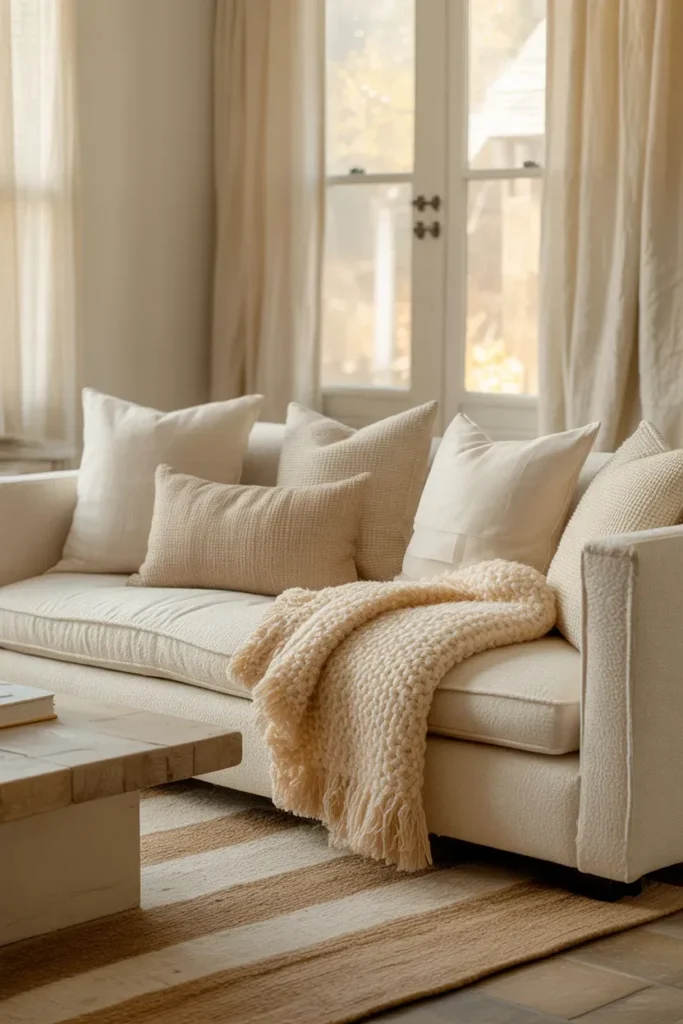
Texture is what keeps a neutral space from feeling boring. Layering different fabrics—such as linen, wool, cotton, and boucle—adds depth and tactile richness. These subtle variations make the space more inviting and visually engaging.
Incorporate textured cushions, throws, rugs, and curtains. Keep the color palette consistent while varying the materials. This approach maintains calmness while enhancing the sensory experience of the room.
6. Decluttered Spaces for Mental Clarity
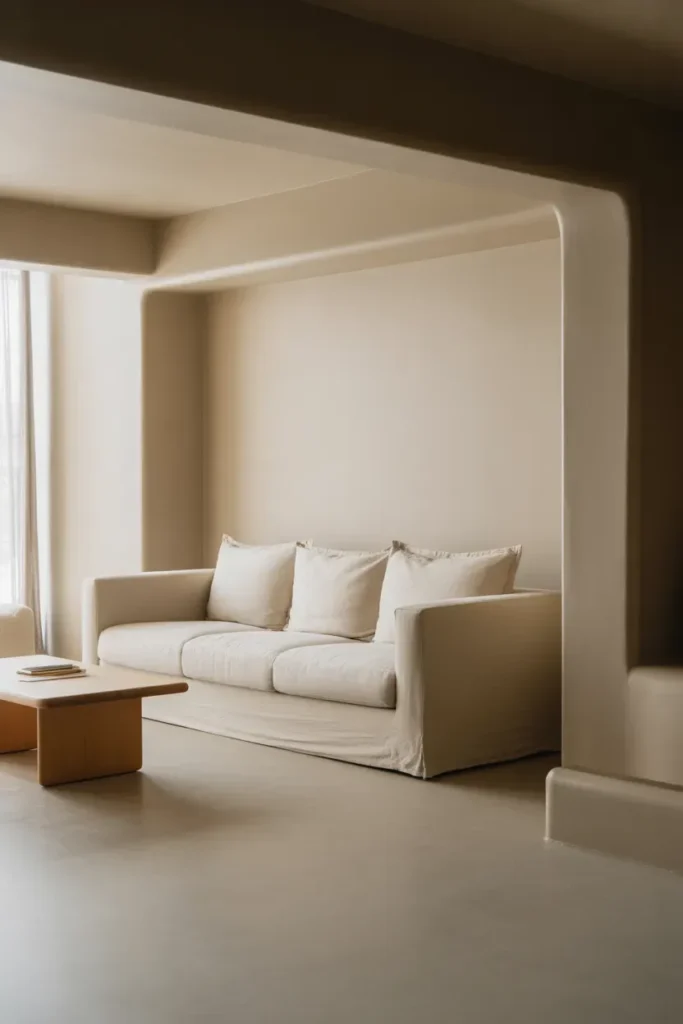
A clutter-free environment is fundamental to a peaceful home. Excess items create visual noise, which can lead to stress and distraction. Calm neutral interiors prioritize simplicity and intentionality in every element.
Adopt a “less but better” philosophy. Keep only essential and meaningful items on display. Use hidden storage solutions to maintain a clean and organized look. This not only improves aesthetics but also enhances mental well-being.
7. Soft Curves and Organic Shapes
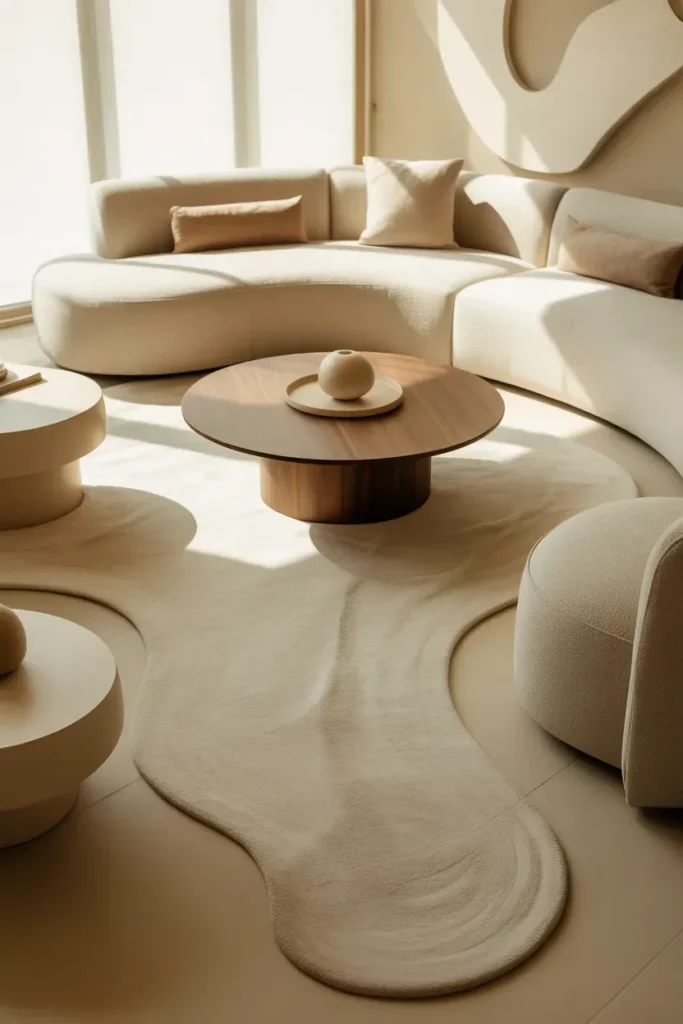
Sharp edges can sometimes feel rigid and harsh. Introducing soft curves and organic shapes helps create a more relaxed and flowing environment. Rounded furniture, curved sofas, and circular décor elements add softness to the space.
These shapes mimic natural forms, making the environment feel more harmonious. Combine them with neutral tones to maintain balance while enhancing visual comfort.
8. Neutral Wall Art with Subtle Details
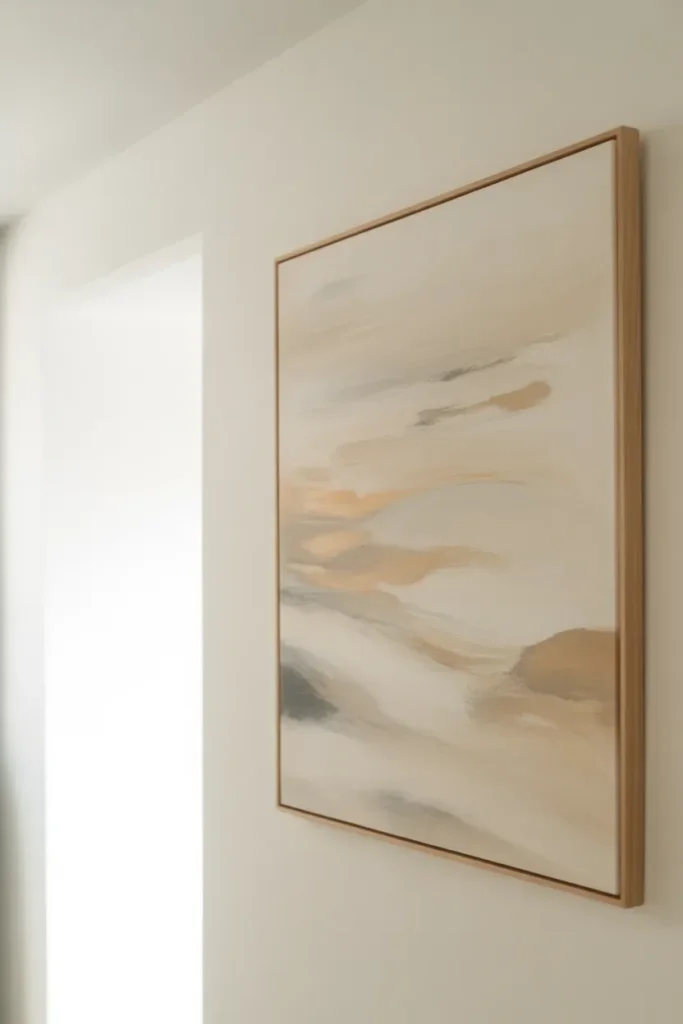
Wall art should complement the calm aesthetic rather than dominate it. Choose artwork with neutral tones, abstract patterns, or soft landscapes. The goal is to enhance the ambiance without drawing excessive attention.
Oversized art pieces in muted colors can act as focal points while maintaining serenity. Keep frames simple and avoid overly vibrant or busy designs.
9. Indoor Plants for a Touch of Life
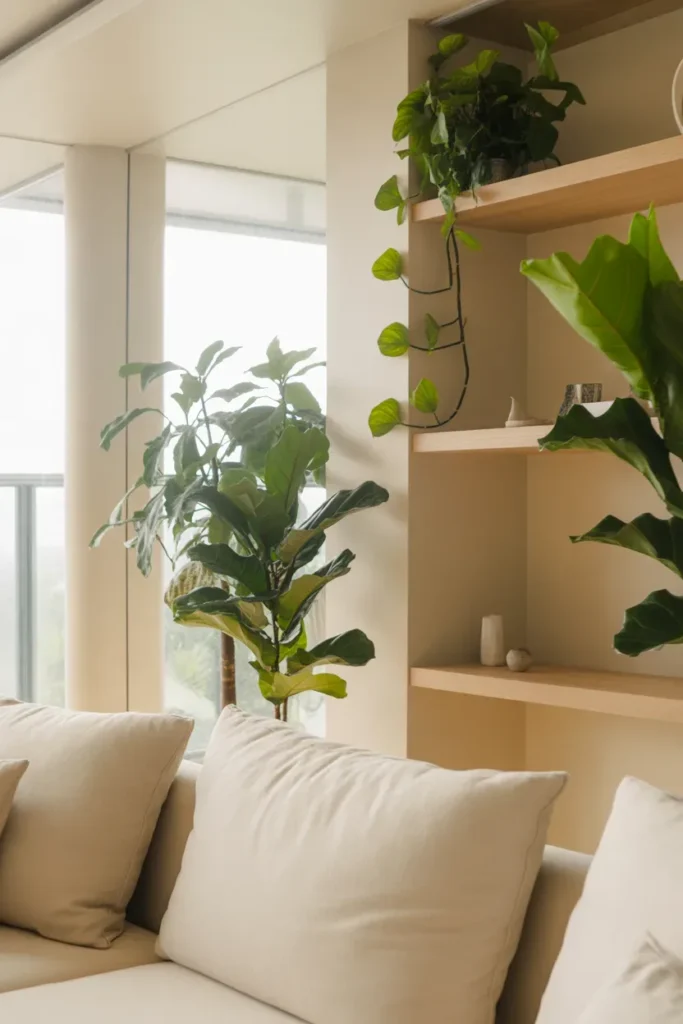
Adding greenery introduces life and freshness to a neutral space. Plants create a natural contrast while maintaining harmony. Choose low-maintenance indoor plants with soft green tones.
Place them strategically—near windows, on shelves, or in corners—to enhance the overall design. Avoid overcrowding; a few well-placed plants are more effective than many scattered ones.
10. Cozy Layered Rugs for Comfort
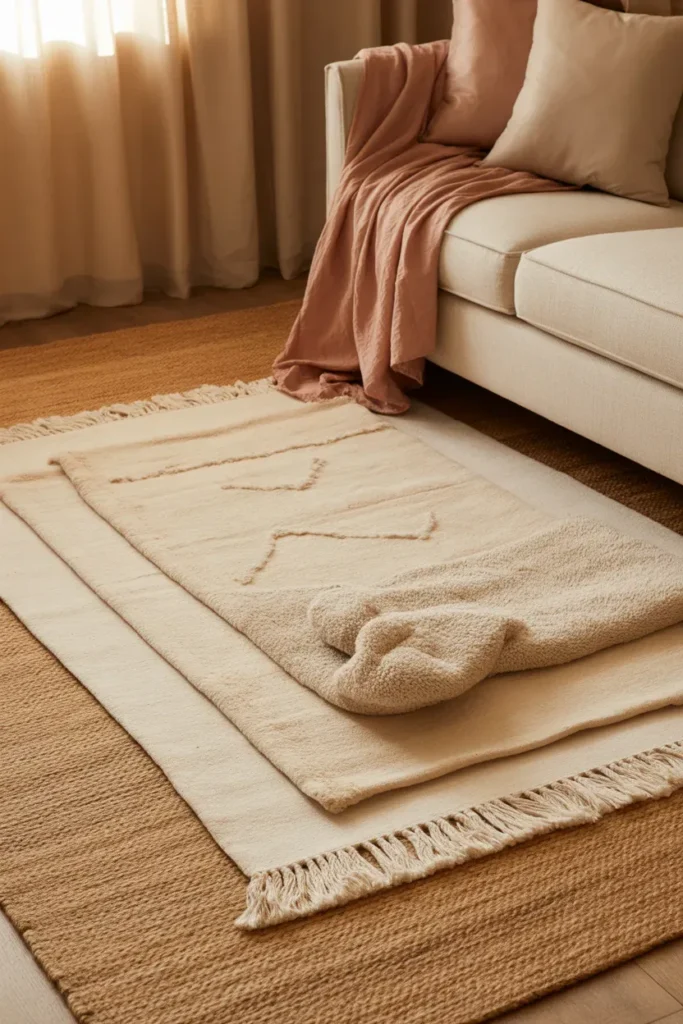
Rugs play a crucial role in defining space and adding warmth. Layering rugs in neutral tones creates a cozy and inviting environment while enhancing texture and depth.
Choose soft materials like wool or cotton and stick to subtle patterns or solid colors. This helps maintain the calm aesthetic while improving comfort and functionality.
11. Subtle Scent and Sensory Elements
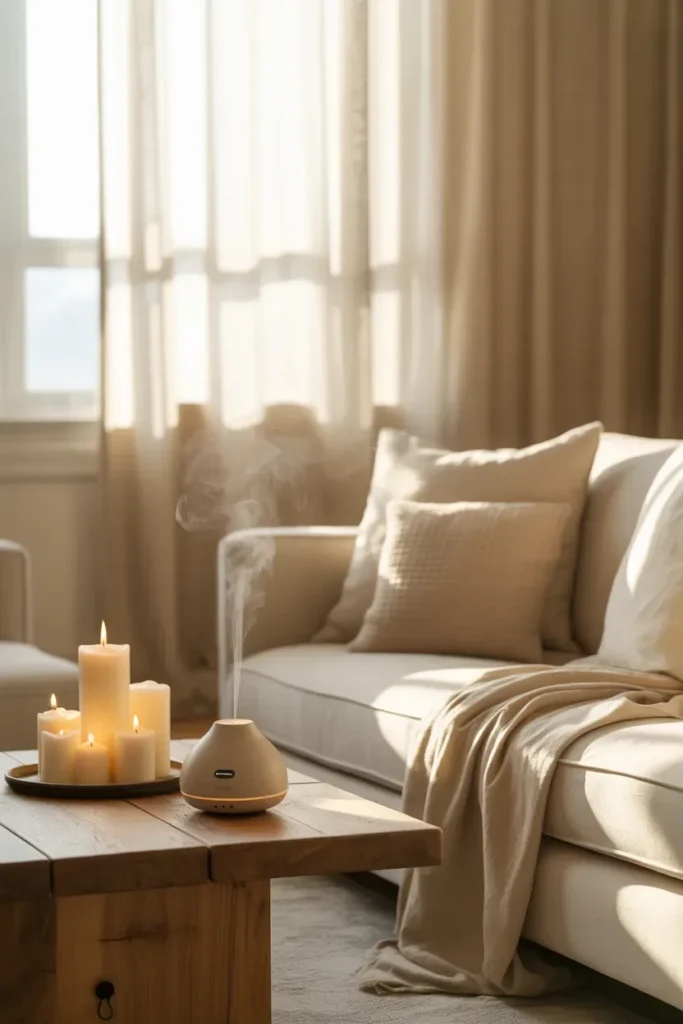
A calm interior is not just visual—it’s sensory. Incorporating subtle scents like lavender, vanilla, or sandalwood enhances the overall experience. Candles, diffusers, and natural fragrances contribute to a relaxing atmosphere.
Pair scent with soft music or quiet surroundings to create a holistic calming environment. The goal is to engage all senses in a gentle and harmonious way.
12. Balanced Symmetry and Layout Harmony
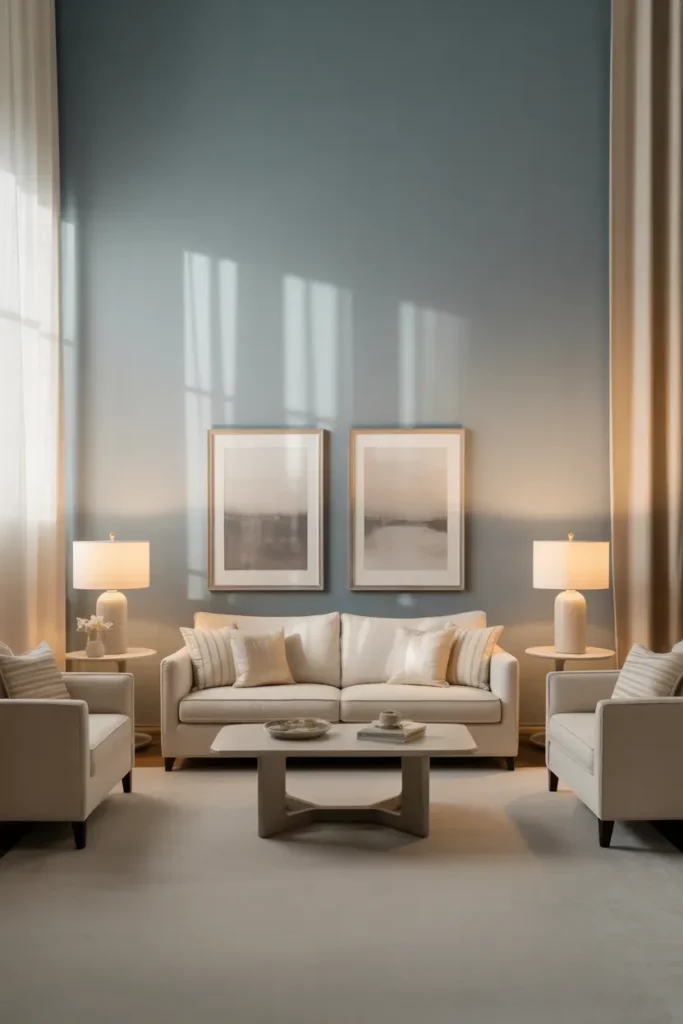
A well-balanced layout creates a sense of order and calm. Symmetry helps the eye move smoothly across the space, reducing visual tension. Arrange furniture and décor in a way that feels balanced and intentional.
Use pairs of items—such as lamps or chairs—to create symmetry. Maintain proper spacing between elements to avoid overcrowding. This structured approach enhances both aesthetics and functionality.
Final Thoughts
Calm neutral interior design is more than a trend—it’s a lifestyle choice that prioritizes peace, simplicity, and intentional living. By combining soft color palettes, natural materials, minimalism, and thoughtful design elements, you can create a space that feels both elegant and deeply relaxing.
The key lies in balance. Every element should serve a purpose while contributing to the overall harmony of the space. When done correctly, a calm neutral interior becomes a sanctuary that supports well-being, clarity, and comfort every single day.