15 Slow Living Home Decor Ideas For Intentional Spaces
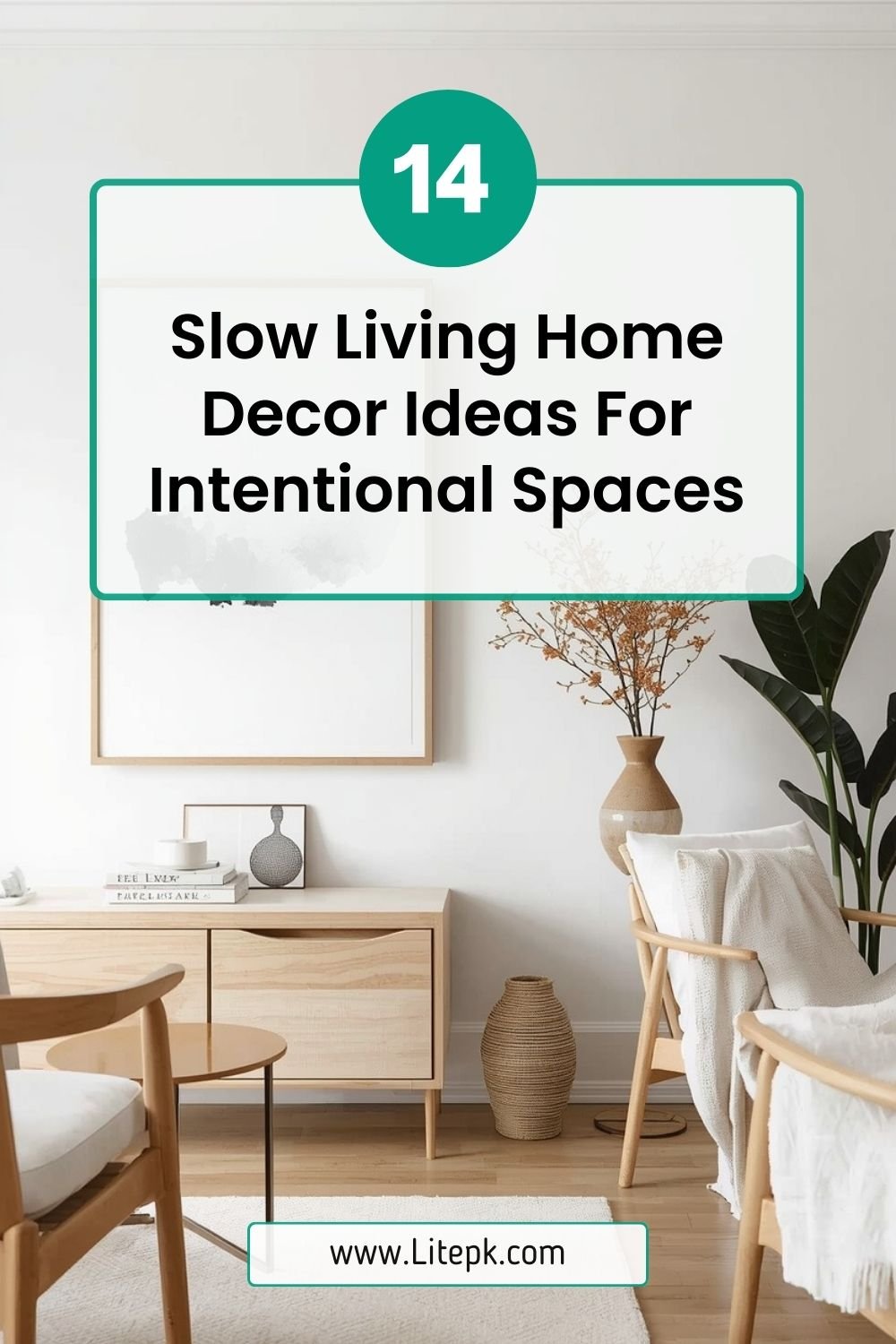
In a world driven by speed, noise, and constant digital stimulation, our homes have become the only true sanctuaries where we can reconnect with ourselves. Slow living home decor embraces this need for intentionality, creating spaces that nurture calmness, mindfulness, and emotional well-being.
Designing a home rooted in slow living principles is not about minimalism alone — it is about meaningful choices, tactile experiences, and soulful aesthetics. These slow living home decor ideas will help you craft interiors that feel grounded, timeless, and deeply restorative.
1. Embrace Natural Material Foundations
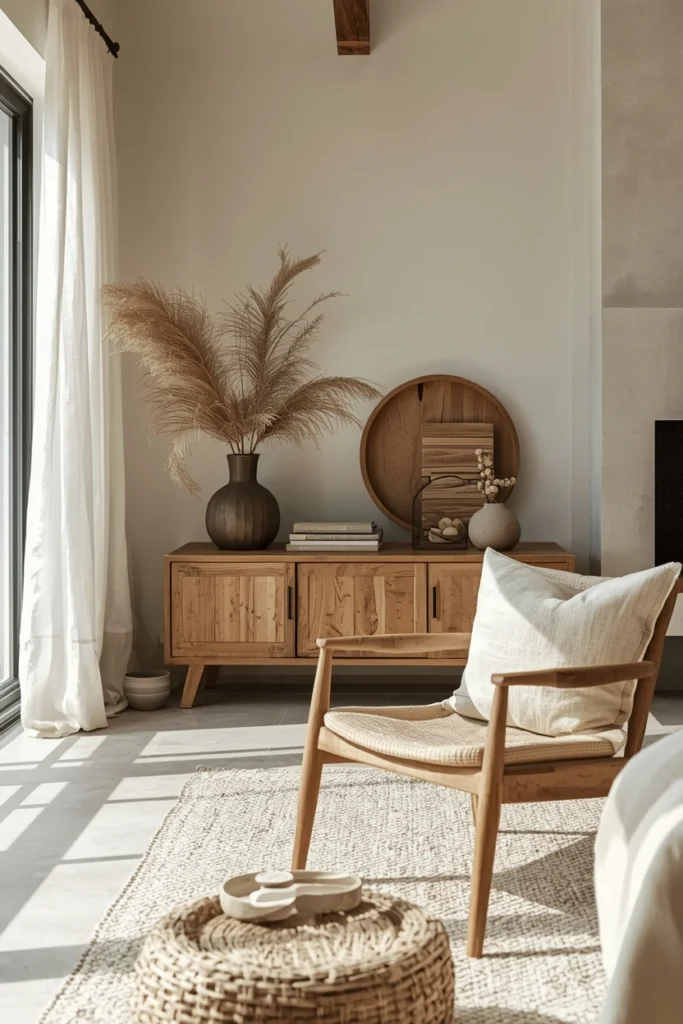
Slow living interiors begin with a strong connection to nature. Using natural materials such as wood, linen, stone, and clay establishes a grounding sensory experience that synthetic elements often fail to achieve. These materials age gracefully, telling a story of time and presence while enhancing the authenticity of the living space.
When layered thoughtfully, organic textures create visual calmness and emotional warmth. A reclaimed wooden console, stone-finished surfaces, or hand-woven textiles can anchor the room while promoting mindful appreciation of craftsmanship and sustainability.
2. Sculptural Functional Decor Pieces
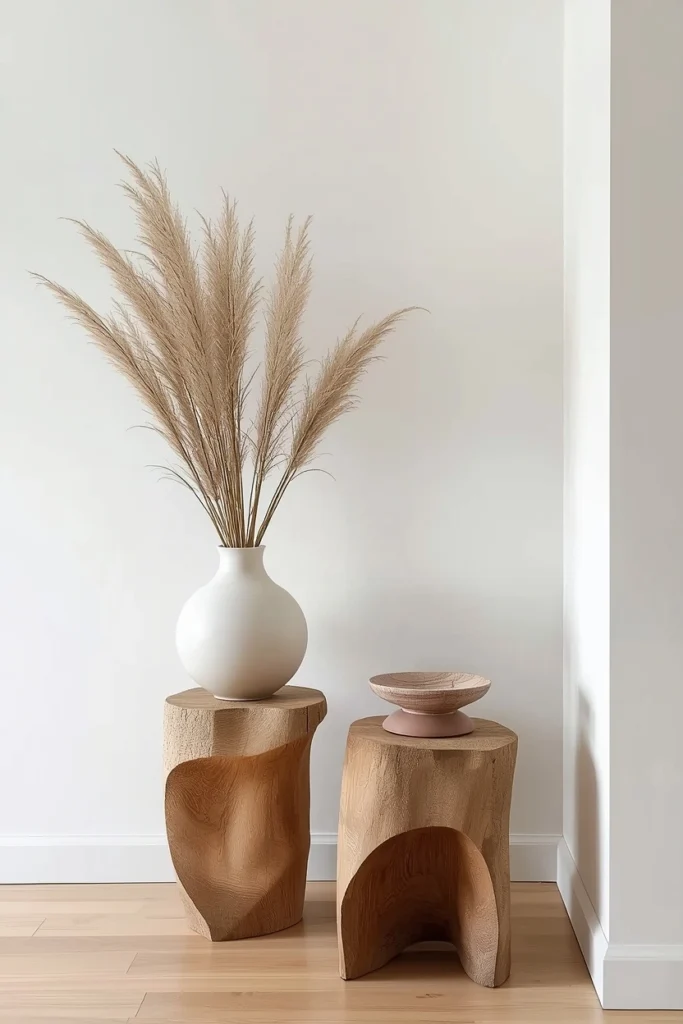
In slow living design, decor should serve both functional and artistic purposes. Sculptural objects such as hand-crafted vases, curved ceramic bowls, or carved wooden stools introduce visual interest without overwhelming the space. These pieces embody intentional design, reinforcing the idea that beauty and function can coexist harmoniously.
Choosing sculptural decor encourages mindful consumption. Instead of mass-produced accessories, invest in timeless forms that contribute to spatial storytelling. This approach creates interiors that feel curated rather than decorated.
3. Soft Neutral Color Palettes
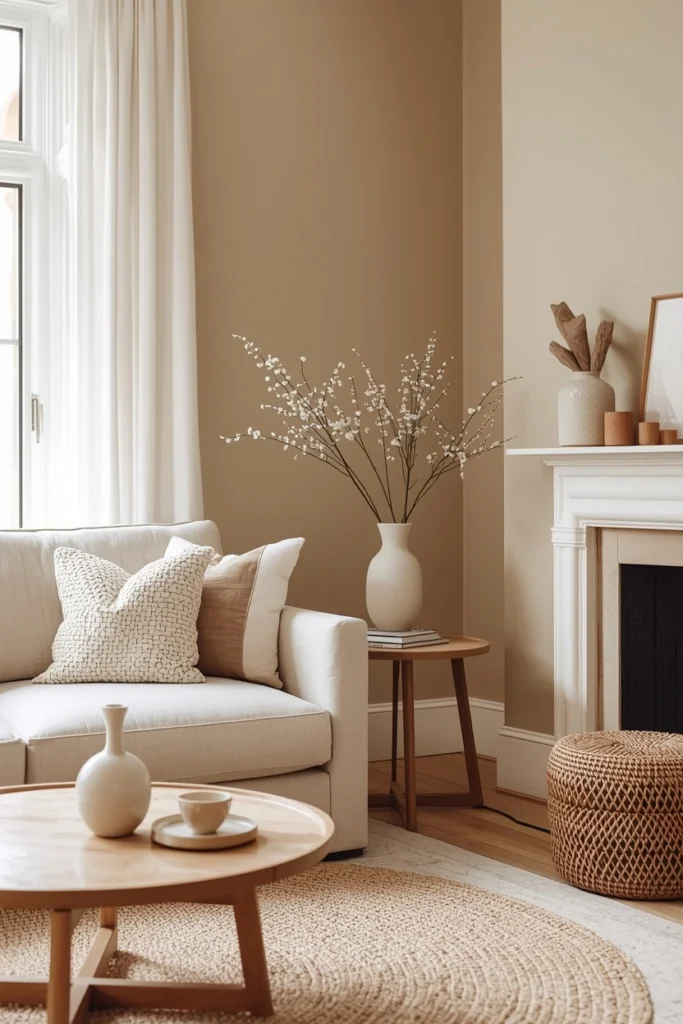
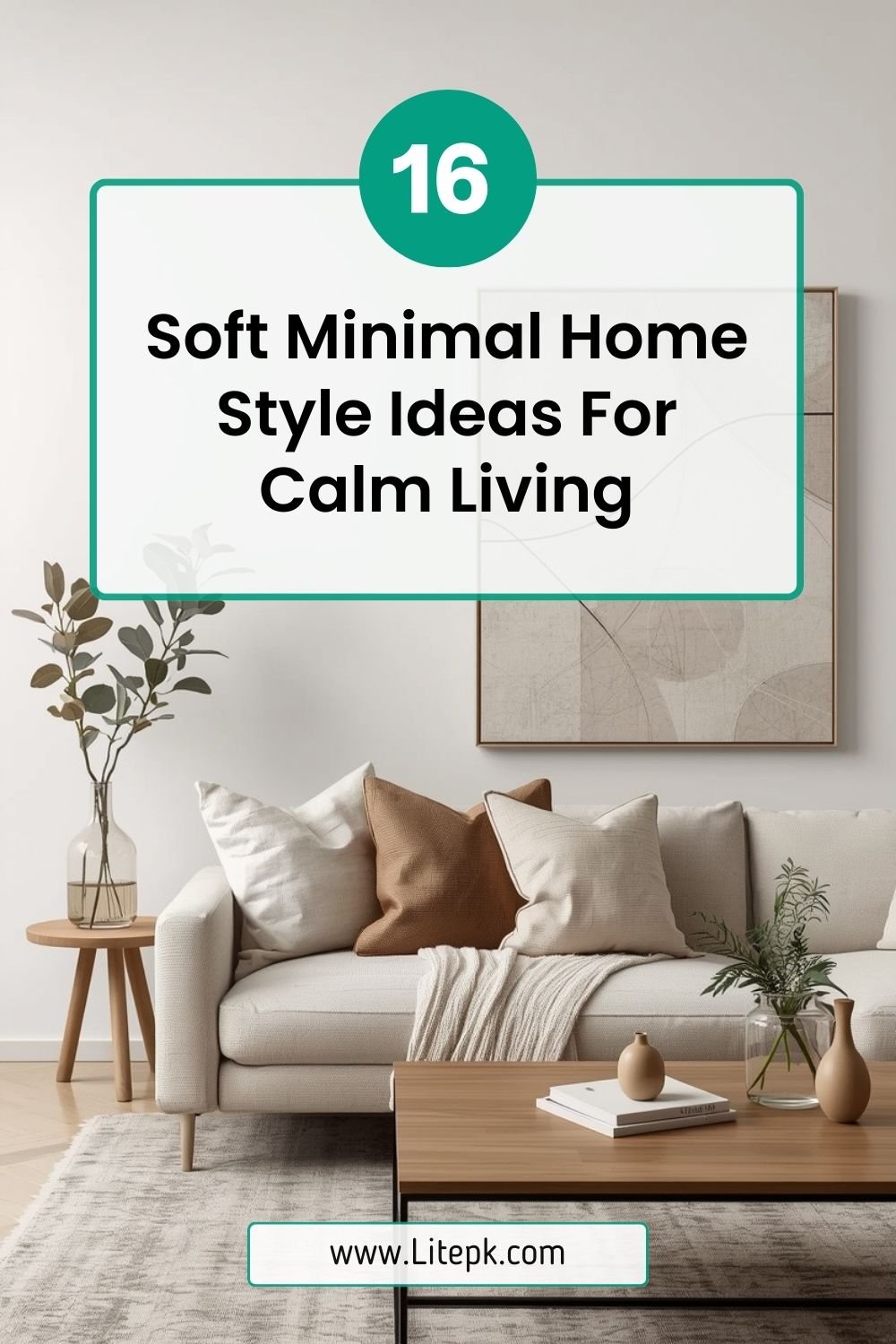
Neutral tones form the emotional backbone of slow living home decor. Shades such as warm beige, muted clay, soft greys, and creamy whites provide visual serenity while allowing textures and forms to take center stage. These colors reduce visual fatigue and foster psychological calmness.
Layering tonal variations prevents the space from feeling monotonous. Incorporating subtle depth through textured walls, woven fabrics, or matte finishes ensures the environment feels rich yet peaceful. This balance creates an atmosphere conducive to rest and reflection.
4. Intentional Negative Space Design
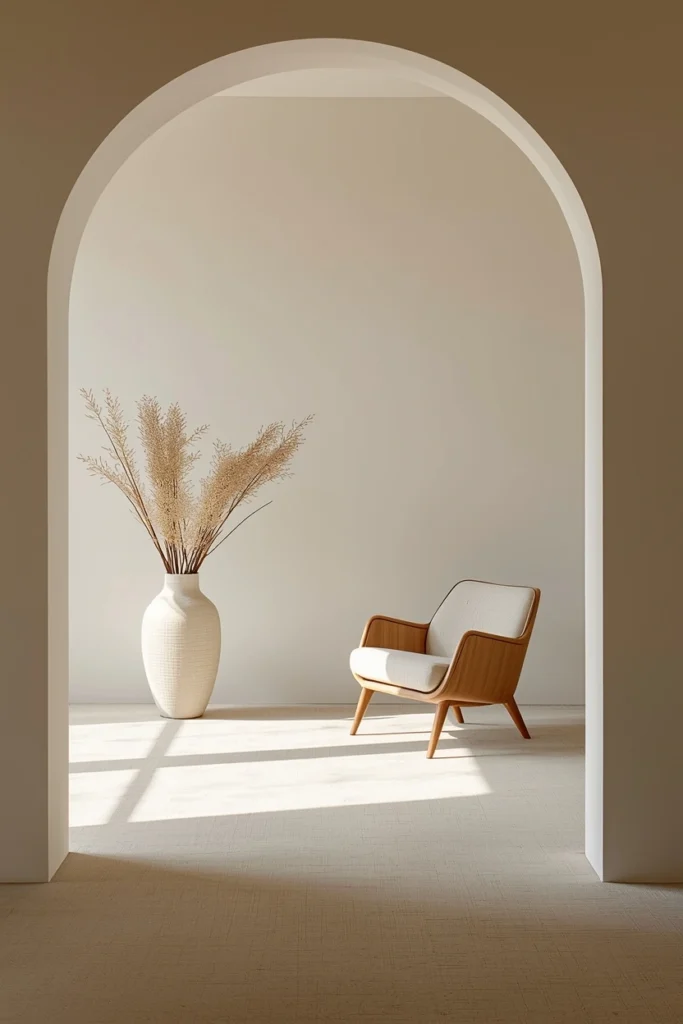
Slow living interiors celebrate the beauty of emptiness. Allowing breathing space between furniture pieces enhances visual clarity and emotional relaxation. This intentional use of negative space creates a sense of balance and encourages mindful interaction with the environment.
Rather than filling every corner, slow living encourages restraint. A single well-placed chair or sculptural console can define the room more effectively than excessive decor. This philosophy aligns with mindful living and spatial harmony.
5. Handmade Artistic Accents
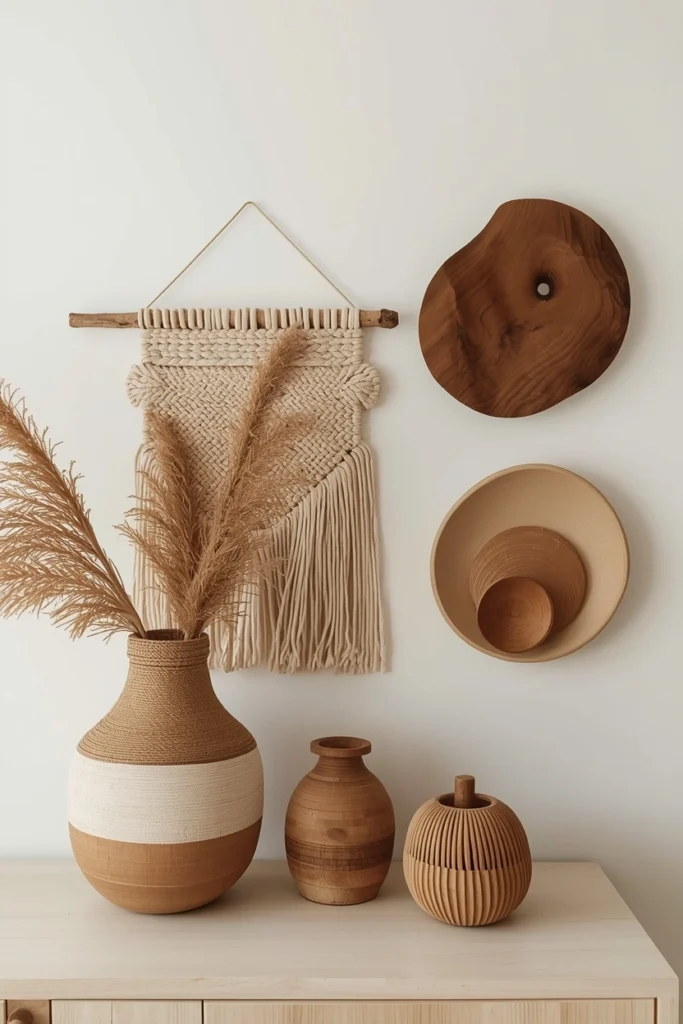
Handcrafted decor introduces authenticity and emotional depth to slow living spaces. Artisanal pottery, woven wall hangings, and hand-carved wooden objects create tactile richness while celebrating human craftsmanship.
These pieces bring individuality into the home, reflecting stories and cultural heritage. Their imperfect forms align with slow living values, encouraging appreciation for the beauty of natural variations and handmade artistry.
6. Layered Textural Comfort
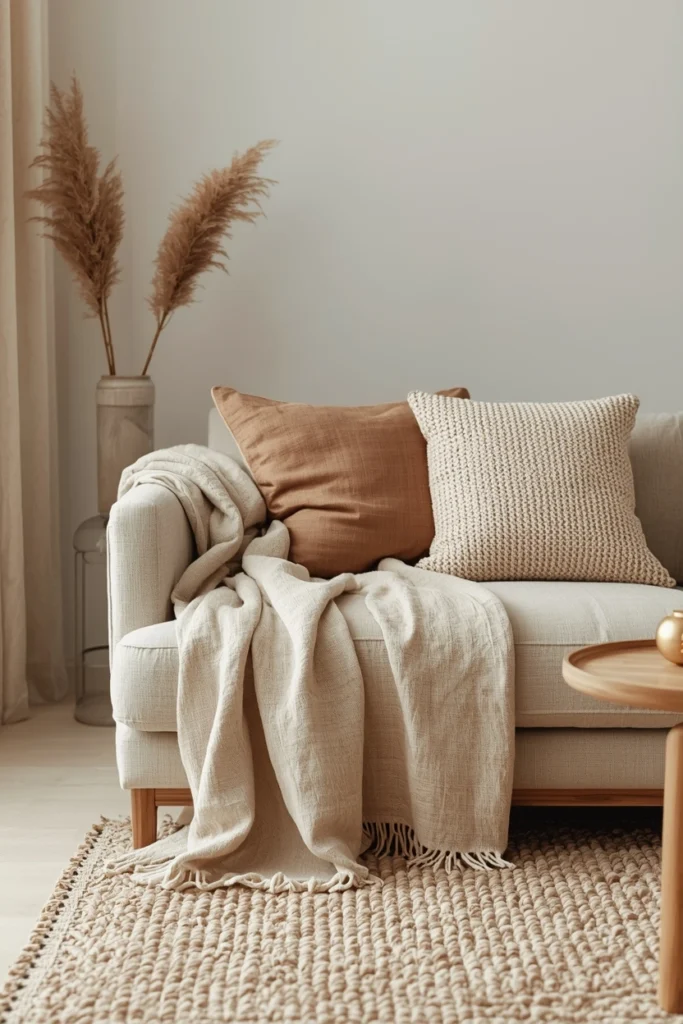
Texture is essential in creating warmth without clutter. Combining linen throws, wool rugs, cotton cushions, and textured curtains builds sensory comfort while maintaining visual simplicity. These tactile layers invite relaxation and enhance emotional connection to the space.
The key is subtle variation rather than bold contrast. By selecting harmonious materials, the interior feels cohesive and nurturing. This approach transforms minimal rooms into welcoming sanctuaries.
7. Warm Ambient Lighting
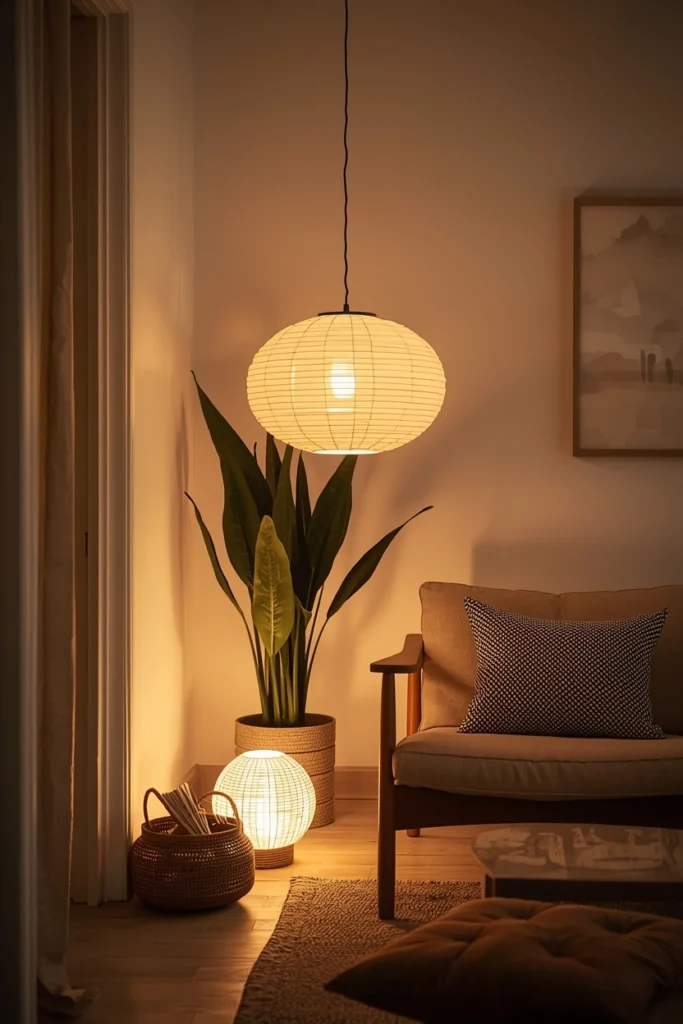
Lighting profoundly influences emotional well-being in slow living interiors. Soft, warm illumination reduces visual harshness and creates a cocooning atmosphere that supports relaxation and mindfulness.
Opt for diffused light sources such as paper lamps, fabric shades, or sculptural pendants. Layering light at different heights enhances depth and ensures the room feels intimate yet functional.
8. Organic Curved Furniture Forms
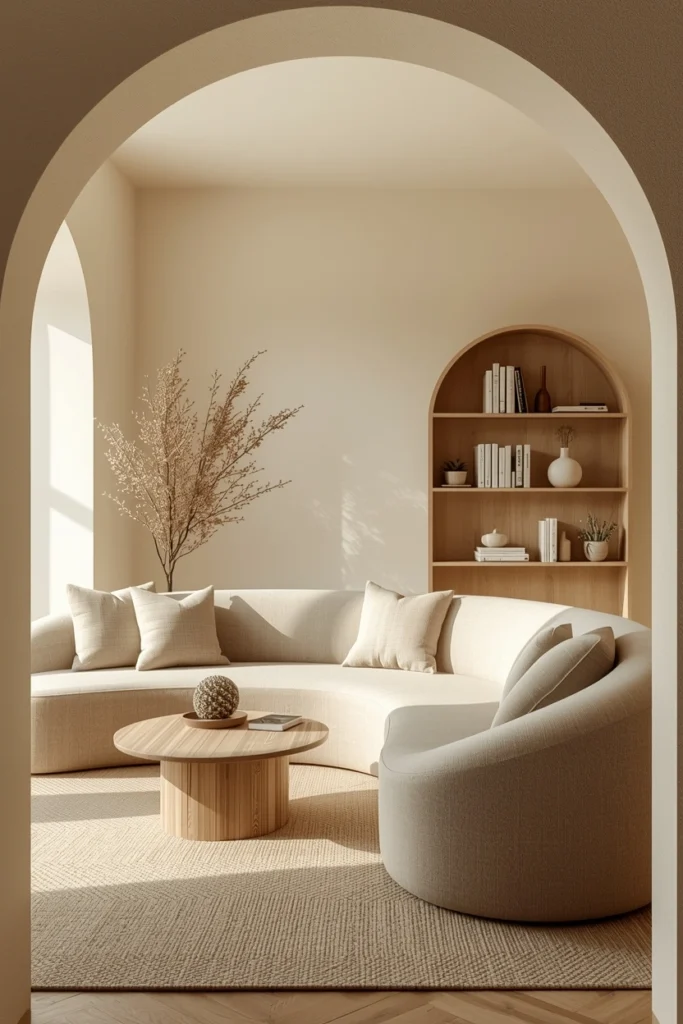
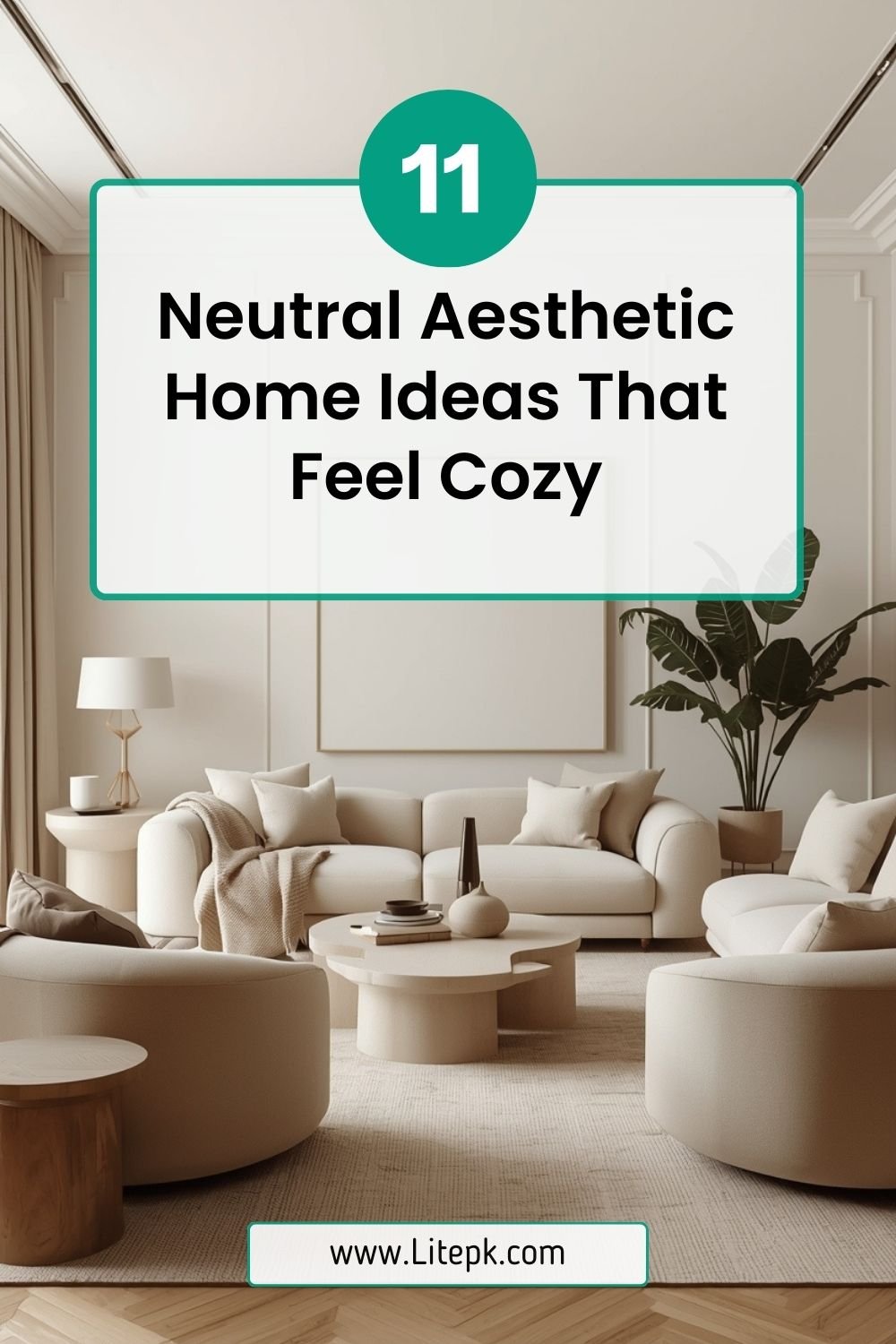
Curved silhouettes evoke softness and fluidity, contrasting rigid architectural lines. Rounded sofas, oval coffee tables, and arched shelving units introduce gentle movement that enhances spatial harmony.
These organic forms reflect natural landscapes, reinforcing slow living’s connection to nature. The result is a space that feels emotionally comforting and visually soothing.
9. Indoor Greenery Integration
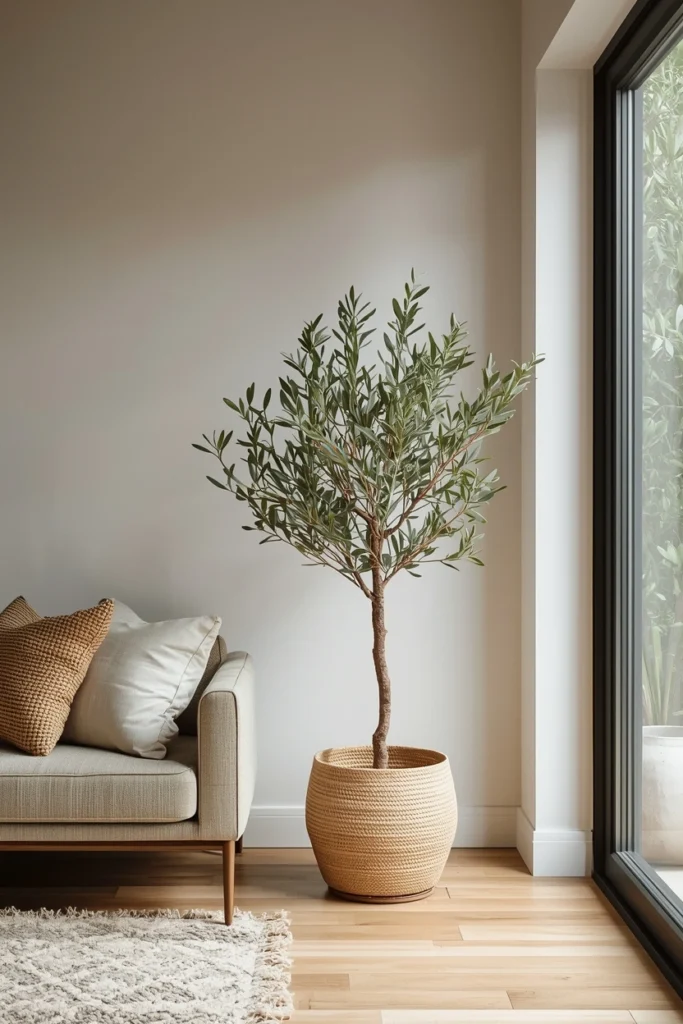
Plants serve as living decor elements that improve air quality and emotional health. Minimal foliage arrangements or statement indoor trees introduce vitality while preserving visual calmness.
Strategic placement enhances balance without cluttering the environment. Greenery becomes an extension of the slow living philosophy, emphasizing nature’s restorative influence.
10. Mindful Storage Solutions
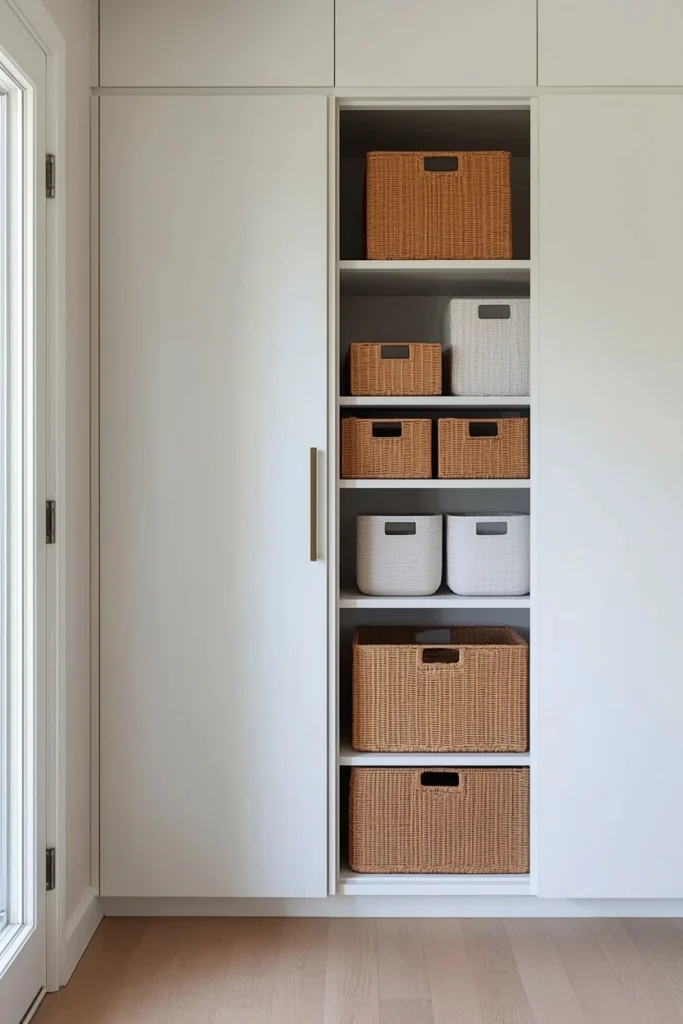
Clutter disrupts both visual harmony and mental clarity. Slow living home decor emphasizes concealed storage and multifunctional furniture that supports organized living.
Minimal cabinetry, woven baskets, and built-in shelving ensure functionality without compromising aesthetics. This thoughtful organization contributes to emotional calmness and spatial clarity.
11. Natural Fiber Rugs
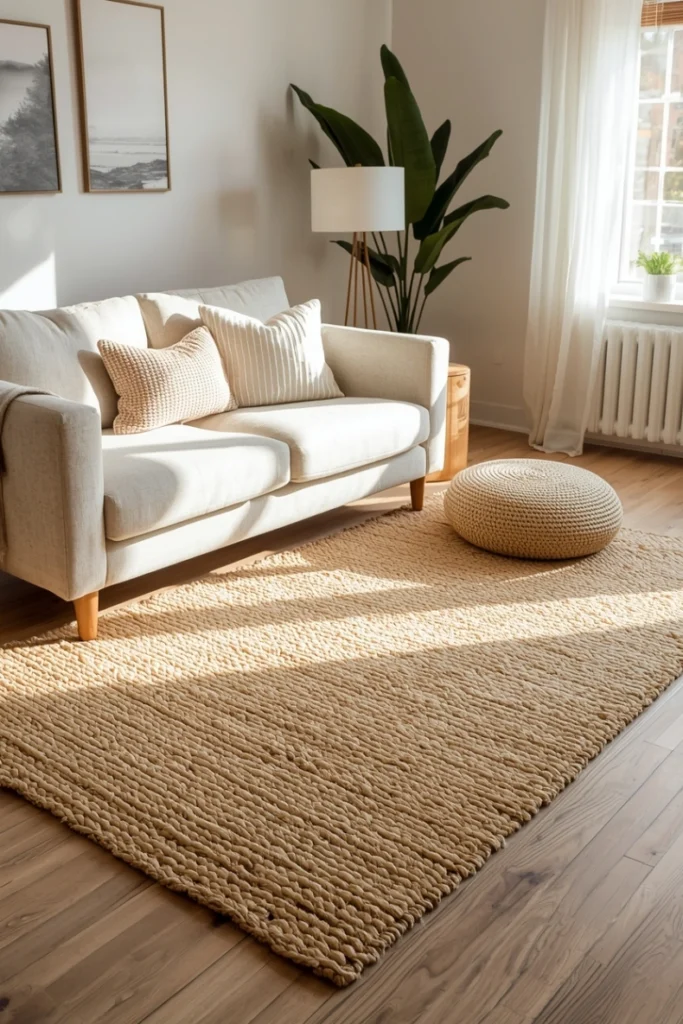
Natural fiber rugs ground the room while adding warmth and texture. Materials such as jute, wool, or sisal provide tactile comfort and visual depth without overpowering the design.
These rugs complement wooden flooring and neutral palettes, reinforcing the organic aesthetic of slow living interiors. Their durability and earthy appeal align with sustainable design values.
12. Personal Meaningful Decor
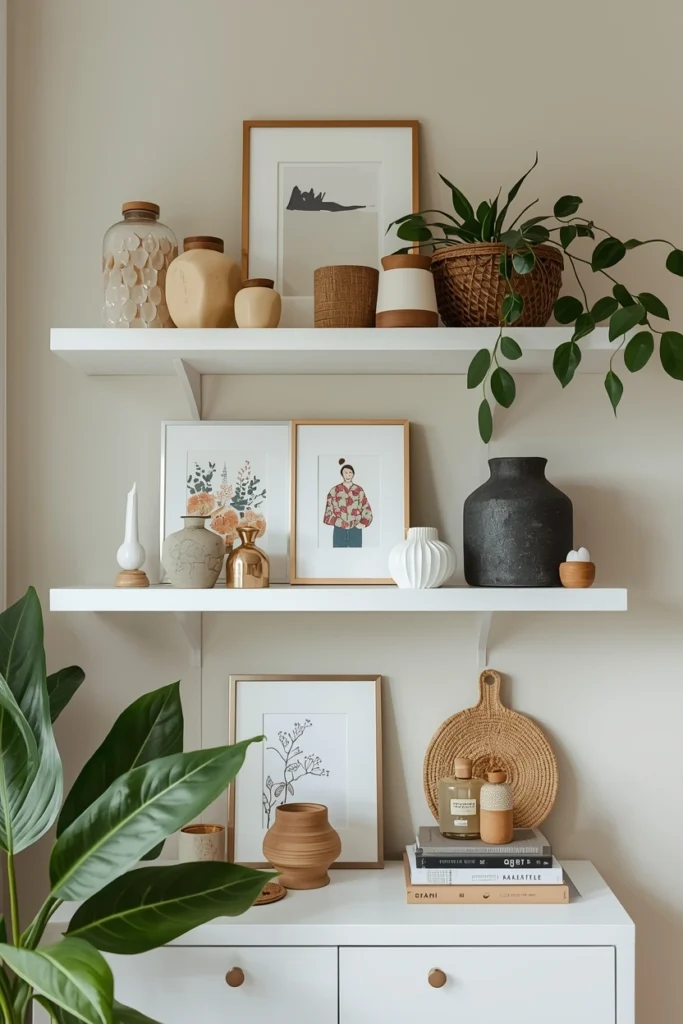
Slow living spaces prioritize emotional resonance over trend-driven styling. Displaying meaningful objects such as travel souvenirs, family heirlooms, or artistic creations fosters a deeper connection to the home.
These curated elements tell personal stories, transforming interiors into reflections of identity. The result is a space that feels authentic, comforting, and uniquely yours.
13. Sustainable Vintage Pieces
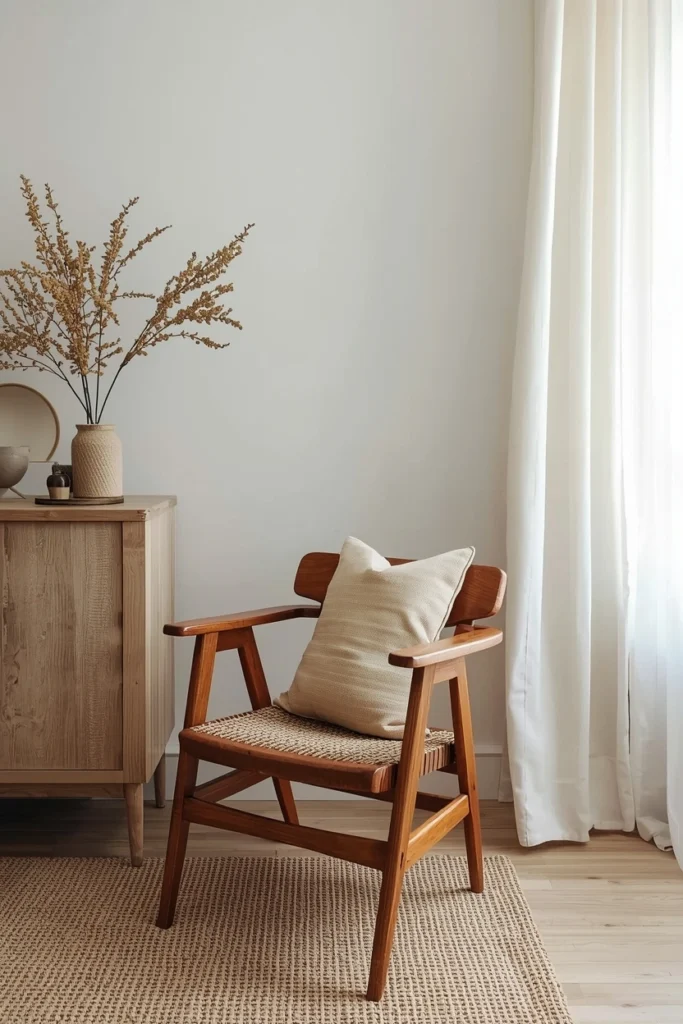
Incorporating vintage furniture promotes sustainability while adding character. Weathered wood finishes, retro silhouettes, and aged textures enrich the narrative of slow living interiors.
These pieces introduce timeless elegance and reduce environmental impact. Mixing vintage elements with modern minimalism creates balanced, soulful spaces.
14. Calm Monochrome Artwork
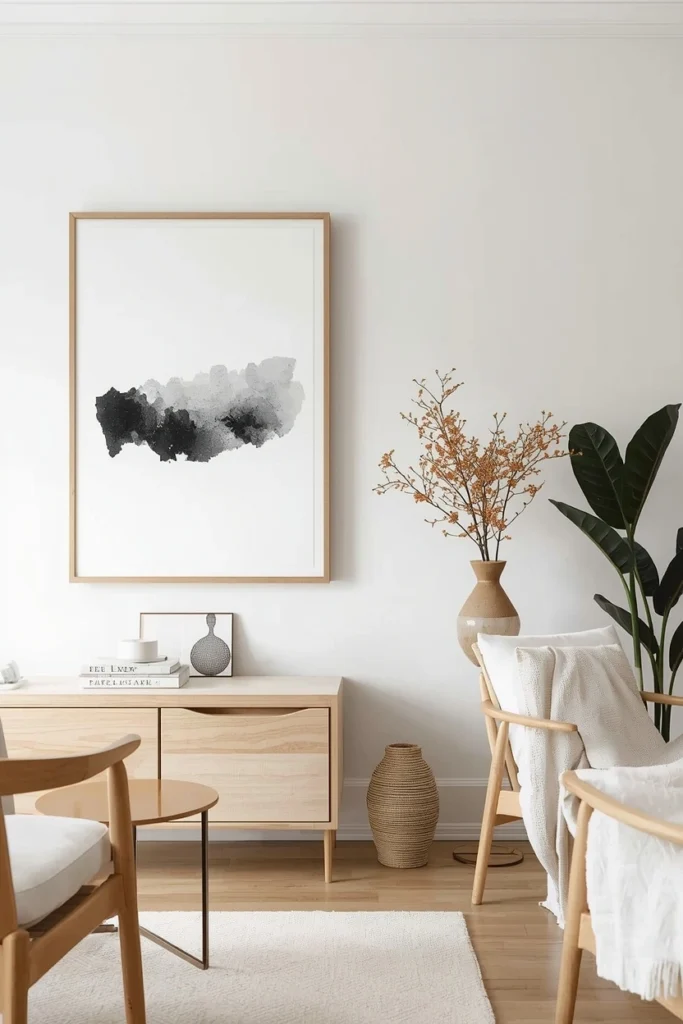
Monochrome art enhances visual sophistication without overwhelming the space. Soft abstract paintings or minimalist ink drawings provide subtle focal points while maintaining serenity.
Framing choices in natural wood or matte black ensure harmony with surrounding decor. This restrained artistic approach aligns with slow living principles.
15. Grounded Low Seating Concepts
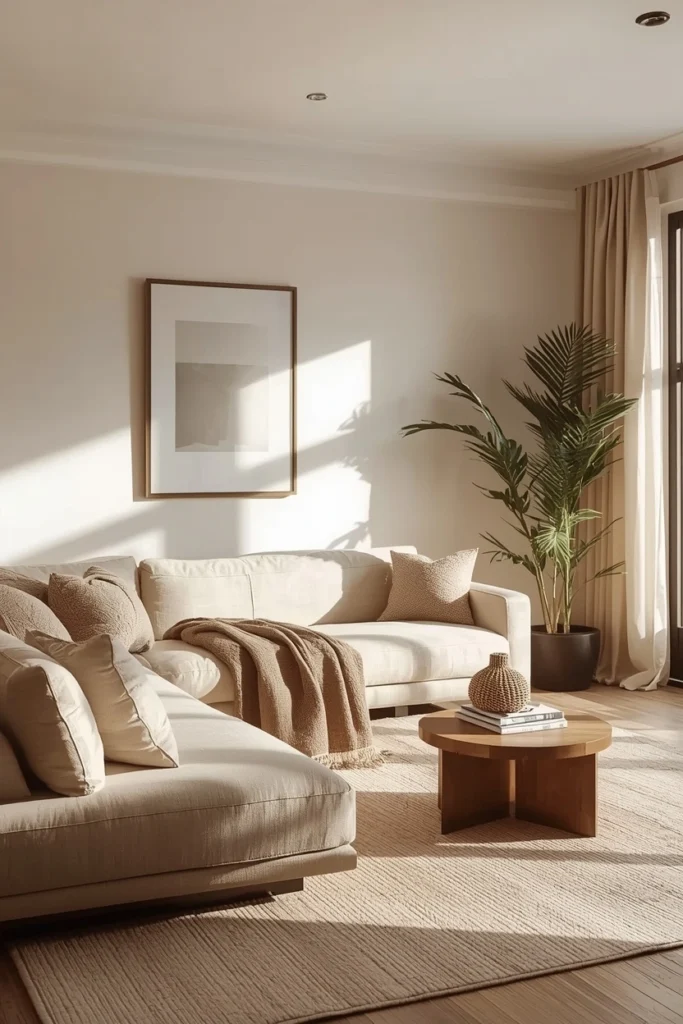
Low seating arrangements create intimate, grounded environments that encourage relaxation and mindfulness. Floor-level sofas or lounge chairs visually expand the room while promoting a slower pace of living.
When paired with natural textiles and warm lighting, low seating fosters emotional comfort and spatial harmony. This design choice reflects intentional living at its core.
Conclusion
Slow living home decor transforms interiors into mindful sanctuaries that nurture emotional well-being and intentional lifestyles. By focusing on natural materials, sculptural decor, and balanced spatial design, you create environments that support both rest and creativity.
Ultimately, slow living is not about aesthetics alone — it is about cultivating spaces that encourage presence, reflection, and authentic living. Through thoughtful design choices, your home becomes a timeless refuge from the fast-paced world outside.