13 Bedroom Styling Ideas Using Texture Like A Pro
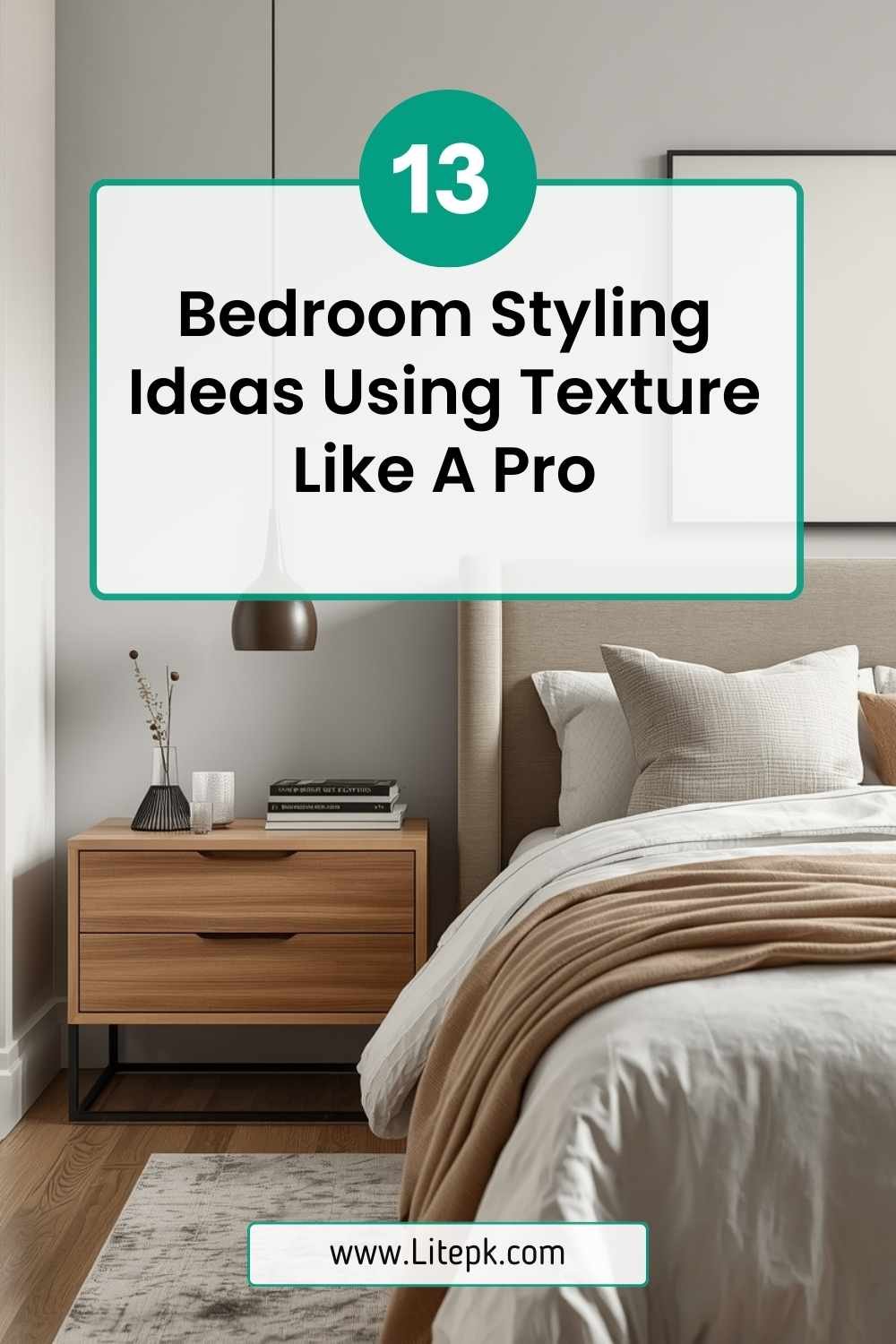
Texture is one of the most powerful yet overlooked elements in bedroom design. While color palettes and furniture layouts often get the spotlight, texture is what quietly transforms a bedroom from flat and ordinary into warm, layered, and deeply inviting. When used correctly, texture adds dimension, visual interest, and a sense of luxury without overwhelming the space.
In this guide, you’ll discover 13 Bedroom Styling Ideas Using Texture Like A Pro, designed to help you create a space that feels curated, comfortable, and effortlessly stylish. Whether your taste leans modern, minimal, or cozy, these ideas will show you how to master texture in a way that feels intentional and timeless.
1. Layered Bedding with Mixed Fabrics
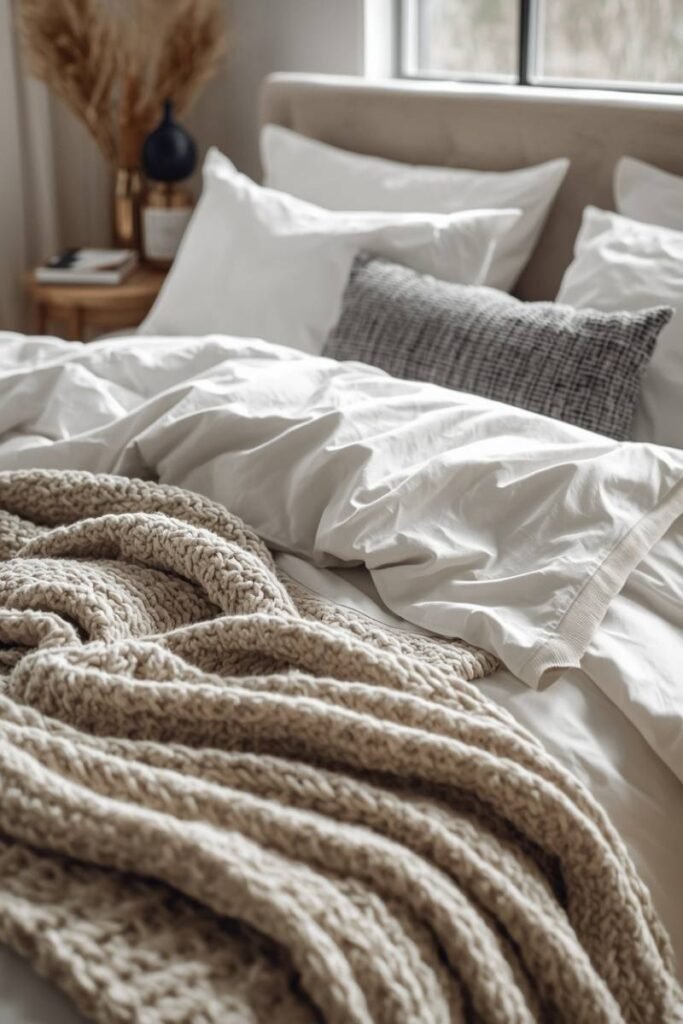
Layered bedding is one of the easiest ways to introduce texture into a bedroom without changing the overall design. Combining materials like crisp cotton sheets, a soft linen duvet, and a chunky knit throw instantly creates depth. The contrast between smooth and tactile fabrics draws the eye and makes the bed feel more inviting. Neutral colors work best here, allowing texture to take center stage instead of bold patterns.
To style layered bedding like a professional, focus on balance. Avoid using too many heavy fabrics at once, which can feel cluttered. Instead, pair light and breathable materials with one or two statement textures. This method not only enhances visual appeal but also improves comfort, making your bedroom feel like a thoughtfully designed retreat rather than a showroom.
2. Textured Wall Panels or Accent Walls
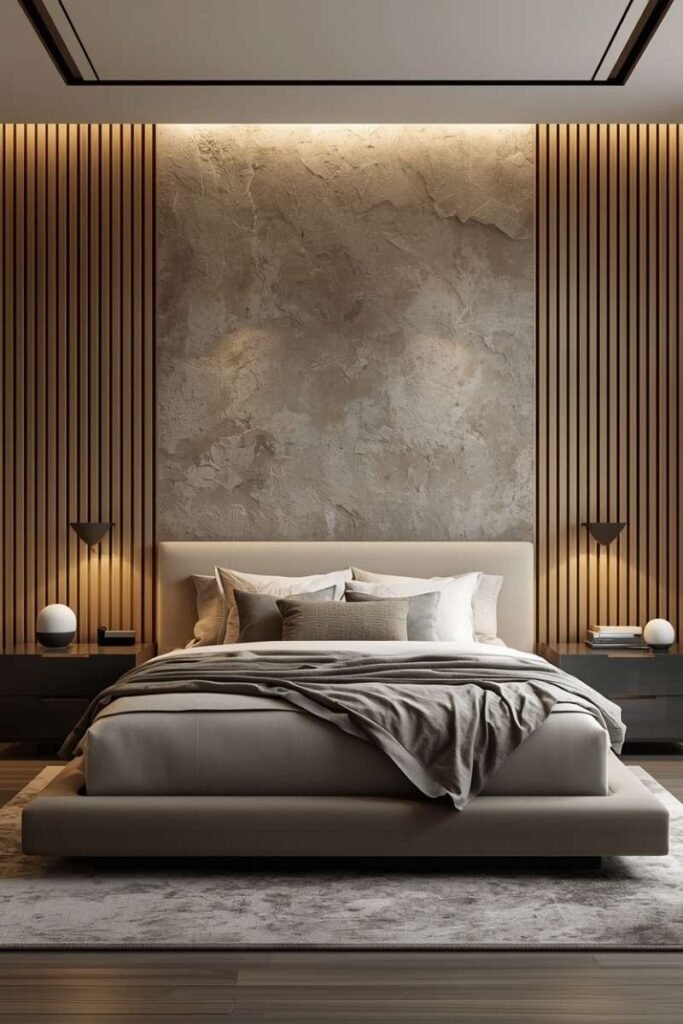
Textured walls instantly elevate a bedroom by adding architectural interest. Materials such as wood slats, fabric panels, or subtle plaster finishes create a focal point without relying on loud colors. A textured accent wall behind the bed anchors the room and gives it a designer-level finish that feels intentional and refined.
When choosing a textured wall treatment, consider scale and proportion. In smaller bedrooms, subtle textures like micro-cement or fabric panels work best. Larger rooms can handle bolder designs such as vertical wood slats or ribbed wall panels. The key is to let the texture complement the room’s overall style while enhancing depth and warmth.
3. Plush Area Rugs for Depth and Comfort
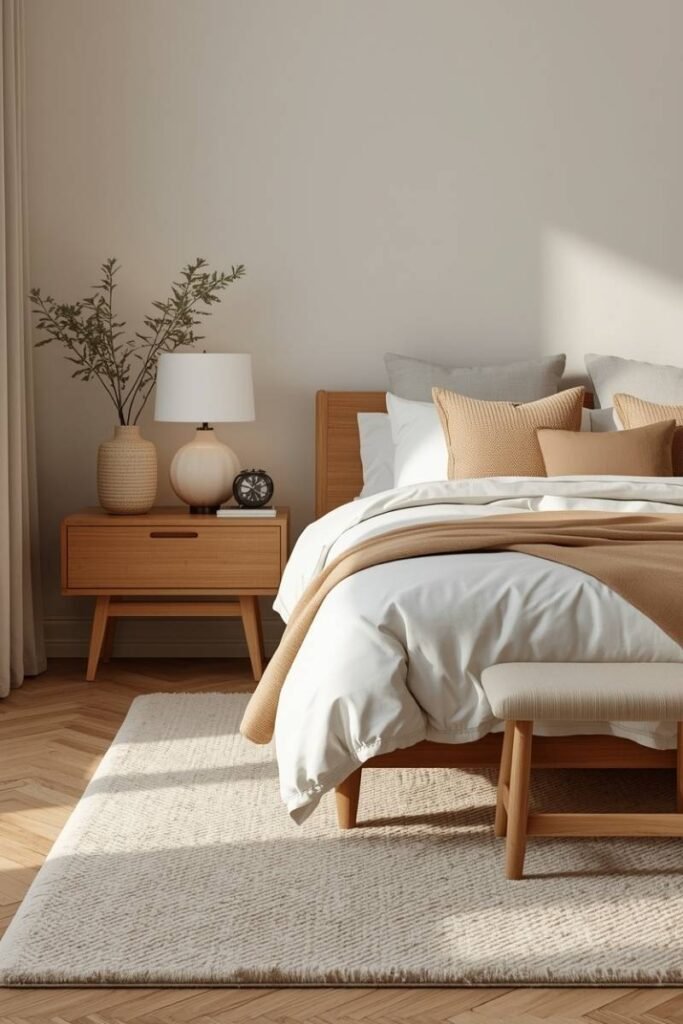
A plush area rug instantly softens a bedroom while adding a rich layer of texture. Whether placed under the bed or partially extending into the room, a textured rug creates visual grounding and enhances comfort underfoot. High-pile, wool, or hand-woven rugs bring warmth and prevent the space from feeling cold or unfinished.
For a polished look, choose rugs with subtle patterns or natural fibers rather than busy prints. Texture should feel tactile, not distracting. Layering a smaller textured rug over a larger flat-weave option is another professional trick that adds complexity while maintaining balance in the room’s design.
4. Upholstered Headboards with Rich Textures
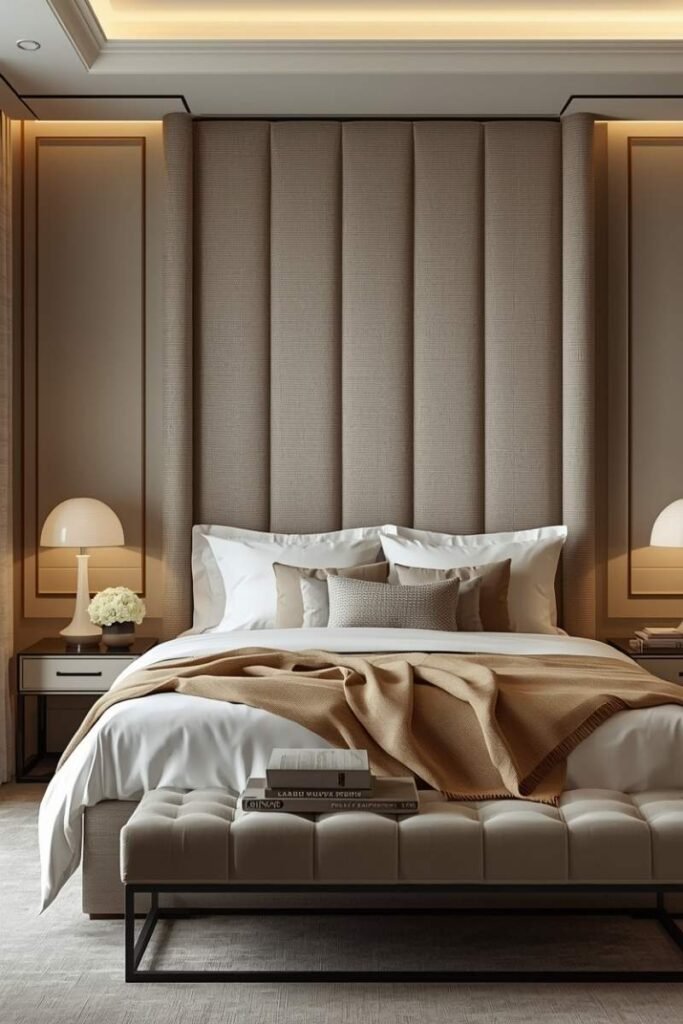
An upholstered headboard is a statement piece that adds softness and elegance to any bedroom. Fabrics like velvet, boucle, or woven linen introduce visual richness while enhancing comfort. A textured headboard frames the bed and creates a luxurious focal point without overwhelming the space.
When styling with textured headboards, keep surrounding elements simple. Smooth walls, minimal artwork, and clean bedding allow the texture to stand out. Neutral tones work particularly well, letting the material’s depth and tactile quality shine through, creating a balanced and sophisticated look.
5. Natural Wood Elements for Organic Texture
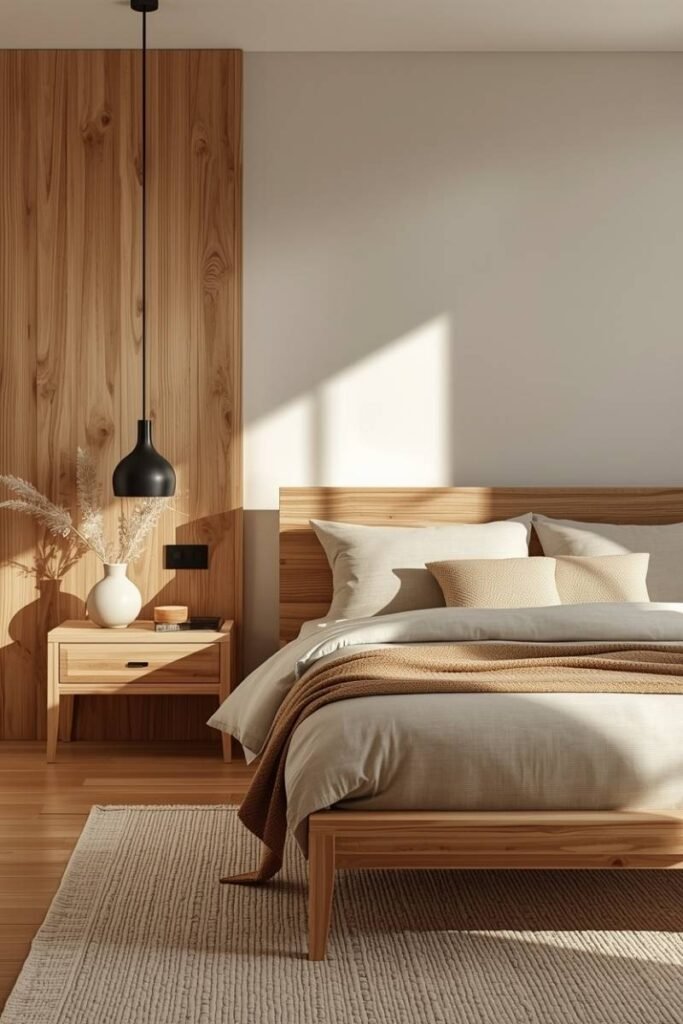
Natural wood brings warmth and authenticity to bedroom interiors. From wooden bed frames to nightstands and ceiling beams, wood introduces organic texture that balances modern or minimalist designs. The grain, knots, and natural imperfections create visual interest without requiring additional decor.
To style wood like a professional, mix finishes thoughtfully. Pair lighter woods with soft fabrics for a calm atmosphere, or darker woods with textured textiles for a dramatic effect. Avoid overusing wood in one space; instead, let it complement other textures like linen, wool, or stone.
6. Layered Window Treatments
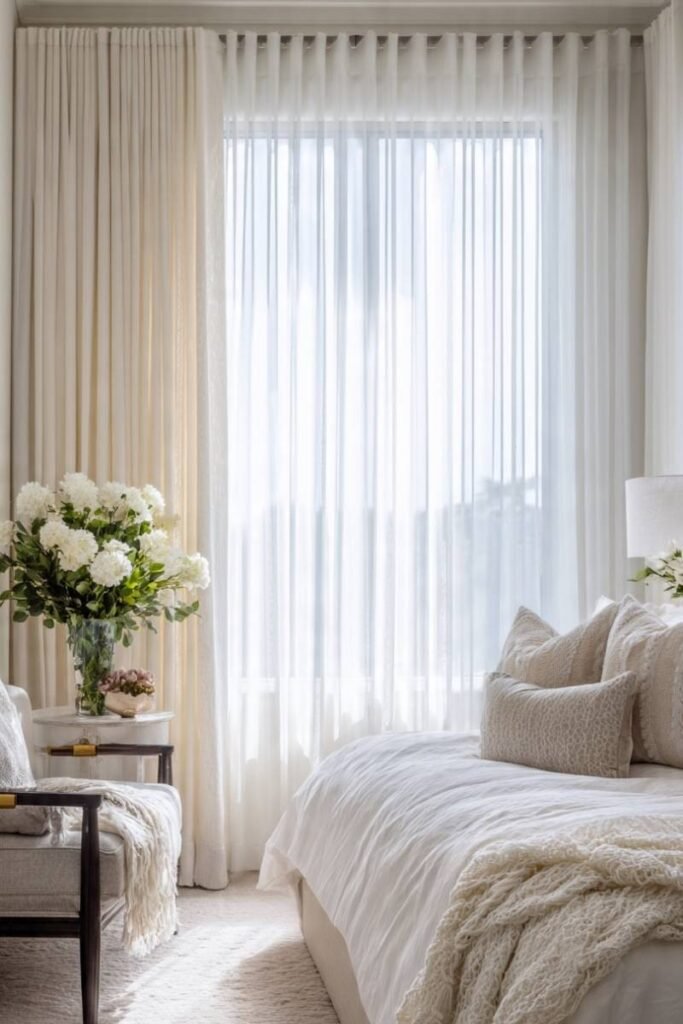
Window treatments are often overlooked, yet they offer an excellent opportunity to introduce texture. Layering sheer curtains with heavier drapes adds depth while allowing flexibility in light control. The contrast between light, airy fabrics and structured materials creates a refined, professional look.
Choose fabrics that complement the bedroom’s overall palette. Linen, cotton blends, or subtly woven textiles work well for a timeless feel. Hanging curtains from ceiling height enhances vertical space, making the room appear larger and more elegant while showcasing texture effectively.
7. Decorative Pillows with Varied Textures
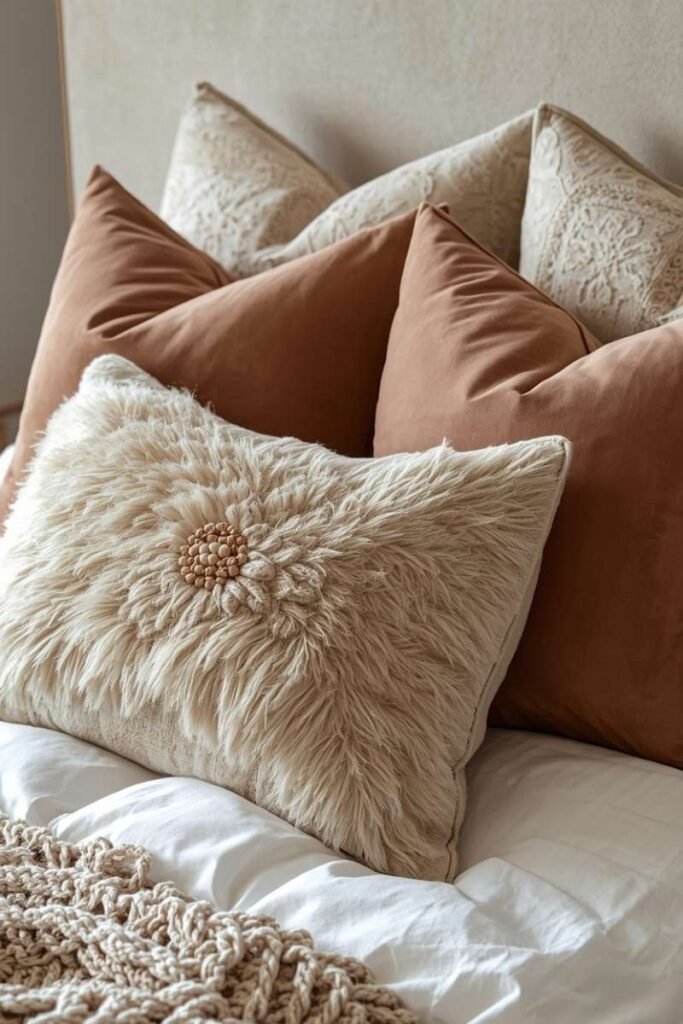
Decorative pillows are small elements with big impact. Mixing materials like velvet, embroidery, knit, and faux fur adds instant dimension to the bed. Texture variation makes the arrangement feel curated rather than staged, enhancing visual interest without clutter.
Limit the color palette to keep the look cohesive. Neutral or muted tones allow texture to stand out naturally. Arrange pillows in odd numbers and vary sizes to create a relaxed yet intentional composition that feels professionally styled.
8. Textured Throws for Effortless Styling
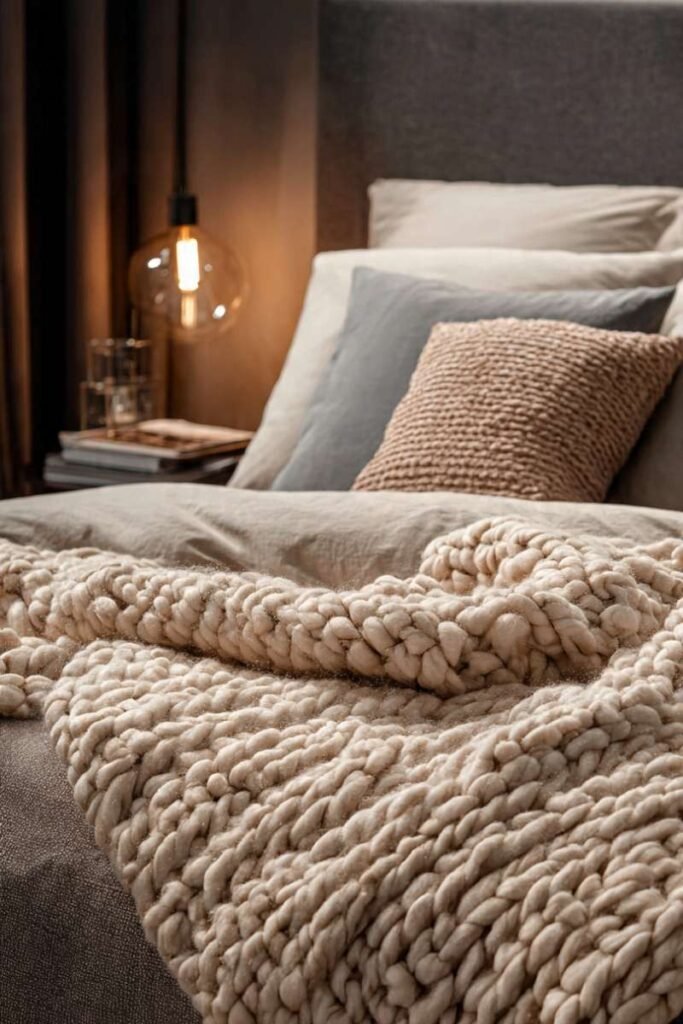
Throws are one of the simplest ways to introduce texture into a bedroom. Draped casually over the bed or a chair, they add softness and movement. Chunky knits, woven cotton, or faux fur throws instantly make the space feel warmer and more inviting.
For a designer finish, choose throws that contrast with the bedding fabric. A textured throw over smooth sheets creates balance and visual interest. Avoid folding too neatly; a relaxed drape feels more natural and lived-in.
9. Statement Lighting with Textural Interest
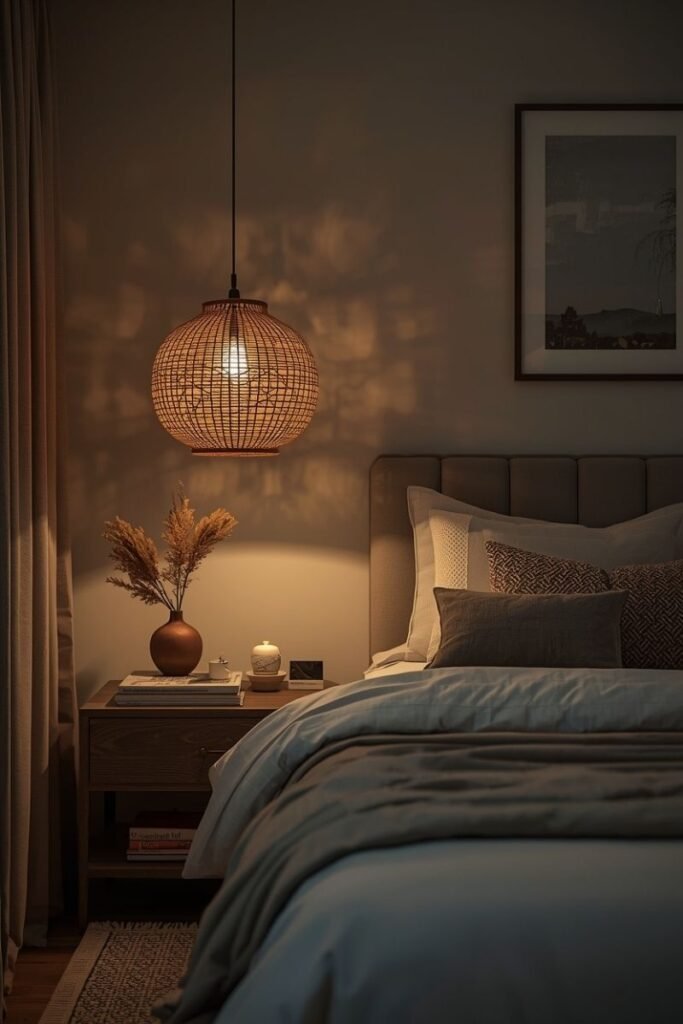
Lighting fixtures can double as texture-enhancing design elements. Woven pendant lights, ribbed glass lamps, or ceramic bases introduce tactile appeal while serving a functional purpose. Textured lighting adds depth, especially in bedrooms with simple color palettes.
Position statement lighting strategically to highlight other textures in the room. Warm light enhances materials like wood and fabric, creating a cozy ambiance. Avoid overly ornate designs; subtle texture keeps the look refined and timeless.
10. Textured Wall Art and Decor
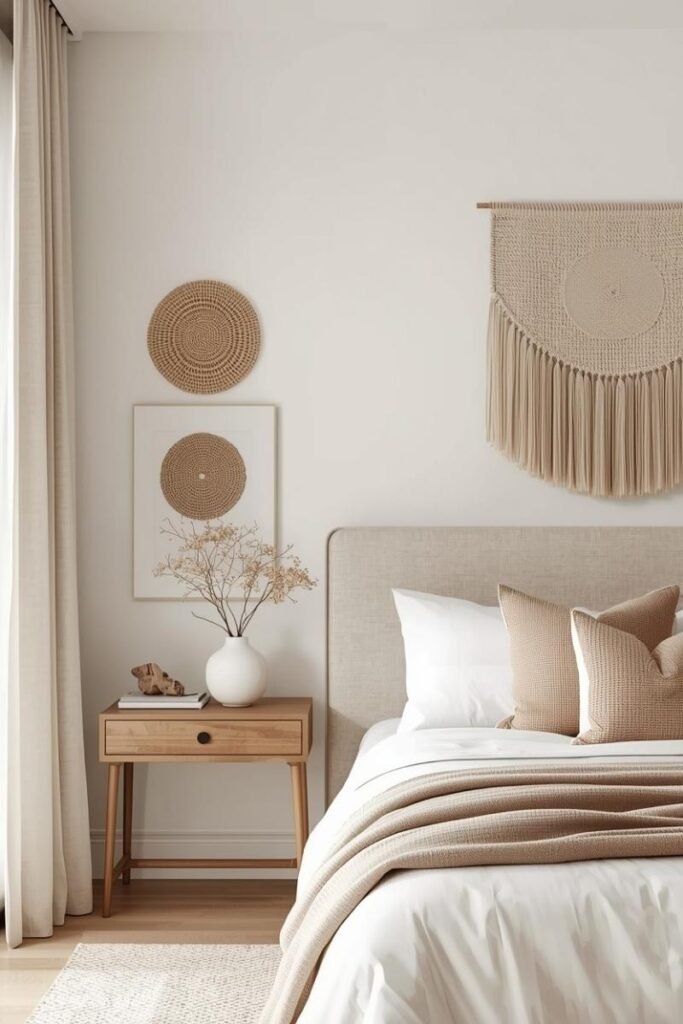
Wall art doesn’t have to be flat. Sculptural pieces, fabric art, or woven wall hangings add dimension and visual interest. These elements break up smooth wall surfaces and introduce texture without overwhelming the space.
Choose artwork that complements the room’s materials and colors. Neutral textured art works well in minimalist bedrooms, while organic forms suit bohemian or contemporary styles. Keep spacing intentional to maintain balance and flow.
11. Layered Furniture Materials
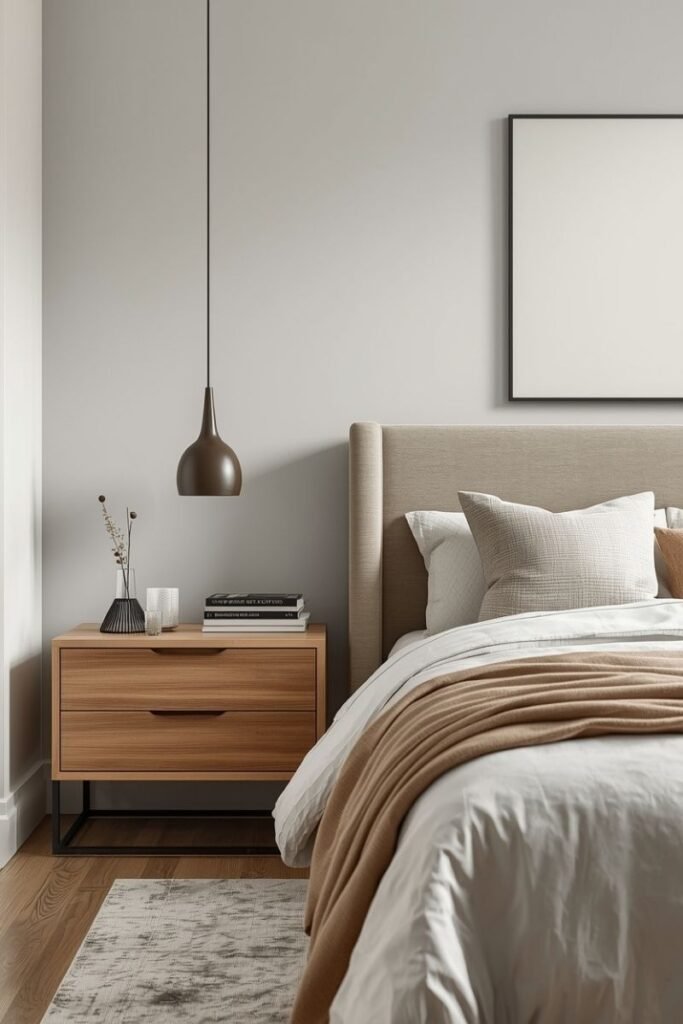
Mixing furniture materials is a professional styling technique that adds subtle texture. Combining wood, metal, upholstery, and stone creates depth without visual clutter. Each material contributes its own tactile quality, making the bedroom feel layered and intentional.
To keep the look cohesive, repeat materials throughout the room. For example, match a metal bed frame with metal lamp bases or wood furniture with wooden accents. This repetition creates harmony while maintaining textural variety.
12. Natural Fibers for a Calm Atmosphere
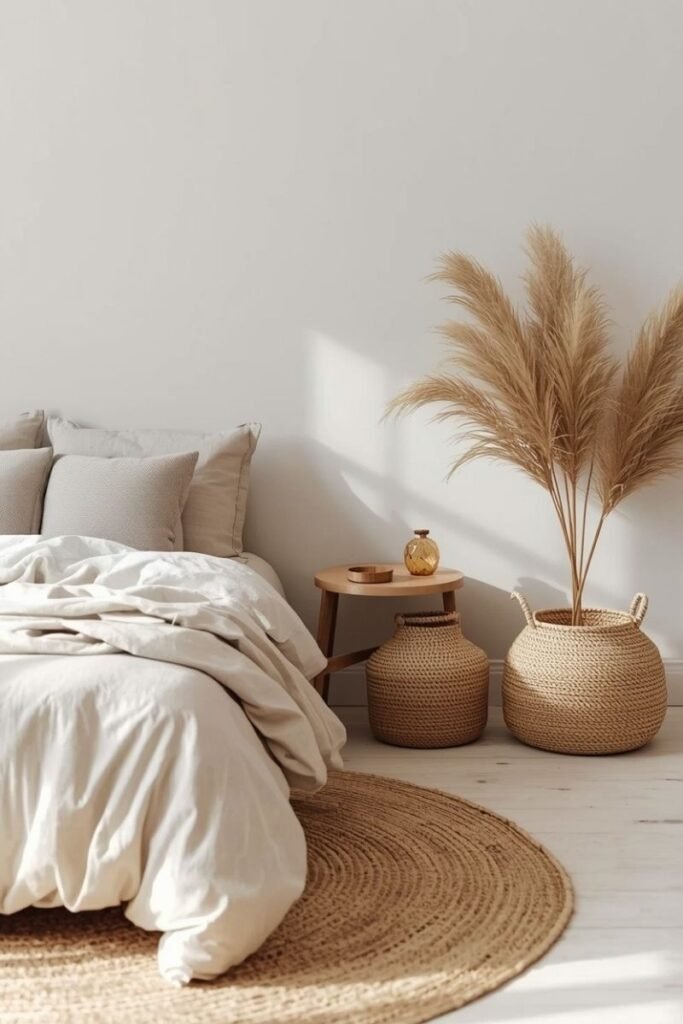
Natural fibers like linen, jute, cotton, and wool bring a relaxed, breathable feel to bedroom spaces. These materials introduce subtle texture while supporting a calming environment. Their imperfect, organic quality adds character without dominating the design.
Use natural fibers in rugs, bedding, baskets, or decor accents. Keep colors soft and earthy to enhance the soothing effect. This approach works especially well in minimalist and Scandinavian-inspired bedrooms.
13. Subtle Texture Through Color and Finish
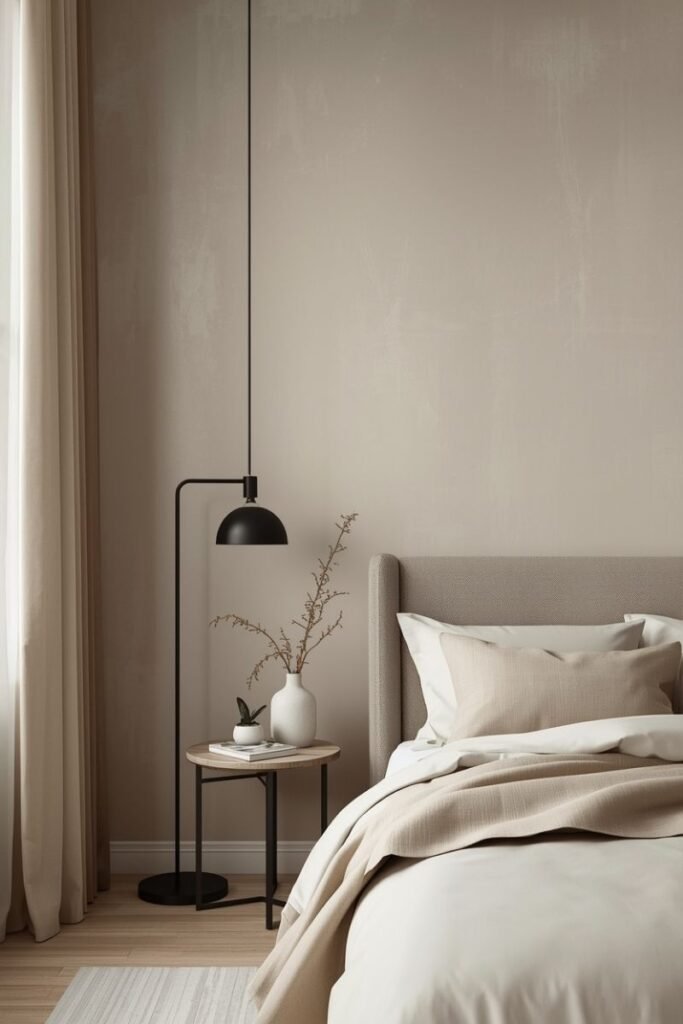
Texture doesn’t always have to be tactile. Matte finishes, soft paints, and layered tones create visual texture without physical depth. Walls with a chalky or limewash finish add movement and softness, enhancing the bedroom’s overall ambiance.
This technique works best in monochromatic spaces where variation comes from finish rather than color contrast. Subtle texture through paint and materials adds sophistication and keeps the room from feeling flat or sterile.
Conclusion: Mastering Bedroom Texture Like a Pro
Texture is the secret ingredient that transforms a bedroom from ordinary to exceptional. By layering materials thoughtfully and balancing visual weight, you can create a space that feels inviting, luxurious, and deeply personal. The key is intention—every texture should serve a purpose and complement the overall design.
These 13 Bedroom Styling Ideas Using Texture Like A Pro offer a framework you can adapt to any style or space. Whether you start small with pillows and throws or make a bold statement with textured walls, mastering texture will elevate your bedroom into a refined, designer-level retreat that stands the test of time.